
 BY
BY Anarcho Capitalism
Table of Contents
Anarcho-capitalism is the political philosophy that calls for abolishing the state entirely and replacing it with voluntary exchange, private property, and competing market institutions. It holds that every function now performed by government - defense, courts, roads - can be supplied by private providers operating under the non-aggression principle.
The Two Pillars: Self-Ownership and Non-Aggression
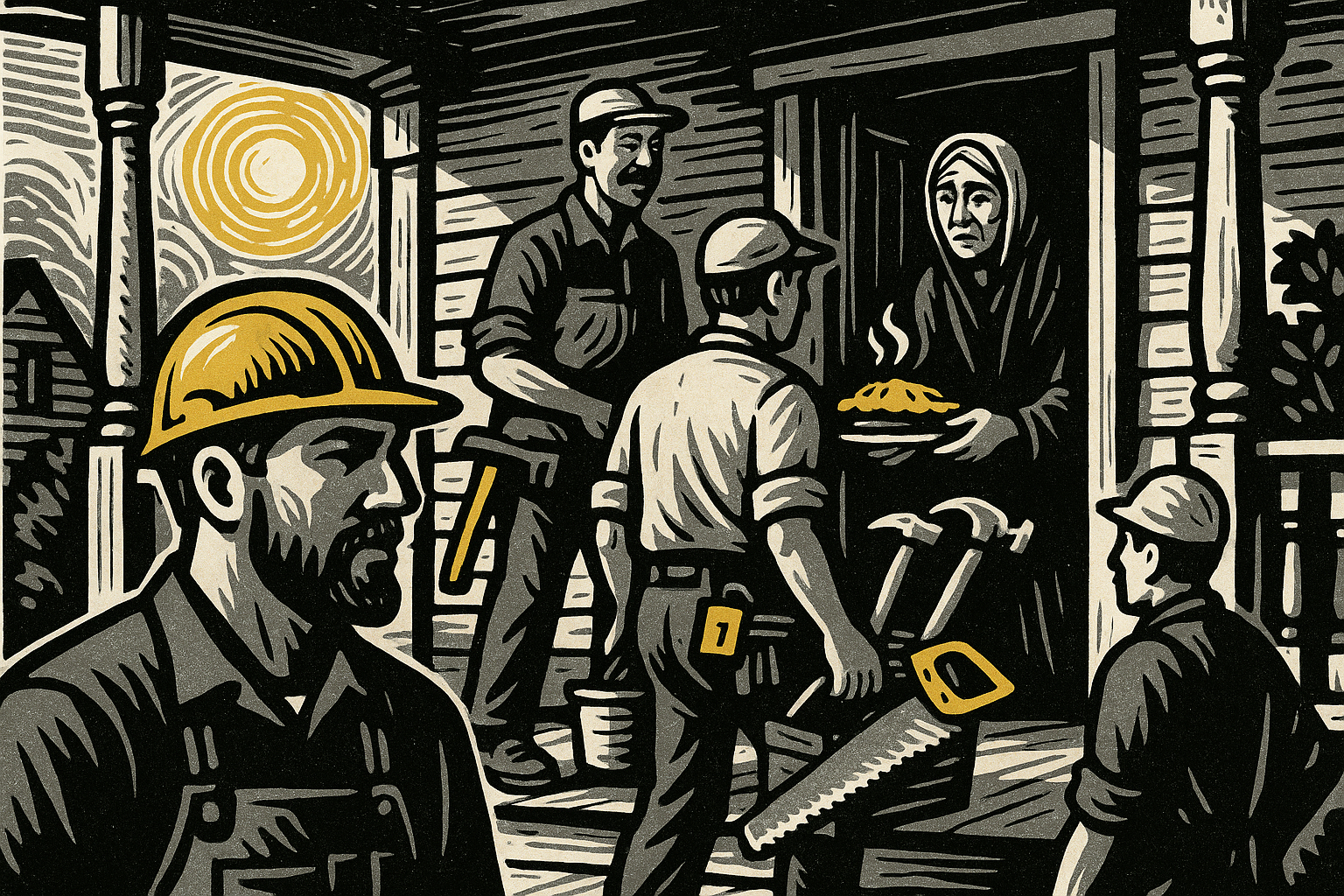
You own your body. You own your labor. No man has the right to put a gun to your head and take either one. That is the starting point of anarcho-capitalist thought.
The philosophy rests on two ideas working together. First, self-ownership: each person has full and exclusive claim over his own life and the product of his work. Second, the non-aggression principle: the initiation of force against any person or his property is wrong. Always. No exceptions carved out for men wearing badges.
The state fails both tests. It taxes by threat. It holds a legal monopoly on violence. Anarcho-capitalists say that makes it a criminal enterprise, not a public servant. Gustave de Molinari made this case as far back as 1849, arguing in The Production of Security that defense and law could be supplied competitively, the same way bread and boots are supplied.
Where the Tradition Comes From
Most people hear the word “anarchy” and picture European bomb-throwers. That image has roots. Nineteenth-century anarchists like Peter Kropotkin and Mikhail Bakunin were men of the Left. They despised the state but also despised capitalism. Many ran in the same circles as Marxists. Some celebrated violence. The assassination of Tsar Alexander II and President William McKinley were their handiwork.
Anarcho-capitalism cut a different path. It kept the hostility to the state and threw out the hostility to property and markets. The intellectual ancestors are older and quieter than the bomb-throwers.
Etienne de la Boetie, a French judge born in 1530, wrote “Discourse on Voluntary Servitude” – the argument that rulers hold power only because the people consent to be ruled. Murray Rothbard rediscovered that essay and praised it as a foundational text. The Liberty Fund has a free edition of The Politics of Obedience if you want to read it yourself.
Frederic Bastiat, a French economist who died in 1850, made the case that law should protect rights rather than redistribute property. His short book The Law remains the best ninety-minute introduction to that argument. Bastiat was a minarchist, not a full anarchist. But he supplied the moral vocabulary that later anarcho-capitalists would push further.
In America, Lysander Spooner and Benjamin Tucker worked the same ground in the latter half of the 1800s. Spooner tried to compete with the U.S. Post Office through his American Letter Company. The government shut him down. Tucker wrote against patents and monopoly. Both believed that decentralized, voluntary society could replace the state without revolution. Albert Jay Nock pulled the threads together in Our Enemy, The State, published in 1935.
Murray Rothbard and the Modern Synthesis
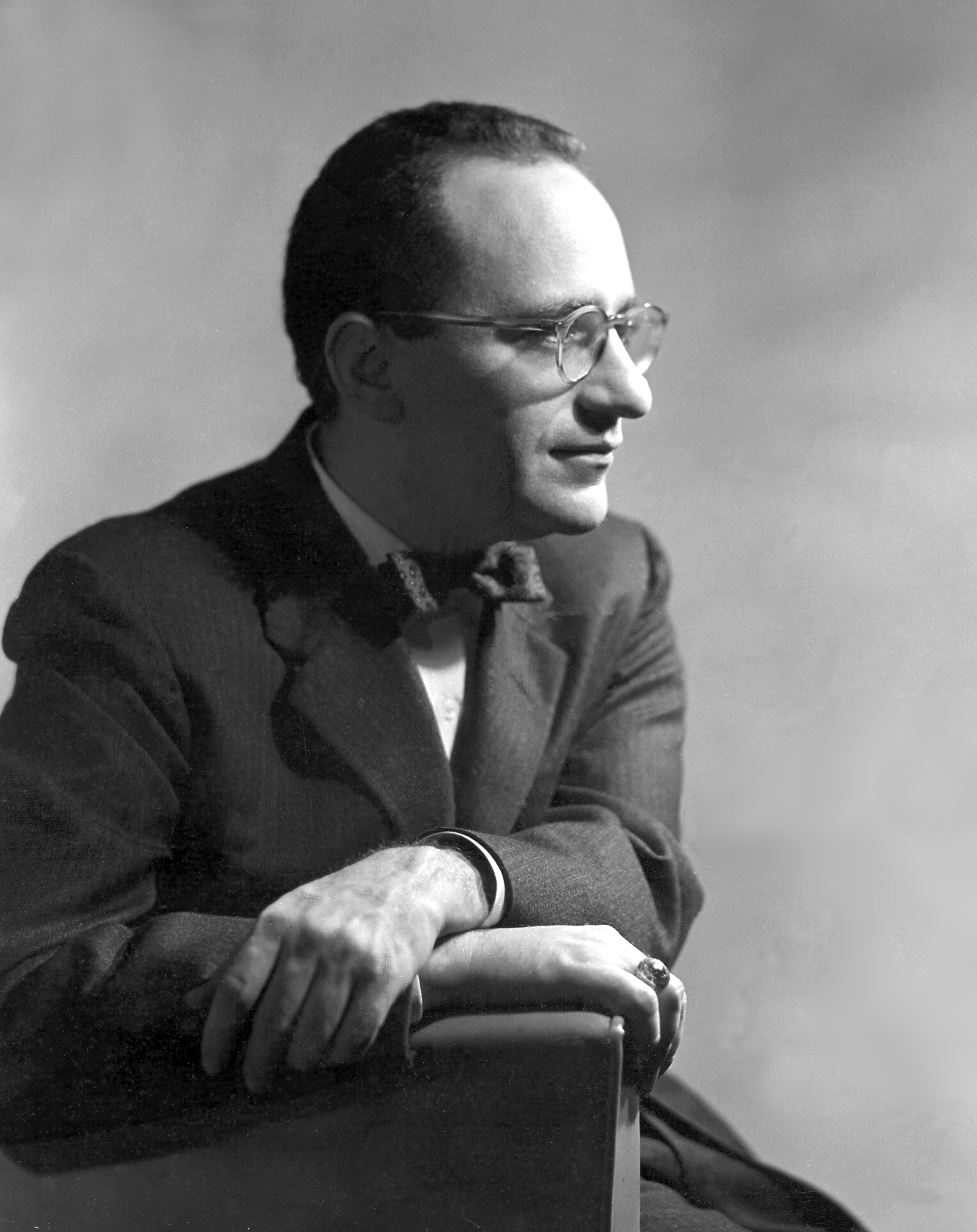
Murray Rothbard is the man who turned scattered precursors into a school. Born in New York City in 1926, Rothbard combined classical liberal economics with natural-rights philosophy and full abolitionism toward the state. He was trained in the Austrian school under Ludwig von Mises but went further than Mises was willing to go.
Mises believed a limited state was the minimum necessary for a functioning market order. Rothbard disagreed. He argued that the state’s monopoly on force could never be justified, no matter how small the state was kept. The logic of monopoly power always points toward expansion. A government that starts small does not stay small.
Rothbard laid out the positive case in For a New Liberty and the philosophical foundations in The Ethics of Liberty. For the long version of the Austrian economics underneath it, read Man, Economy, and State. Mises.org carries For a New Liberty free online.
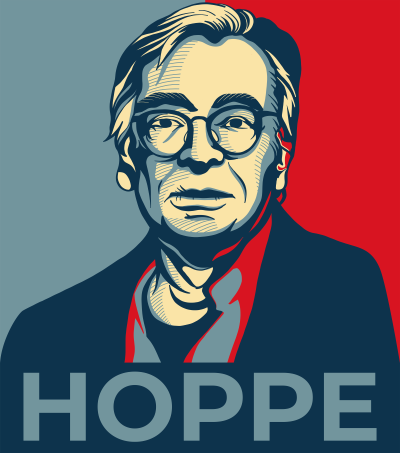
Hans-Hermann Hoppe extended Rothbard’s work into the 21st century. His Democracy: The God That Failed argues that democratic government is no less coercive than monarchy – and in some respects more so, because elected politicians have short time horizons and every incentive to spend down the capital of the society they govern. Hoppe praised de Molinari’s 1849 work as a direct ancestor of this line of thinking.
Critiques From the Right and the Left
Anarcho-capitalism gets attacked from every direction. Understanding the critiques honestly is more useful than dismissing them.
Three main objections come up repeatedly. Each deserves a straight answer.
- Who enforces the contracts? Critics ask what stops a larger private security firm from becoming a de facto government. Rothbard and Hoppe answer that competing firms have strong incentives to maintain reputation and submit to third-party arbitration. A firm that simply seizes what it wants loses clients to honest competitors. The objection assumes monopoly is the inevitable outcome of competition – which is exactly what market theory disputes.
- What about the poor? The left-anarchist objects that private property without redistribution leaves the poor defenseless. The anarcho-capitalist answer is that charity and mutual aid flourished before the welfare state crowded them out. State dependency is not the only alternative to private wealth. Tocqueville documented an America thick with voluntary associations doing exactly that work.
- Isn’t this just libertarianism with extra steps? Some paleolibertarians and conservatives ask whether abolishing the state throws out institutions – courts, common law, the sheriff – that took centuries to build and that actually protect ordinary people. Russell Kirk made this point in a different register: order is not the enemy of liberty. It is liberty’s precondition. This is the most serious critique from the right, and anarcho-capitalists have not fully settled it.
What Liberty Frees You to Build
A man with a paid-off house and a small business can hire the kid down the street when his father dies. He can keep an apprentice on through a slow winter. He can pay for his sister’s funeral without a GoFundMe. That is not abstract. That is what economic sovereignty looks like when it shows up on a Tuesday.
Liberty is not license. It is capacity. The anarcho-capitalist case is not that men should do whatever they please. It is that the heavy hand of the tax collector, the regulator, and the licensing board strips away the margin a man needs to be genuinely generous. What is left after the state takes its share is often not enough to be anybody’s neighbor in the old sense of the word.
Russell Kirk called them the permanent things – family, parish, community, the ties that bind a man to something larger than himself. The state does not destroy those ties with a single blow. It bleeds them slowly. Every hour a small businessman spends on compliance paperwork is an hour he did not spend teaching a nephew his trade. Every dollar taken in payroll tax is a dollar that did not go toward keeping a long-time employee through a hard stretch.
The parish that takes in the old widower, the neighborhood that notices when a porch light stays dark, the foreman who quietly carries a grieving family on the payroll for a month – these are not romantic images from another century. They are how communities held together before the managerial state told people that caring for strangers was Washington’s job. Strip away that claim, and the space does not stay empty. People fill it. They always have.
De la Boetie saw it clearly five centuries ago. Servitude is learned. So is self-reliance. A man who stops looking to distant authorities to solve problems he can see from his own front porch recovers something. Call it responsibility. Call it dignity. Call it the permanent things reasserting themselves. The state crowds out that recovery. Voluntary society is where it happens.
Libertarian Skepticism Toward Full Abolition
Not every libertarian follows Rothbard to the end of the road. Mises stopped at the minimal state. Hayek worried about spontaneous order requiring some legal framework that only a state could anchor. F.A. Hayek’s The Constitution of Liberty is the best single statement of the case for limited government over no government.
The minarchist position holds that certain public goods – national defense, a court system, enforcement of contracts – cannot be reliably supplied by competing private firms. The anarcho-capitalist replies that this concession is the crack in the door. Once you grant the state a monopoly on courts, you have granted it everything. History supports the worry. Limited governments do not stay limited.
The debate inside the libertarian family is real and unresolved. It is also more productive than most political arguments, because both sides are working from shared premises about self-ownership and non-aggression. The disagreement is about institutional design, not first principles.
What to Do With the Diagnosis
Most working men will never call themselves anarcho-capitalists. The label carries too much baggage. But the underlying questions are ones every man with a mortgage and a tax bill should think about.
How much of what the government does could be done better by individuals, families, churches, and voluntary associations? How much of what passes for public order is actually the state protecting its own monopolies? When the county sheriff tells a farmer he can’t sell raw milk, who is being protected?
Etienne de la Boetie’s core insight applies here. The state holds power because people believe it has the right to hold power. The moment that belief erodes, the power erodes with it. That is not a call to revolution. It is a call to honest thinking about where authority actually comes from.
For the philosophical foundations, start with Bastiat’s The Law. Then Rothbard’s For a New Liberty. Then Spooner’s “No Treason” – you can find it free at the Liberty Fund. For the conservative critique of where this thinking goes wrong, read the paleolibertarian entry and Kirk’s The Conservative Mind.
« Back to Glossary Index