
 BY
BY Positive Rights
Table of Contents
A positive right is a claim that obligates someone else - usually the government - to provide you with a good or service. Unlike a negative right, which simply demands others leave you alone, a positive right demands action from others on your behalf.
A positive right is a rights claim that obligates another party, most often the state, to supply you with something: a job, a doctor, an income, a place to live. Unlike a negative right, it cannot be honored simply by others keeping their hands off. It requires that someone produce what you are owed and deliver it, willing or not.
The problem is not hard to locate. Every positive right generates a corresponding duty that someone did not choose. The taxpayer who funds the entitlement, the physician conscripted into a managed-care network, the employer told whom to hire and at what wage, all of them are carrying a load imposed without their consent. The voluntary community obligations that have always governed decent men, the parish benevolence fund, the neighbor who shows up when the roof leaks, have nothing in common with a rights claim enforced by statute. One is freely given. The other is extracted.
The Basic Distinction
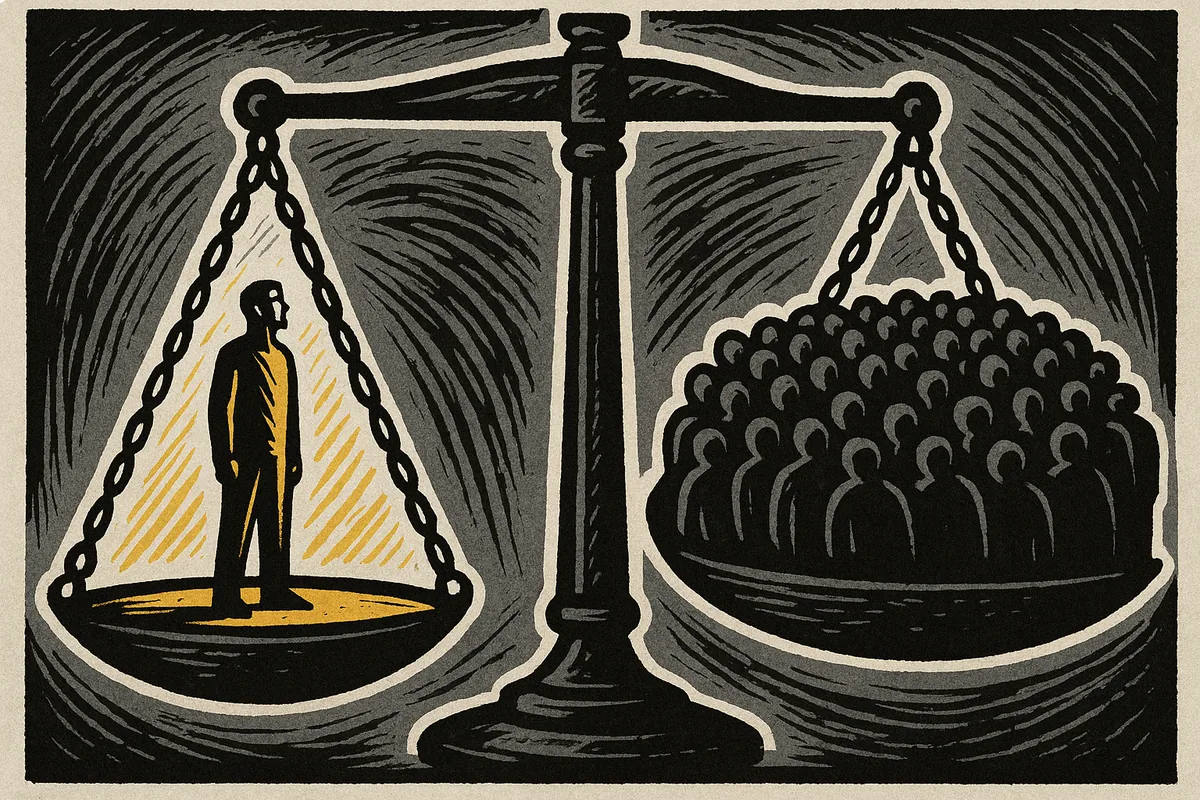
Your neighbor builds a fence on his own land. Nobody owes him a fence. Nobody has to buy the lumber. He does the work and holds the result. That is a negative right in action - the right to be left alone to do what is yours to do.
Now imagine your neighbor has a legal claim on your paycheck to fund his fence. The county shows up, collects from you, and hands him the materials. That is a positive right. Somebody else pays.
The difference sounds simple. It is not simple in practice. Once government can compel one man to provide for another, the only question left is how much and for what.
Isaiah Berlin put the sharpest blade to this distinction in his 1958 lecture “Two Concepts of Liberty.” Negative liberty is freedom from interference. Positive liberty is the capacity to act - and, in Berlin’s warning, the capacity to be told by the state that you are being made free whether you feel it or not. For the full text, the Online Library of Liberty carries Berlin’s work.
Where Positive Rights Come From
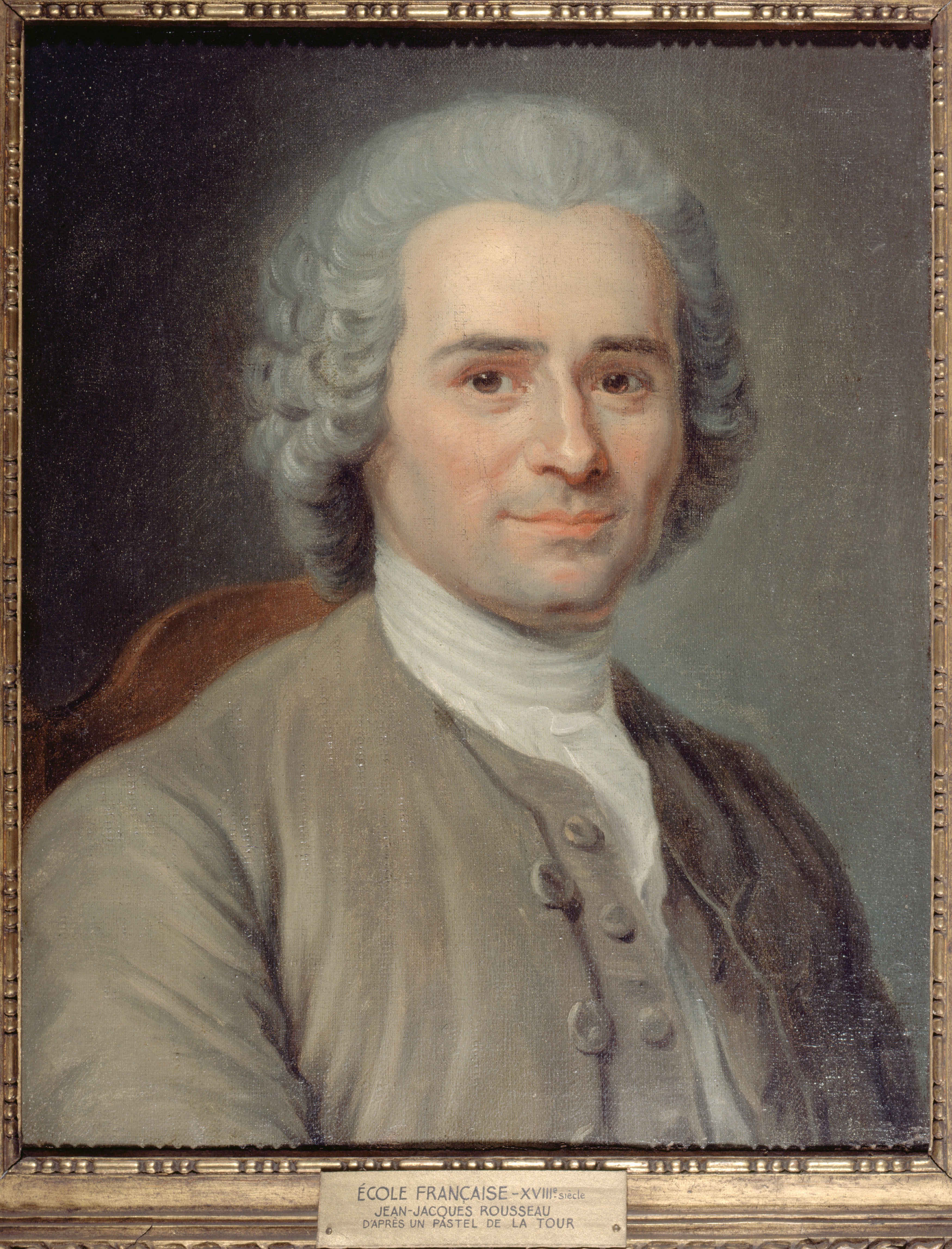
Jean-Jacques Rousseau planted the seed. His argument was that a strong government liberates you by overriding your lesser preferences for your own good. Submit to the collective will and you are, in some higher sense, free. Rousseau called it being “forced to be free.”
That phrase should stop you cold.
The American Founders read Rousseau and largely rejected him. Their framework was negative. The Bill of Rights is a list of things government cannot do to you - not a list of things government must give you. Congress shall make no law. The right shall not be infringed. Shall not be violated.
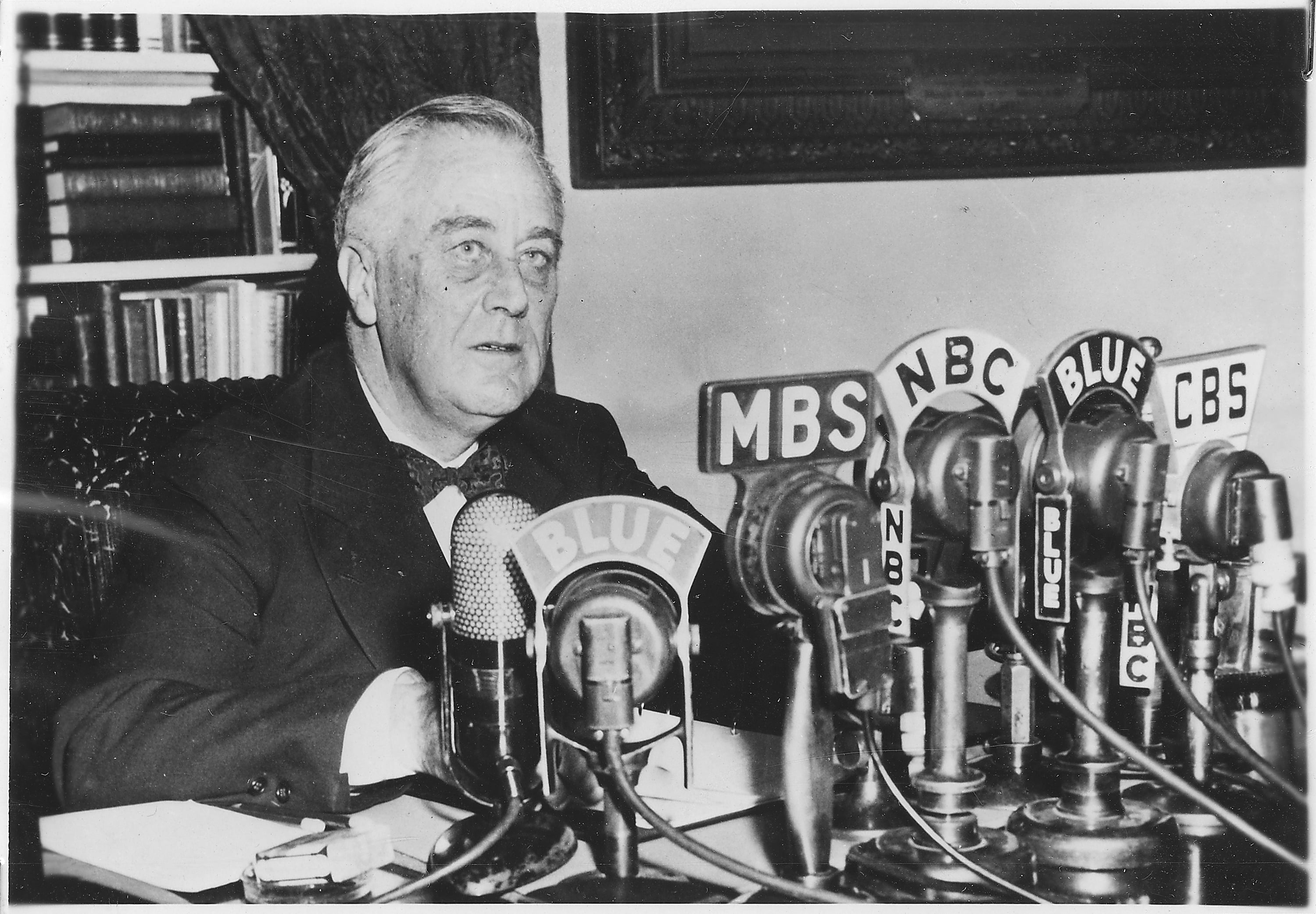
The shift came in the twentieth century. The New Deal reframed government as provider. FDR’s 1944 “Second Bill of Rights” speech listed a job, a home, medical care, and education as rights the government owed every American. No one had to sign anything. No legislature ratified it. One speech moved the goalposts.
The Social Gospel movement ran a parallel track inside the churches, translating Christian charity into political demand. What had been a voluntary moral obligation - feed the hungry, house the stranger - became a line item in a federal budget enforced by the IRS.
The Cost Someone Always Pays

Every positive right has a bill attached. The bill goes to someone who did not ask for the obligation.
A man in Ohio runs a small machine shop. He files payroll taxes every quarter. Part of that money funds Medicaid in a state three thousand miles away for people he has never met. He did not agree to this. He cannot opt out. The positive right of one person is the positive duty of another - and that duty is enforced with fines and, at the far end of the chain, prison.
This is the core objection. It is not heartlessness. It is a question about the difference between charity and compulsion. A man who gives to his parish food pantry is generous. A man who reaches into his neighbor’s wallet and hands the cash to a third party is not generous. He is spending someone else’s money.
The statist answer is that collective needs require collective solutions. Fine. But calling a coerced transfer a “right” papers over what it actually is. Rights language is powerful. When you attach it to a government benefit, you make that benefit feel permanent, natural, and beyond argument. That is exactly the point.
Four Examples Worth Examining
Positive rights show up across the whole range of government activity. Four examples make the pattern clear.
- Welfare and Social Insurance. The federal government collects payroll taxes and redistributes them as Social Security, Medicaid, and food assistance. The recipient has a legal claim. The taxpayer has a legal obligation. Neither party chose the other.
- Public Education. Every child has a legal right to a government school. Every property owner funds it through taxes whether he has children or not, whether he approves of the curriculum or not. A man in his sixties with grown children is still paying for the local school district.
- Minimum Wage. A young man and a small business owner agree on $10 an hour to wash windows. The law says no. The government imposes a floor that neither party requested. The employer’s property right in his own payroll is overridden by the employee’s claimed right to a mandated wage.
- Healthcare Mandates. The Affordable Care Act required individuals to purchase health insurance or pay a penalty. The government did not just offer a service. It compelled a purchase. One person’s right to coverage became another person’s legal duty to fund the risk pool.
The Conflict With Negative Rights
Positive and negative rights are not naturally compatible. They pull in opposite directions.
A negative right tells others to stay back. Your right to speak means others cannot silence you. Your right to property means others cannot take it. The obligation is pure restraint. It costs nothing to respect a negative right except the willingness to keep your hands to yourself.
A positive right tells others to step forward. Your right to healthcare means someone must provide it. Your right to a living wage means an employer must pay it. The obligation is active. It costs money, time, and labor extracted from specific people.
When the two collide, one yields. Usually the negative right loses. The small business owner’s right to set his own wages loses to the employee’s right to a minimum. The taxpayer’s right to his earnings loses to the welfare recipient’s right to benefits. The logic runs in only one direction once the positive-rights framework takes hold.
For a full treatment of where the line between the two should run, see the contrasts page on negative vs. positive rights.
What You Can Actually Do With Freedom
A man with a paid-off house and a small business with some margin can do things. He can keep an extra man on payroll through a slow winter. He can tell his nephew to come learn the trade. He can write a check when the church takes up a collection for the family whose father just died.
Strip that margin away in taxes, compliance costs, and mandated benefits - and his generosity becomes rhetorical. He forwards a link. He votes for the candidate who promises to help. He is not uncharitable. He is broke and scheduled into the ground.
This is what the positive-rights regime actually costs. Not just dollars. Hours spent on paperwork. Anxiety spent on tax law. The slow crowding-out of real responsibility by abstract obligation. You owe strangers what the government calculates. You owe your neighbor nothing official. The parish food pantry runs on what is left over.
Russell Kirk called the family, the church, and the local community the little platoons of civilization. They do not need the state to tell them what to do. A neighborhood that knows whose porch light has been dark for three days does not need a wellness check hotline. A trade that passes from father to son does not need a federal apprenticeship program.
Liberty is not license. It is the condition under which a man can actually be responsible - for his sister’s three kids, for the widower down the street, for the apprentice whose mother is sick. The state does not liberate that capacity. It competes with it, taxes it, and eventually replaces it with a form and a caseworker.
What the Conservative Tradition Says
Russell Kirk’s first canon of conservative thought was the belief in a transcendent moral order. Law should reflect that order - not manufacture new entitlements from political pressure.
Kirk would have recognized positive rights as a modern form of an old error: using the machinery of the state to satisfy appetites that properly belong to voluntary society - the family, the church, the neighborhood, the parish. When government colonizes those functions, it does not supplement civil society. It crowds it out.
The classical liberal tradition made the same argument from a different angle. Ludwig von Mises and F.A. Hayek spent careers demonstrating that central planners cannot rationally allocate resources they do not own and cannot price correctly. A positive right to healthcare does not conjure doctors and hospitals. It redirects them. Someone else goes without.
For the deeper philosophical case against compelled provision, Etienne de la Boetie’s The Politics of Obedience is still the shortest path to the root of the problem. De la Boetie asked a simple question: why do people obey? His answer - habit, propaganda, and the small benefits distributed by the ruler - maps directly onto the positive-rights regime.
« Back to Glossary Index