
 BY
BY Table of Contents
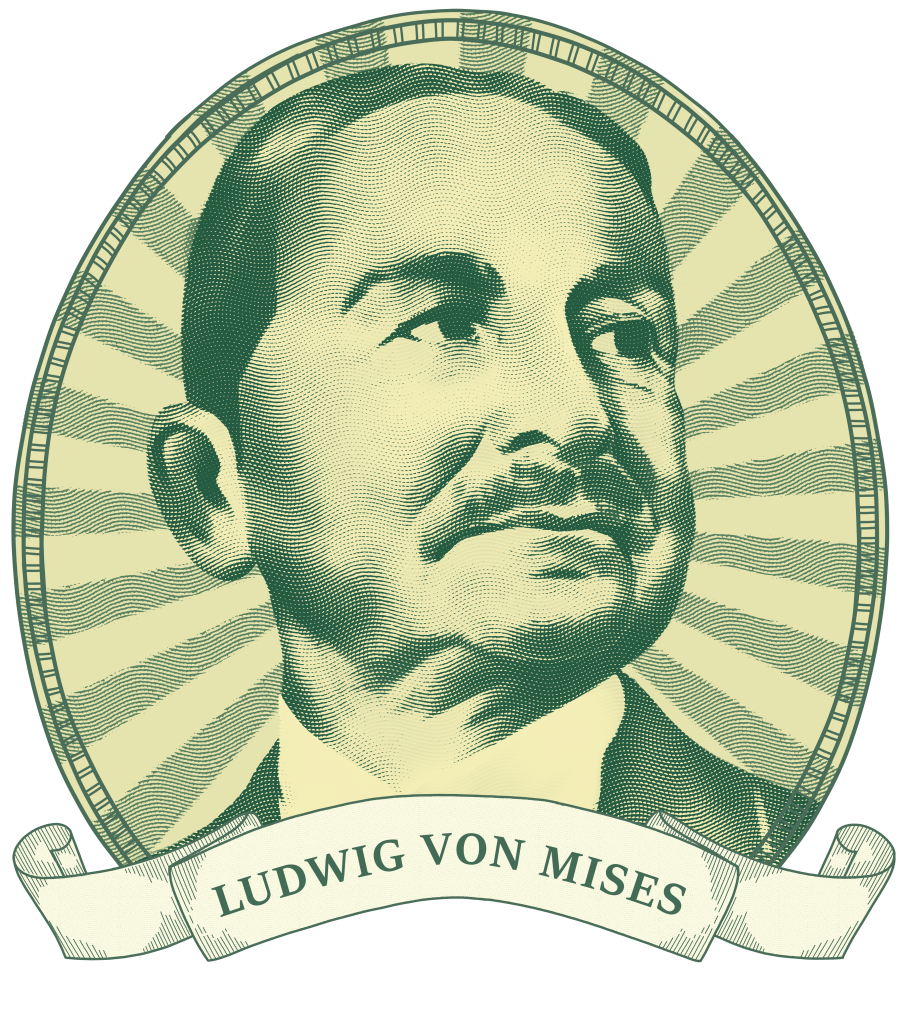
Ludwig von Mises (1881–1973) did not merely argue that socialism was unwise or premature or in need of better administrators. He argued that it was logically impossible – that any attempt to abolish market prices abolished, at the same stroke, the only mechanism by which a complex economy can coordinate production with human needs. Without prices generated by voluntary exchange, central planners are not working with imperfect information; they are working with no information at all. The calculation problem, as Mises formalized it in Socialism (1922) and grounded in first principles in Human Action (1949), is not a policy critique. It is a demonstration that the thing itself cannot function as advertised, regardless of who is running it or how sincere they are about running it well.
That distinction – between a program that might be improved and a program that is structurally self-defeating – is what separates Mises from the ordinary run of free-market commentators, and it is why his work remains essential long after most mid-century economic controversy has gone stale. The managerial state does not fail because it attracts the wrong personnel. It fails because the knowledge required to make its decisions is dispersed across millions of individuals making billions of exchanges, and no bureau, however staffed, can reconstruct that signal from the outside. Every regulatory expansion, every price control, every nationalization makes the distortion worse, not because bureaucrats are especially venal – though that too – but because the logic runs in only one direction. Mises watched governments across the twentieth century dismiss this analysis, implement the policies anyway, and then produce, with remarkable consistency, exactly the waste and coercion he had predicted. He was not bitter about being right. He continued writing.
The quotes collected here cover the architecture of that argument: why socialism fails at the level of theory before it fails at the level of practice, why capitalism is not a system imposed on society but the name for what emerges when exchange is free, and why the state’s appetite for control is not an accident of bad leadership but a predictable feature of institutions that face no profit-and-loss discipline. Readers who have spent time with related material on this site will recognize the structural logic. Those coming to Mises fresh should read slowly. He earns his conclusions.
Quotes on Socialism
“Socialism is the expression of the principle of violence crying from the workers’ soul, just as Imperialism is the principle of violence speaking from the soul of the official and the soldier.”
- Ludwig von Mises, Socialism: An Economic and Sociological Analysis (1922)
“Socialism is the abolition of rational economy.”
- Ludwig von Mises, Economic Calculation in the Socialist Commonwealth (1920)
“Socialism and democracy are irreconcilable.”
- Ludwig von Mises, A Critique of Interventionism (1929), Ch. 3: Liberalism and Social Liberalism
“Every socialist is a disguised dictator.”
- Ludwig von Mises, Human Action (1949), Ch. XXV, Sec. 1: The Historical Origin of the Socialist Idea
“People frequently call socialism a religion. It is indeed the religion of self-deification.”
- Ludwig von Mises, Human Action (1949), Ch. XXV, Sec. 1: The Historical Origin of the Socialist Idea
“In the bureaucratic machine of socialism the way toward promotion is not achievement but the favor of the superiors.”
- Ludwig von Mises, Bureaucracy (1944)
“Socialism promises not only welfare – wealth for all – but universal happiness in love as well. This part of its program has been the source of much of its popularity.”
- Ludwig von Mises, Socialism: An Economic and Sociological Analysis (1922)
“Socialist society is a society of officials. The way of living prevailing in it, and the mode of thinking of its members, are determined by this fact.”
- Ludwig von Mises, Socialism: An Economic and Sociological Analysis (1922)
“True, a socialistic society could see that 1000 litres of wine were better than 800 litres. It could decide whether or not 1000 litres of wine were to be preferred to 500 litres of oil. Such a decision would involve no calculation. The will of some man would decide.
But the real business of economic administration, the adaptation of means to ends only begins when such a decision is taken. And only economic calculation makes this adaptation possible. Without such assistance, in the bewildering chaos of alternative materials and processes the human mind would be at a complete loss. Whenever we had to decide between different processes or different centres of production, we would be entirely at sea.”
- Ludwig von Mises, Socialism: An Economic and Sociological Analysis (1922), Ch. 1, Sec. 3: Economic Calculation
“All efforts to realize Socialism lead only to the destruction of society. Factories, mines, and railways will come to a standstill, towns will be deserted. The population of the industrial territories will die out or migrate elsewhere.
The farmer will return to the self-sufficiency of the closed, domestic economy. Without private ownership in the means of production there is, in the long run, no production other than a hand-to-mouth production for one’s own needs.”
- Ludwig von Mises, Socialism: An Economic and Sociological Analysis (1922), Conclusion: Socialism in History
“It suffices here to say that the planned economy which the advocates of dictatorship wish to set up is precisely as socialistic as the Socialism propagated by the self-styled Social Democrats.”
- Ludwig von Mises, Socialism: An Economic and Sociological Analysis (1922), Epilogue
“A socialist administration needs ‘guarantees’ that its work of transformation would not be ‘disrupted’ by repeal in event of its defeat at the polls. Therefore the suspension of the Constitution is ‘inevitable’.”
- Ludwig von Mises, Socialism: An Economic and Sociological Analysis (1922), Ch. 3, Sec. 5: Political Constitution of Socialist Communities

“The Kingdom of Christ is not of this world; socialism, on the contrary, wants to establish the kingdom of salvation on earth. Therein lies its strength, therein, however, its weakness too, from which it will collapse some day just as quickly as it has triumphed.”
- Ludwig von Mises, Socialism: An Economic and Sociological Analysis (1922)
Quotes on Capitalism and Free Markets
“A society that chooses between capitalism and socialism does not choose between two social systems; it chooses between social cooperation and the disintegration of society.”
- Ludwig von Mises, Human Action (1949)

“If history could teach us anything, it would be that private property is inextricably linked with civilization.”
- Ludwig von Mises, Omnipotent Government: The Rise of the Total State and Total War (1944)
“The lord of production is the consumer.”
- Ludwig von Mises, Socialism: An Economic and Sociological Analysis (1922), Ch. 5, Sec. 1: The Slogan 'Economic Democracy'
“When we call a capitalist society a consumers’ democracy we mean that the power to dispose of the means of production, which belongs to the entrepreneurs and capitalists, can only be acquired by means of the consumers’ ballot, held daily in the market-place.”
- Ludwig von Mises, Socialism: An Economic and Sociological Analysis (1922), Ch. 5, Sec. 1: The Slogan 'Economic Democracy'
“If Capitalism improves the economic position all round, it is of secondary importance that it does not raise all to the same level. A social order is not bad simply because it helps one more than the other.”
- Ludwig von Mises, Socialism: An Economic and Sociological Analysis (1922), Ch. 4: The Theory of Increasing Poverty
“Under capitalism the common man enjoys amenities which in ages gone by were unknown and therefore inaccessible even to the richest people. But, of course, these motorcars, television sets and refrigerators do not make a man happy.
In the instant in which he acquires them, he may feel happier than he did before. But as soon as some of his wishes are satisfied, new wishes spring up. Such is human nature.”
- Ludwig von Mises, The Anti-Capitalistic Mentality (1956)
“All people, however fanatical they may be in their zeal to disparage and to fight capitalism, implicitly pay homage to it by passionately clamoring for the products it turns out.”
- Ludwig von Mises, The Anti-Capitalistic Mentality (1956)
“Any advocate of socialistic measures is looked upon as the friend of the Good, the Noble, and the Moral, as a disinterested pioneer of necessary reforms, in short, as a man who unselfishly serves his own people and all humanity, and above all as a zealous and courageous seeker after truth.
But let anyone measure Socialism by the standards of scientific reasoning, and he at once becomes a champion of the evil principle, a mercenary serving the egotistical interests of a class, a menace to the welfare of the community, an ignoramus outside the pale.”
- Ludwig von Mises, Socialism: An Economic and Sociological Analysis (1922), Preface to the Second German Edition
Final Thoughts
What the quotes collected on this page demonstrate is not merely that Mises was right about specific predictions – though he was, repeatedly, with an accuracy that embarrasses the credentialed class that ignored him. The deeper point is structural. Mises diagnosed the 20th century’s central pathology before it had fully declared itself: that any regime which suppresses market prices suppresses the only mechanism by which dispersed human knowledge can be coordinated. Central planning does not fail because planners are corrupt or incompetent, though they are often both. It fails because the information required to plan does not exist in a form any central authority can access. The managerial state does not learn this lesson. It cannot, because acknowledging it would dissolve the justification for its own existence.
The civilization Mises was defending was already under pressure when he wrote Socialism in 1922, and the pressure has not relented. What has changed is the form the interventionism takes – no longer five-year plans with their obvious catastrophes, but a corporate-government complex that manages markets rather than abolishing them, capturing the price mechanism rather than replacing it, and producing the same slow erosion of economic rationality through a hundred regulatory distortions instead of one blunt decree. The diagnosis Mises offered is, if anything, more necessary now than when he made it, because the disease has learned to disguise itself. For the reader who wants to carry that diagnosis forward into a full account of what a free society actually requires, the next step is For a New Liberty by Murray Rothbard – Mises’s most rigorous student, working the same tradition into a systematic case for liberty that goes where Mises pointed but did not always follow.
Mises did not write for regimes. He wrote for people who wanted to understand what was actually happening to them and why. That readership is still the right one.
If Mises diagnosed the structural disease, the question his work leaves open is how a person is supposed to live and think inside a system that will not be fixed on any timeline relevant to one’s own life – and here the Stoics have something to add that economics cannot. Meditations by Marcus Aurelius is the right companion text, not because Marcus would have endorsed free markets (he would not have known what to do with the concept), but because he understood with brutal clarity that most of the external order is not yours to control, that the rational faculty is the one thing no decree can expropriate, and that the man who keeps his judgment clean inside a corrupt system is doing the only work that is actually available to him. There is a Nietzschean undertone here too – not the cartoon version, but the real one: the demand that you impose form on your own existence rather than waiting for the institutions to get their act together. Mises wrote for civilization; Marcus wrote for the person who has to get up tomorrow inside whatever civilization currently is. You need both.