
 BY
BY Paleolibertarian
Table of Contents
Paleolibertarian refers to a strand of libertarian thought that combines hard-line opposition to state power with traditional cultural values, private property, and the decentralized institutions of family, church, and community. The term pairs the Greek prefix ‘paleo’ - meaning old or ancient - with libertarian to signal a rootedness in the classical right and the Old Right tradition.
Where the Term Comes From
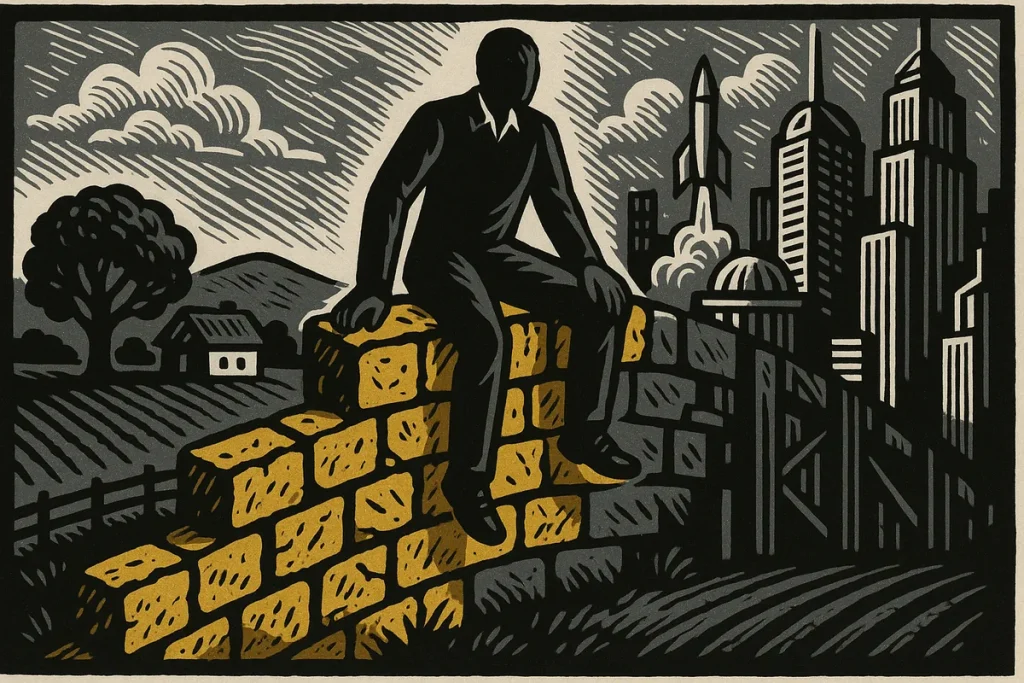
Think of the Old Right men who opposed FDR’s New Deal and Wilson’s crusades abroad. Howard Buffett in Congress. Senator Robert Taft on the Senate floor. Writers like Albert Jay Nock and Garet Garrett in the pages of small magazines. These men believed in a republic, not an empire. They wanted government small enough that a county sheriff could still outrank Washington in a man’s daily life. That tradition is the root.
The ‘paleo’ label signals a recovery of that older right – the one that existed before the Cold War married classical liberalism to a global crusade. British historian Lord Acton, with his famous warning about power and corruption, stands as one of the intellectual anchors. Nineteenth-century liberalism’s insistence on private property and voluntary exchange is the economic ground. The Old Right’s anti-interventionism is the foreign policy.
By the 1990s, two men gave this tradition its sharpest modern form: Murray Rothbard and Lew Rockwell.
Rothbard, Rockwell, and the Mises Institute
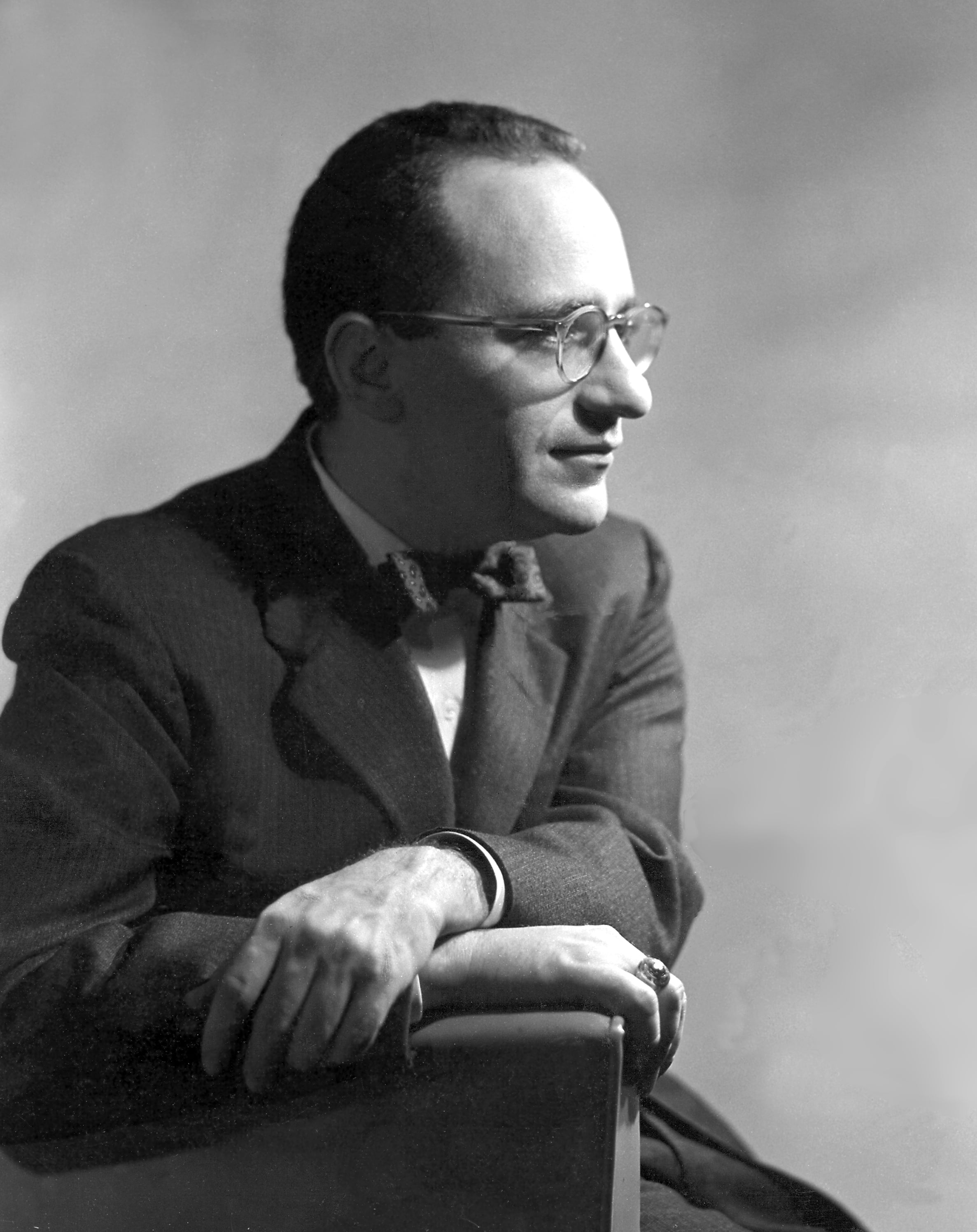
Rothbard was an economist trained in the Austrian school. He spent his career building the intellectual case for anarcho-capitalism – the view that the state itself is illegitimate, that private property and voluntary contract can handle what government pretends only it can do. Rockwell had been Ron Paul’s chief of staff. He understood political organizing and media.
Together they ran the Rothbard-Rockwell Report in the early 1990s. That newsletter became the center of gravity for paleolibertarian argument. It pushed free markets, property rights, and traditional western culture at the same time – a combination the mainstream libertarian press had little interest in.
Rothbard helped found the Cato Institute with the Koch brothers in 1977. That partnership did not last. He was pushed out in 1981 after clashing over strategy and the direction of the Libertarian Party. From there, he and Rockwell founded the Mises Institute in Auburn, Alabama. When Rothbard died in 1995, the Institute kept going. Rockwell’s website, launched in 1999, remains a hub for this kind of thinking today.
The Philosophy Behind It
The core commitment is simple. No man has the right to initiate force against another. That rule applies to private criminals and to governments equally. The state, in the paleo view, is not a flawed tool that can be reformed. It is an inherently aggressive institution. It survives by taxing men who never consented and regulating businesses that never asked for oversight.
Paleolibertarians oppose the welfare state, central banking, and foreign military adventurism. Those three form a kind of unholy trinity in the paleo mind. The welfare state buys dependency. The Federal Reserve inflates away savings. The war machine drains the treasury and comes home with veterans nobody wants to pay for. All three expand the reach of the managerial state into the lives of ordinary people.
But the paleo case goes further than economics. The family, the church, the parish, and the neighborhood are not sentimental add-ons. They are the actual load-bearing institutions of a decent society. They enforce norms without a badge. They care for the poor without a bureaucracy. They transmit culture across generations without a curriculum committee. A statist government does not merely compete with these institutions – it crowds them out.
Private property is central to all of it. A man who owns his house, his tools, and his business has standing. He can tell an inspector to get off his porch. He can fire a customer who disrespects his staff. Property is not greed. It is the material foundation of independence.
The Splits Inside Libertarianism
The libertarian movement grew fast in the 1970s. The Libertarian Party became a real third-party force. The Koch network poured money into think tanks and campaigns. It looked like a movement on the move.
It did not hold together. The Koch-Rothbard split was the most consequential fracture. Rothbard wanted radical positions – abolish the income tax, end the Fed, get out of every entanglement abroad. The Cato-aligned wing wanted respectability. They wanted invitations to Georgetown dinner parties and op-ed slots in mainstream papers. The two goals pulled in opposite directions.
After the Cold War ended, another fault line opened. The fusionist alliance between libertarians and conservatives – built around resisting Soviet totalitarianism – had less reason to exist. Neoconservatives pushed for new wars and new interventions. Many libertarians looked at the post-Cold War Right and saw a machine for expanding state power abroad while doing nothing to shrink it at home. That perception drove the final split.
Left-libertarians went one direction – toward cultural progressivism, open borders, and alliance with the academic left. Paleos went the other – toward immigration restriction, cultural traditionalism, and a willingness to talk to paleoconservatives despite disagreements on trade and economics.
Paleos and Paleocons – Allies, Not Twins
The paleo alliance in the 1990s brought paleolibertarians and minarchist-leaning paleoconservatives into rough alignment. Pat Buchanan’s America First campaigns gave that alliance a political face. Chronicles magazine gave it a cultural one.
The alliance was always uneasy. Paleoconservatives are not allergic to the state the way paleolibertarians are. A paleocon will use tariffs to protect American manufacturing. He will use zoning laws to preserve neighborhood character. He will talk about subsidies for family formation without flinching. The paleolibertarian holds his nose at all of that.
What the two camps share is more important than what divides them: hostility to the neoconservative foreign policy consensus, skepticism of mass immigration, preference for decentralized political authority, and a belief that culture matters more than policy. A man who wants sovereignty – for his country, his community, and himself – finds allies in both camps.
The Critiques and the Tensions
Mainstream libertarians at Cato and Reason have little patience for the paleo tendency. They see the traditionalist cultural commitments as inconsistent with a liberty philosophy. If a man can do what he wants with his own life, who are the paleos to frown at what he does on Saturday night?
The paleo answer is that nobody is proposing to put the frowner in uniform. The paleo case is about civil society, not law. The church can disapprove without arresting anyone. The community can ostracize without a warrant. The family can cut off the inheritance without a court order. These are social mechanisms, not state mechanisms. The distinction matters.
The deeper critique comes from within the paleo tradition itself. Some argue that cultural traditionalism and radical anti-statism cannot sustain a working political coalition. The voters who care most about immigration and cultural preservation often also want Medicare and the defense budget. The voters who want to abolish the Fed are a small tribe. Rothbard knew this tension. He never fully resolved it.
For a harder look at what happens when the managerial state captures every institution that used to do the work of civil society, read Sam Francis’s Beautiful Losers. That book explains why Conservative Inc. lost the culture war it claimed to be fighting.
What Liberty Actually Frees You To Do
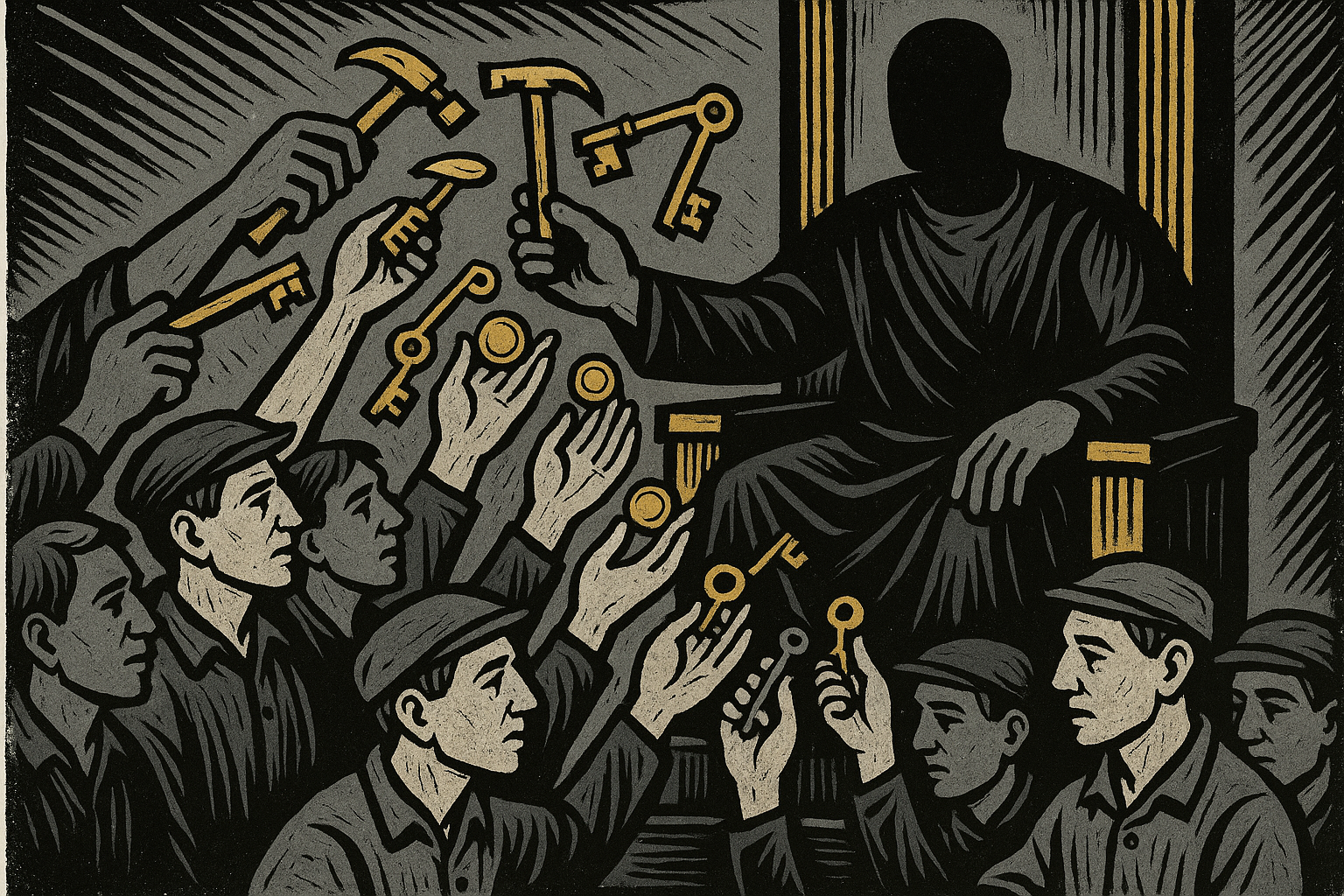
A man with a paid-off house and a small business can hire the kid down the street whose father just died. He can keep an apprentice on through a slow quarter. He can tell his brother-in-law to move into the spare room until he gets back on his feet. That is not ideology. That is capacity.
Strip that away – with a tax bill that never shrinks, a regulatory burden that eats Tuesday afternoons, a mortgage that stays underwater because the Fed printed money for someone else first – and the same man can do none of it. His generosity becomes rhetorical. He can share a fundraising link.
This is what the paleo tradition means by freedom. Not libertinism. Not Saturday night with no rules. Russell Kirk called the permanent things the substance of a decent life – family, faith, community, the obligations you were born into and chose to honor. Liberty exists to protect the ground those things grow in.
The state does not merely tax you. It replaces you. The parish that used to feed the old widower now competes with a federal nutrition program that requires a caseworker, a form, and a zip code. The neighborhood that used to know whose porch light had been dark for three days now has a wellness hotline. The uncle who used to teach his nephew a trade now faces a licensing board. Every one of those replacements costs you something – not just money, but the weight and dignity of actual responsibility.
Etienne de la Boetie saw this in the sixteenth century. Rulers do not need chains when they have trained men to depend on them. The paleo affirmative case is not anarchy and it is not sentimentality. It is the argument that the people you can name – the sister with three kids, the neighbor with the leaking roof, the apprentice whose mother died in March – deserve the actual you, with actual resources, showing up. Not a bureaucracy doing it in your name while billing you for the privilege.
Where Paleolibertarianism Stands Today
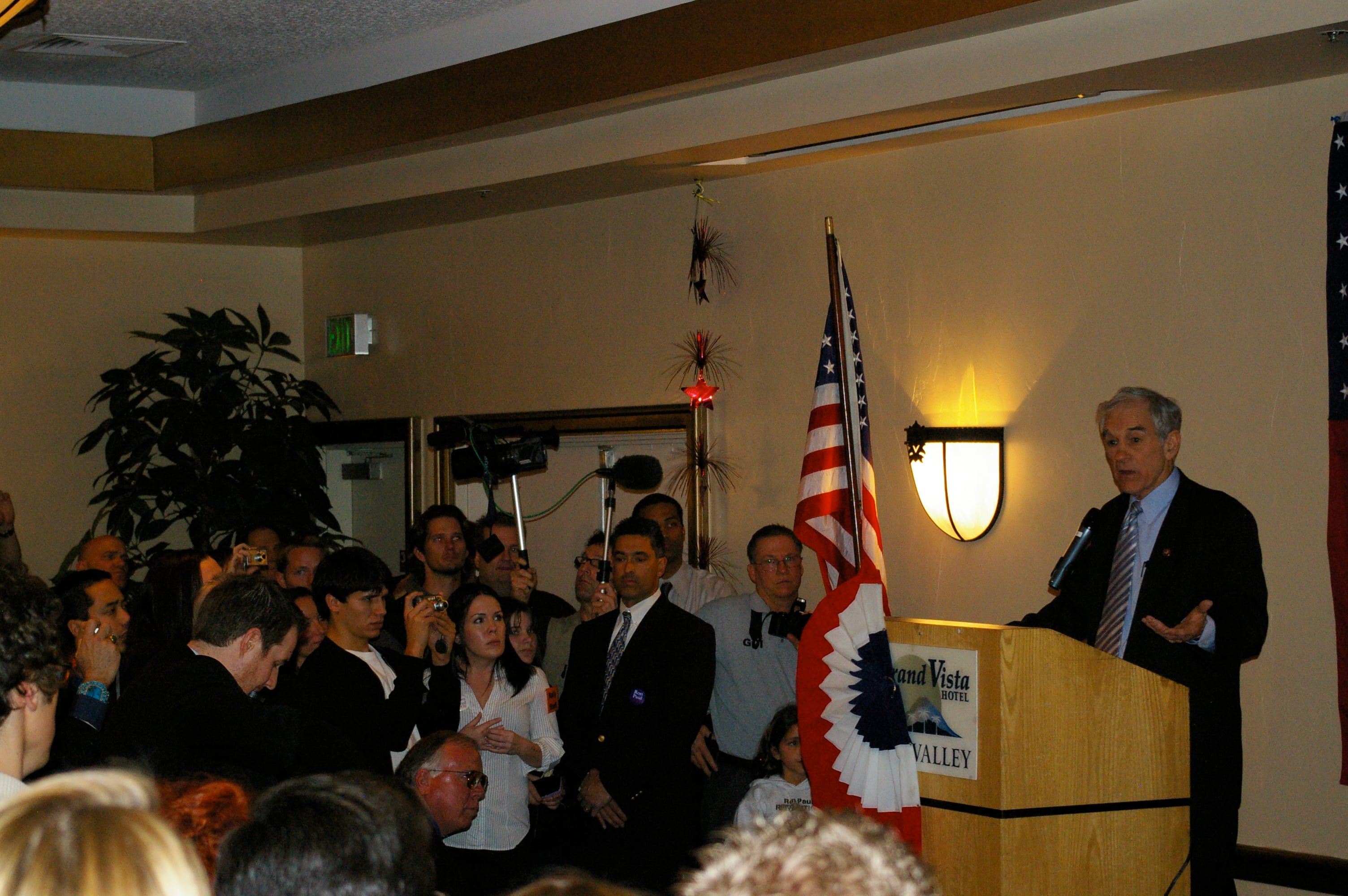
Ron Paul turned paleo ideas into a mass movement, briefly. His 2008 and 2012 presidential campaigns drew young people into a tent that combined End the Fed, bring the troops home, and respect the Bill of Rights. That energy did not disappear. It scattered.
Some of it went into agorism – building parallel economic structures outside the state’s reach. Some went into cryptocurrency and the broader project of making government financial controls obsolete. Tom Woods carries the intellectual tradition forward at the Mises Institute. Rockwell’s website still publishes daily.
The paleo critique of the managerial state has not aged poorly. Central banking has inflated asset prices beyond the reach of working families. Foreign policy adventurism has spent trillions and produced chaos. The welfare state has not ended poverty – it has institutionalized dependence. Every prediction the paleos made about what unchecked state power would produce has a news story to illustrate it.
The movement has never held elected office and probably never will in any serious way. But ideas do not require a majority to be correct. The case for property, voluntary community, and a state small enough to drown in a bathtub stands on its own merits – and the evidence keeps piling up on its side.
« Back to Glossary Index