
 BY
BY Minarchist
Table of Contents
A minarchist is someone who holds that government should be stripped to its bare minimum - courts, police, military, and little else. The term comes from the Latin “minus” and Greek “archos,” meaning minimal rule.
A minarchist is someone who holds that government ought to be reduced to its irreducible minimum: courts to adjudicate disputes, police to maintain order, and a military to defend the territory. Beyond that, the state should stay out.
The appeal is not primarily theoretical. It is experiential. County-scale civic life, the local jury, the volunteer fire department, the sheriff you can name: these are recognizable, accountable, and human in scale. The managerial state that grew up around and above them is none of those things. Minarchism says you can have the former without the latter. Whether that boundary holds is the question minarchists spend most of their time arguing about, usually with anarcho-capitalists who think any state will metastasize, and with conservatives who think some institutions need defending.
The Core Idea
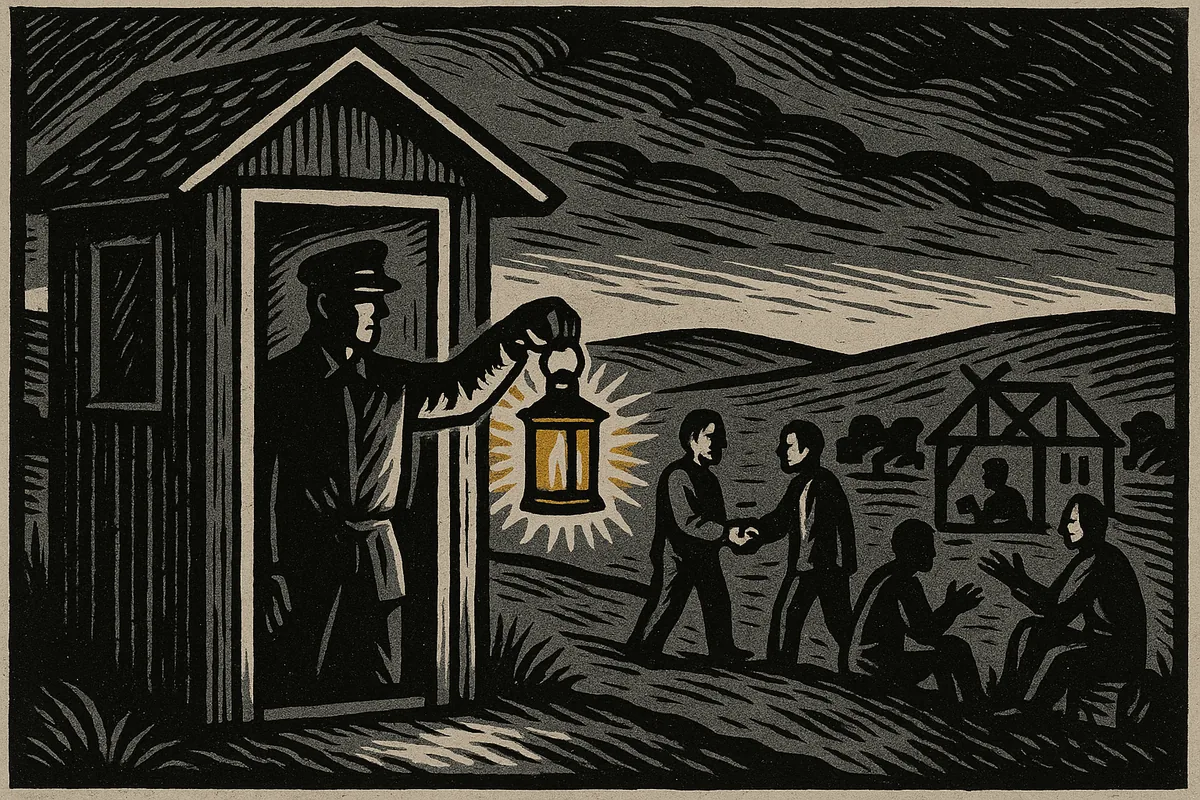
Picture your county sheriff, a courthouse, and a volunteer fire department. That is roughly the government a minarchist wants. No more.
Minarchism sits inside the broader libertarian tradition. It holds that the state has one legitimate job: protect individuals from force and fraud. Courts settle disputes. Police stop criminals. The military guards the border. Everything else - the licensing boards, the farm subsidies, the zoning commissions - goes.
This is what political philosophers call the “night-watchman state.” The watchman walks his rounds, keeps the peace, and stays out of your business. He does not tell you what to plant, what to charge, or who to hire.
Where the Term Comes From
The phrase “night-watchman state” was coined as an insult. Ferdinand Lassalle, a German socialist, used it in 1862 to mock liberal governments he thought were too hands-off. He meant it as a slur. Supporters of limited government took it as a badge.
Ludwig von Mises fired back. He said a government that sticks to its watchman role is no more absurd than one that regulates the preparation of sauerkraut. Mises’s point was blunt: once you accept that the state may manage commerce, there is no principled place to stop. Read Mises’ Human Action for the long version.
The word “minarchist” itself was coined by Samuel Edward Konkin III in the 1970s. Konkin was actually an agorist who opposed minarchism, but he gave the idea its name. That is not unusual in political philosophy. Your critics often write your dictionary.
Robert Nozick and the Philosophical Case
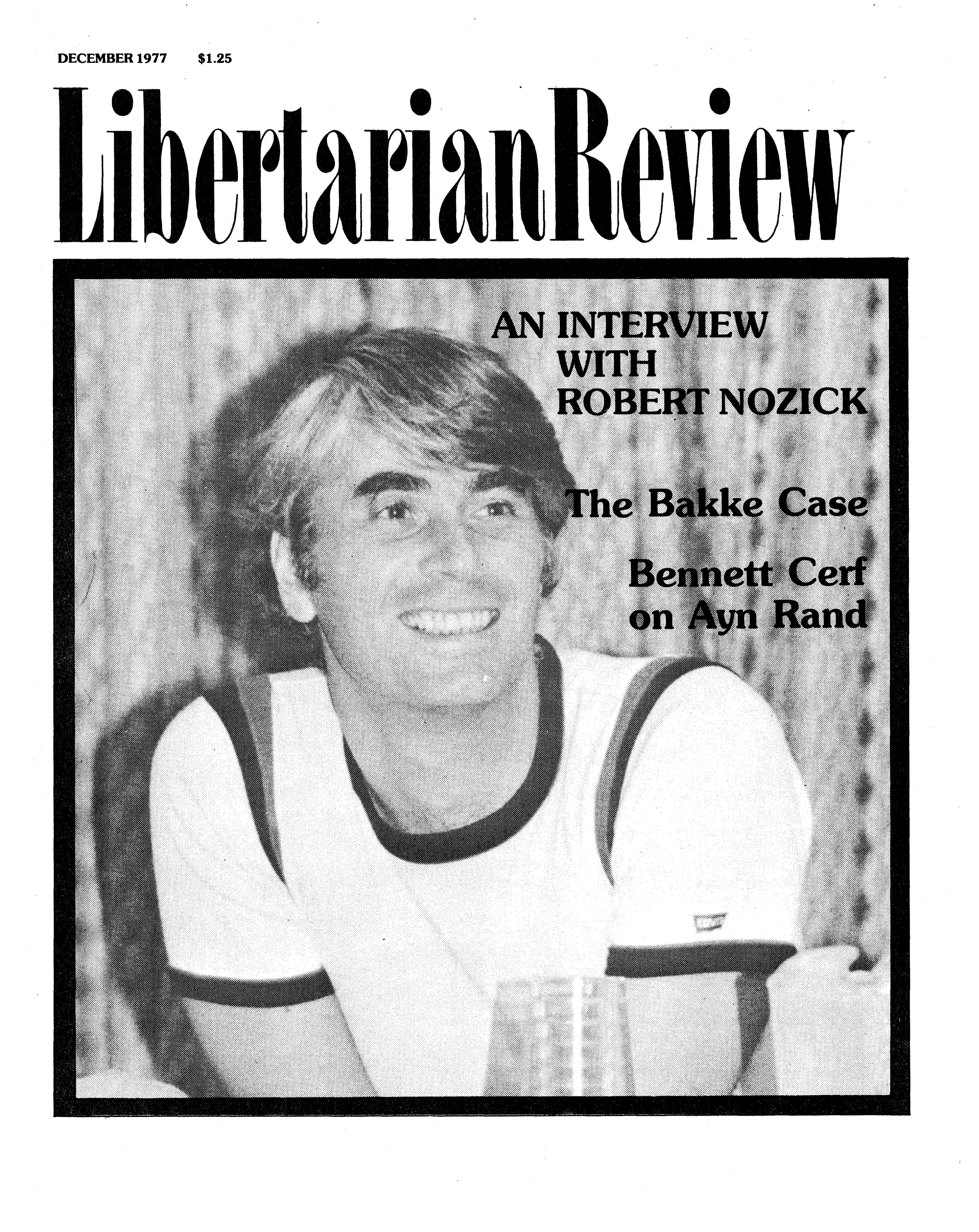
The most rigorous defense of minarchism came from Robert Nozick in Anarchy, State, and Utopia, published in 1974. Nozick was a Harvard philosopher arguing against both the welfare state and anarchism at the same time. That is a narrow path.
His argument ran roughly like this. A minimal state can arise from a stateless society without violating anyone’s rights - through a dominant protection agency that eventually covers everyone in a territory. That makes it legitimate. But anything beyond that minimal function requires taking from some to give to others, which violates individual rights.
Nozick called his view “entitlement theory.” You own what you earned or received in a fair trade. The state has no right to redistribute it. For the full argument, Anarchy, State, and Utopia is the primary text. FEE.org carries accessible summaries.
Ayn Rand and Objectivism
Ayn Rand is often grouped with minarchists, though she rejected the label libertarian. Her philosophy, Objectivism, reached similar conclusions by a different road.
Rand held that government exists for one purpose: to ban the use of physical force among citizens. Police, courts, and military - those are legitimate. Everything else is coercion dressed up as public service. She was also blunt about taxation, calling it wrong in principle while arguing that abolishing it had to happen gradually so as not to wreck the economy mid-transition.
The key difference Rand insisted on: Objectivism is a complete philosophy - ethics, metaphysics, epistemology, politics - not just a policy position. She thought libertarians borrowed her conclusions without the philosophical foundation underneath. Whether you agree with her or not, the distinction is real. Visit our Ayn Rand quotes page for her own words on the subject.
Minarchism vs. Anarcho-Capitalism
The sharpest debate in libertarian circles is not between libertarians and the left. It is between minarchists and anarcho-capitalists.
The anarcho-capitalist says the minarchist stops too soon. If voluntary exchange and private contract can organize markets, why can they not organize courts and defense? Murray Rothbard argued in For a New Liberty that a state monopoly on law enforcement is itself a rights violation - you are forced to fund it whether you want it or not.
The minarchist responds that privatizing courts and defense creates a different problem. A rich man can buy better justice than a poor man. At least a public court answers to the same law for everyone. Nozick made this argument. So did Rand. The debate has not been settled. It probably will not be.
The Practical Criticism
Critics from outside the libertarian tradition raise a simpler objection. They say the night-watchman state is not stable. Once you have courts, police, and a military, you have a state with a monopoly on force. States with monopolies on force tend to grow. History is not kind to limited governments that stayed limited.
Vin Armani made a version of this point in Self Ownership. When the state is both the final judge of property disputes and the monopoly holder of the force used to enforce those verdicts, the individual has no real recourse in a conflict with the state itself. Armani called it an inescapable logical progression - even the most minimal government carries the seed of what comes later.
The minarchist answer is constitutional design and vigilant citizenship. The Founders tried exactly that. Whether their design held is a question every American over forty can answer from personal observation.
What You Do With the Space
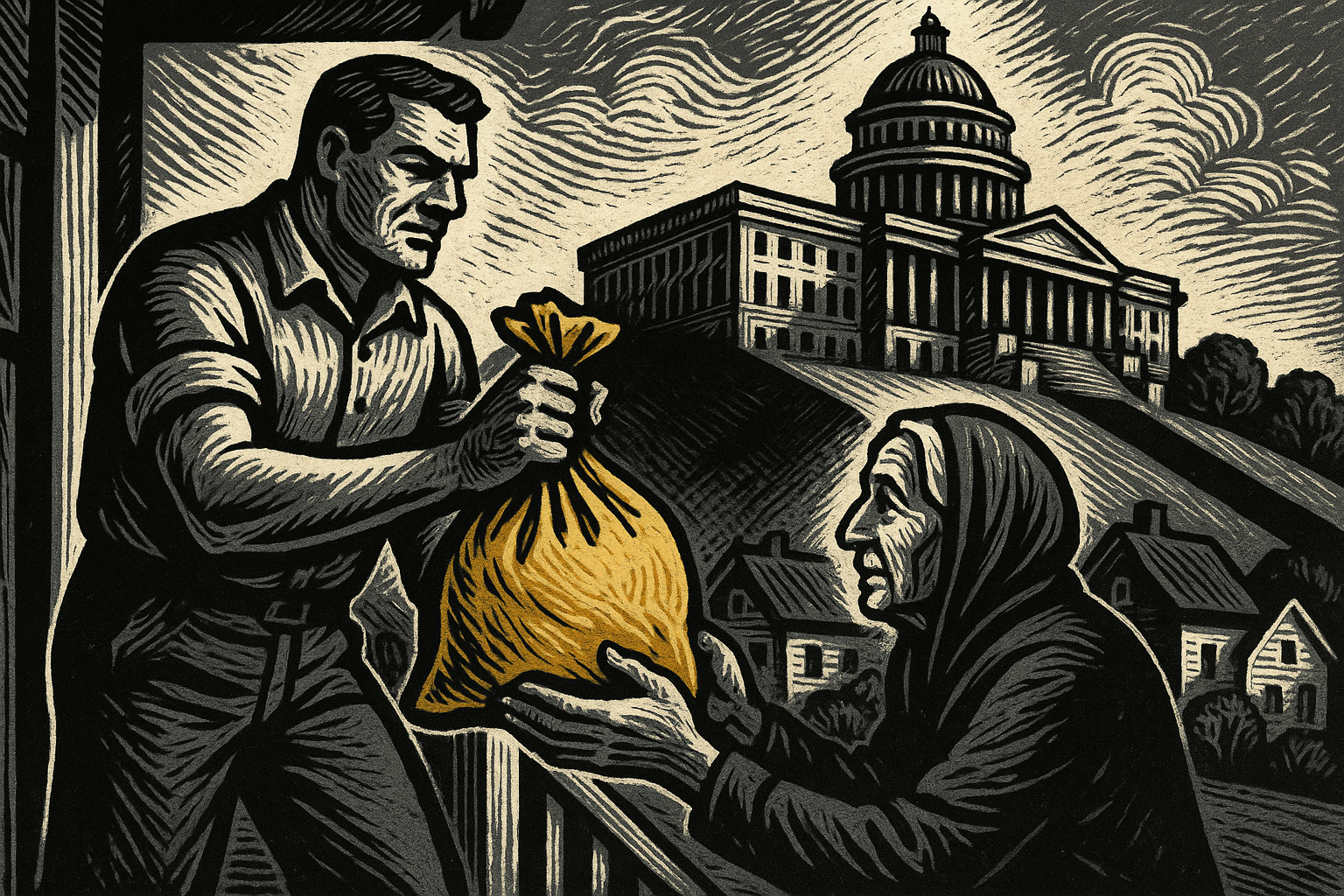
A man who owns his house free and clear can take in his sister’s kids when her marriage falls apart. A shop owner who keeps his payroll can hire the son of the man who died in the accident last spring. A farmer with savings can carry a neighbor through a bad harvest. These are not abstractions. This is what liberty is for.
The night-watchman state does not just leave you alone. It leaves you capable. Every dollar siphoned off in taxes is a dollar that does not go to the nephew learning your trade. Every hour spent on compliance paperwork is an hour not spent at the school board meeting or the parish hall. The state does not just take money. It takes the time and attention that genuine charity requires.
Russell Kirk called them the permanent things - family, faith, community, the obligations we carry to people we can name and touch. Those obligations do not disappear when the state expands. They get crowded out. The program replaces the neighbor. The agency replaces the parish. The form replaces the handshake. What fills the space when the state grows is not freedom. It is managed helplessness.
Liberty is not libertinism. The minarchist is not arguing for a world without obligation. He is arguing for a world where obligation flows to the right places - to the widow on your street, the apprentice who showed up every morning, the old man whose porch light stopped coming on. A free man can actually do something for those people. A man taxed to the edge of his margin can only forward a link.
Étienne de la Boétie saw this four centuries ago. Servitude is not just imposed from above. It is accepted, gradually, by men who have traded the concrete responsibility of a free life for the thin comfort of being taken care of. The minarchist proposition is simpler than any political theory. Keep what you earn. Tend to what you can see. The people who need you are not in a database. They are next door.
Where Minarchism Fits on the Map
Minarchism overlaps with classical liberalism and shares ground with the paleolibertarian tradition. It is distinct from left-libertarianism, which tends to favor collective ownership of resources even while opposing the state.
The negative rights versus positive rights divide runs right through this debate. Minarchists hold firmly to negative rights - the right to be left alone, to keep what you earn, to make your own deals. Once you accept positive rights - the right to housing, healthcare, a guaranteed income - you have handed the state a mandate with no natural ceiling.
That is the minarchist’s core warning. Not that government is always bad. That government without a hard boundary always grows. The night-watchman who starts checking your papers is no longer a watchman.
« Back to Glossary Index