
 BY
BY Libertarian Socialism
Table of Contents
Libertarian socialism refers to a political tradition that opposes both the centralized state and concentrated corporate power, favoring voluntary associations, worker self-organization, and decentralized governance in place of either state capitalism or state socialism. The term is older than modern libertarianism and carries roots in 19th-century anarchist movements in Europe.
Libertarian socialism is a political tradition whose first impulse is to oppose all concentrated power, whether the power sits in a government ministry or a corporate boardroom. The term predates the American libertarian movement by decades: in 19th-century Europe, to call yourself a libertarian was to identify with anarchist and mutualist currents that wanted neither the capitalist employer nor the state official giving orders.
The American tradition that runs through Rothbard and Hoppe inherits only one half of that original critique. It took the anti-state argument and built a rigorous case for private property as the foundation of liberty, departing sharply from Proudhon’s premise that property itself was the problem.
What persists from the older tradition is the suspicion of all concentrated power, including corporate. Where the two traditions disagree is on whether property is the antidote or part of the problem. That disagreement runs through every later split in the libertarian family.
Where the Term Comes From
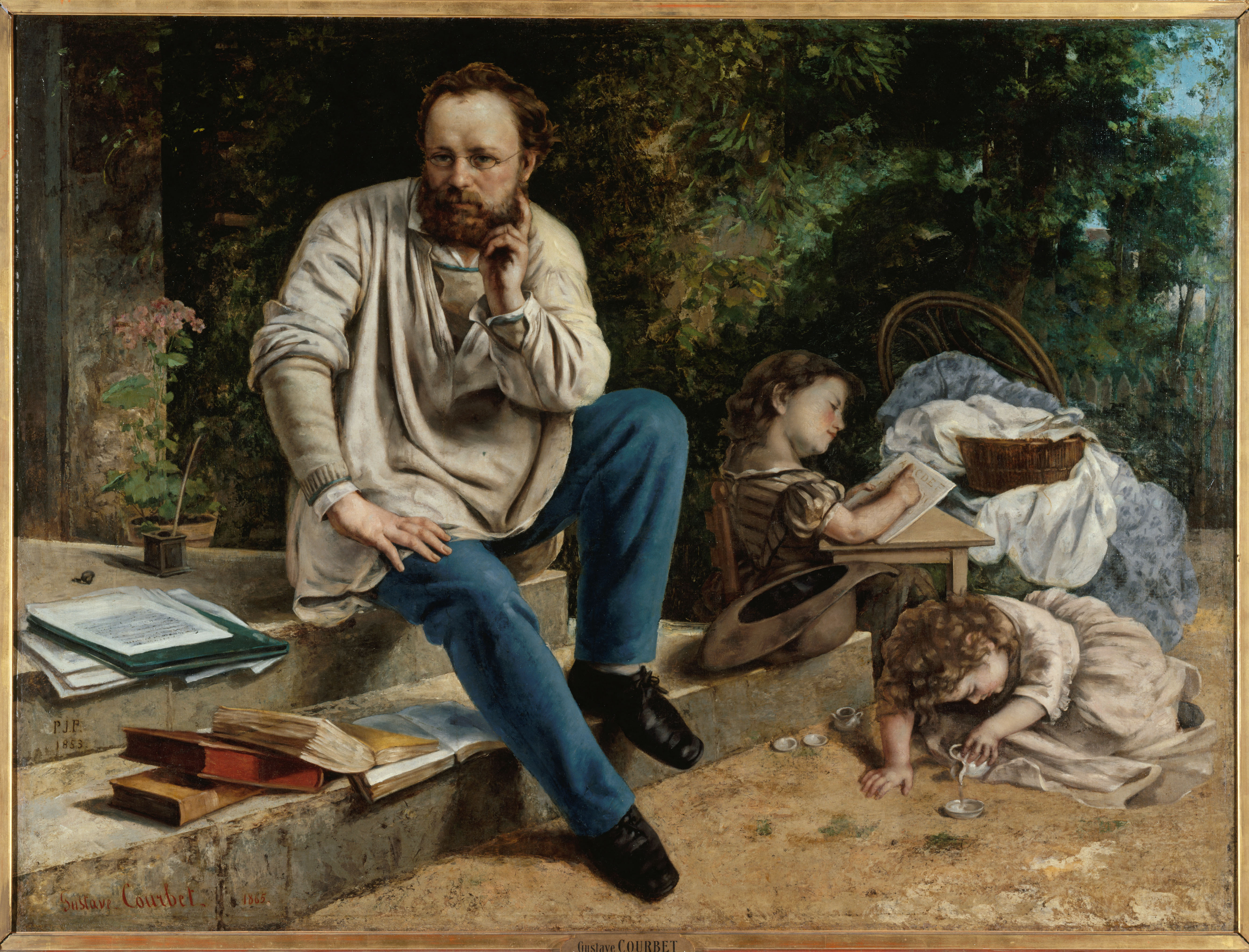
In 1850, a man calling himself a libertarian was not talking about tax cuts. He was more likely a French anarchist who had read Pierre-Joseph Proudhon and thought both the factory owner and the government bureaucrat were the enemy.
The word “libertarian” belonged to the left for most of the 19th century. Anarcho-communists, anarcho-syndicalists, mutualists - these movements claimed the label. They opposed the state root and branch. They also opposed the rising industrial capitalist class, which they saw as using state power to lock in market position.
The modern use of “libertarian” to mean free-market, private-property individualism came later - mostly a 20th-century American development drawing from classical liberalism. That shift is why the phrase “libertarian socialist” sounds like a contradiction today. It did not always.
Proudhon, Peter Kropotkin, and Mikhail Bakunin are the anchoring names. They critiqued capitalism from an anarchist angle. They did not want a workers’ state. They wanted no state at all. Their quarrel with Marx was precisely that point - Marx wanted to seize the state, then wither it away. They said the state never withers. They were right about that part.
What a Libertarian Socialist Actually Believes
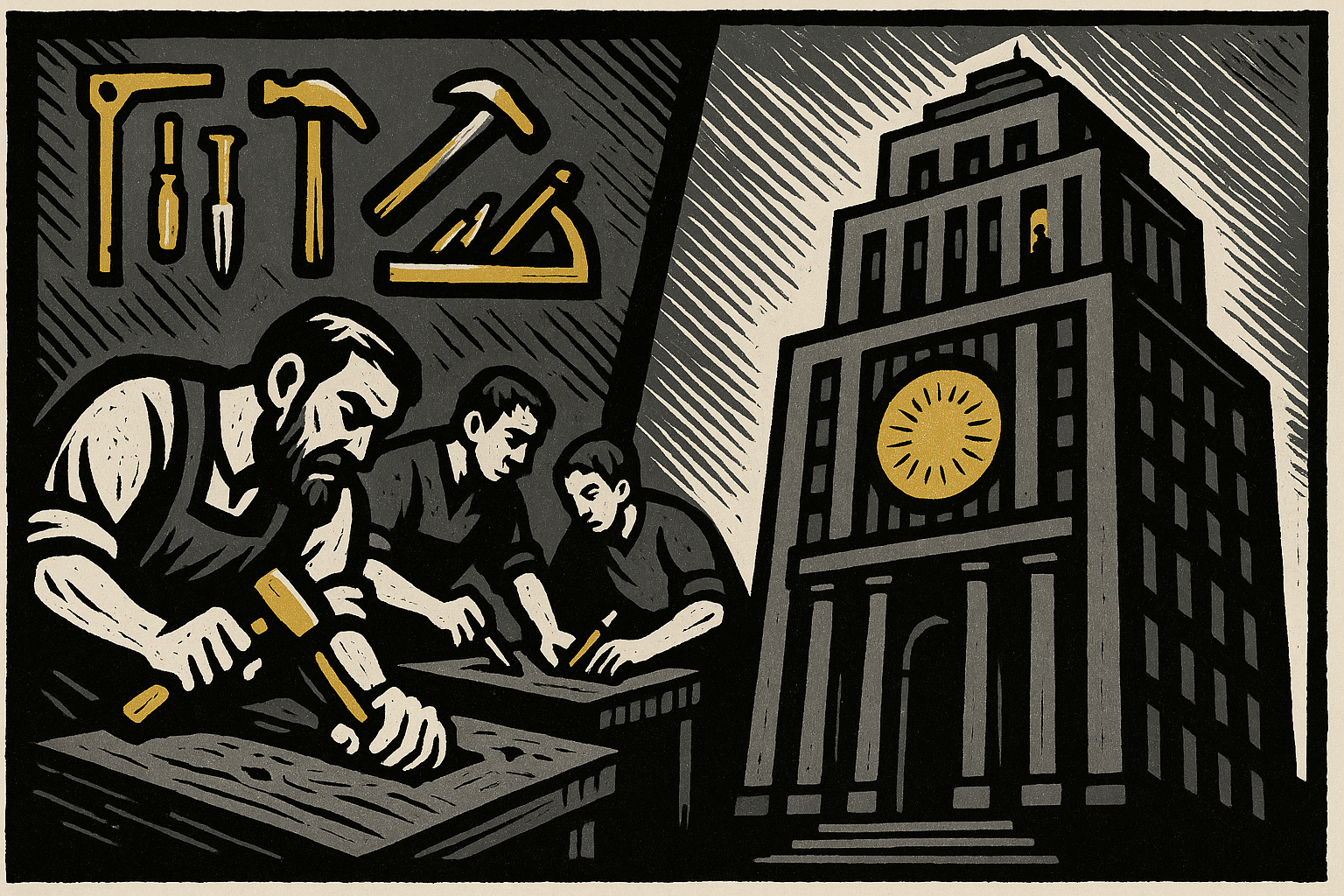
A libertarian socialist does not want a central planner. He does not want nationalized industries or a party vanguard running the economy from a ministry building in the capital. On those points he parts company with the mainstream left sharply.
What he does want is collective ownership arrived at voluntarily. A group of workers pooling their tools and running their own shop - no landlord, no absentee shareholder drawing rent - is the model. Whether that works in practice is a separate question. The principle is voluntary association, not state decree.
He also shares with the right a deep suspicion of concentrated power. The libertarian socialist watched 20th-century communist regimes and saw something the Western left kept excusing: wealth inequality survived just fine under those regimes. The party bosses lived like princes. The concentration moved from private boardrooms to state offices. The worker was still at the bottom.
That observation is not wrong. A statist solution to corporate power tends to produce a new ruling class rather than no ruling class. The libertarian socialist at least noticed the pattern.
Civil liberties matter a great deal to this tradition. It opposed totalitarian socialist regimes when much of the left was making excuses for Stalin. Dissident socialist parties were among the first organizations that Communist governments banned. The libertarian socialists saw that coming.
Is It an Oxymoron
The honest answer is: it depends on your definitions, and both sides load the dice.
If “libertarian” means absolute private property rights and free markets as the primary mechanism of social order, then yes - socialism is incompatible. A man who thinks property rights are foundational and inviolable cannot also believe that workers may simply collectivize a factory because they feel like it. Those two commitments collide.
But if “libertarian” means opposition to coercive authority - the state, the monopoly, the politically connected corporation extracting rents from ordinary people - then the tension eases. Both traditions can agree that government-enforced privilege for the wealthy is the enemy. They disagree on what comes after.
The paleolibertarian tradition tends to see private property as the real guarantor of individual freedom. Disperse ownership widely enough and you get a free society. The libertarian socialist is more worried that private property itself becomes a mechanism of domination when it concentrates in too few hands.
Neither is entirely wrong. Both are pointing at a real problem. They just disagree about which threat is primary.
Where It Overlaps With Tradition and Where It Breaks
The conservative and the libertarian socialist share more than either usually admits. Both distrust centralized power. Both want decisions made closer to home - at the parish, the town, the workplace, not the federal agency. Both are skeptical of the large corporation when it has captured the regulatory apparatus.
Russell Kirk wrote about the importance of local attachments and organic community. The libertarian socialist’s preference for worker cooperatives and voluntary associations at least rhymes with that instinct, even if the theoretical frameworks diverge badly.
The break comes on private property and the market. A working-man conservative sees his paid-off house, his tools, his small business as his protection against both the state and the employer. Property is freedom made concrete. The libertarian socialist is more suspicious of that claim when property concentrates at the top.
The deeper break is on human nature. The libertarian socialist tends to believe that remove the right institutional pressures and people will organize themselves cooperatively and fairly. The conservative is more doubtful. He has read enough history to think that fallen men in any institutional arrangement will find ways to dominate their neighbors. That skepticism is not nothing.
For the overlap between anti-state instincts on the left and the left-libertarian tradition more broadly, that entry carries the longer version.
What Liberty Actually Frees You To Do
A man with a paid-off house and a small business that turns a steady profit can hire the kid down the street whose father just died. He can keep an apprentice on through a slow quarter. He can write a check when the parish roof leaks. Strip that away - tax it, regulate it, inflate it, credential-gate it - and his generosity becomes a bumper sticker.
This is the case that gets lost. Liberty is not a permission slip to do whatever you want. It is the material capacity to be responsible for the people you can name. Your sister with three kids. Your neighbor whose furnace quit in January. The old widower two doors down whose porch light stopped coming on. The state does not make those people disappear. It just moves your obligation to them into a tax category and ships it to an agency three states away.
De la Boetie saw it clearly in the sixteenth century. Voluntary servitude works by redirecting loyalty upward - toward the ruler, the ministry, the program - and away from the man standing next to you. The community that used to handle a funeral, float a struggling family through a hard year, and teach a trade to a nephew does not vanish overnight. It just atrophies when the state takes the money and the habit both.
Russell Kirk called them the permanent things. Family. Parish. Neighborhood. The small obligations that make a life worth accounting for. Those things do not run on ideology. They run on time, attention, and resources that have not already been consumed by compliance, withholding forms, and mandatory credentialing for work a man could learn in six months on the job.
The libertarian socialist and the working-man conservative can at least agree on this much: a society where ordinary people have enough left over to take care of their own is worth more than one where the state promises to take care of everyone and delivers to no one in particular.
What to Do With the Term Today
Libertarian socialism is not a governing program. No country runs on it. The historical experiments - the Spanish anarchists in 1936, various commune movements - were either crushed by the state or collapsed under their own contradictions. That is worth noting.
But the tradition carries some ideas worth engaging honestly. The corporate capture of regulatory agencies is real. The neo-feudal gap between the asset-owning class and the wage-earning class is real. The libertarian socialist at least names those problems without immediately proposing a new ministry to fix them.
The anarcho-capitalist and the libertarian socialist are both responding to the same visible rot. They prescribe differently. The debate between them is more honest than most of what passes for political discussion today.
For the deeper argument about self-ownership as the foundation of any property theory - left or right - Vin Armani’s Self Ownership is the tightest recent treatment. For the 19th-century roots, Proudhon’s What is Property? is the primary source. For the classical liberal counter-argument, start with classical liberalism and work outward.
« Back to Glossary Index