
 BY
BY Table of Contents
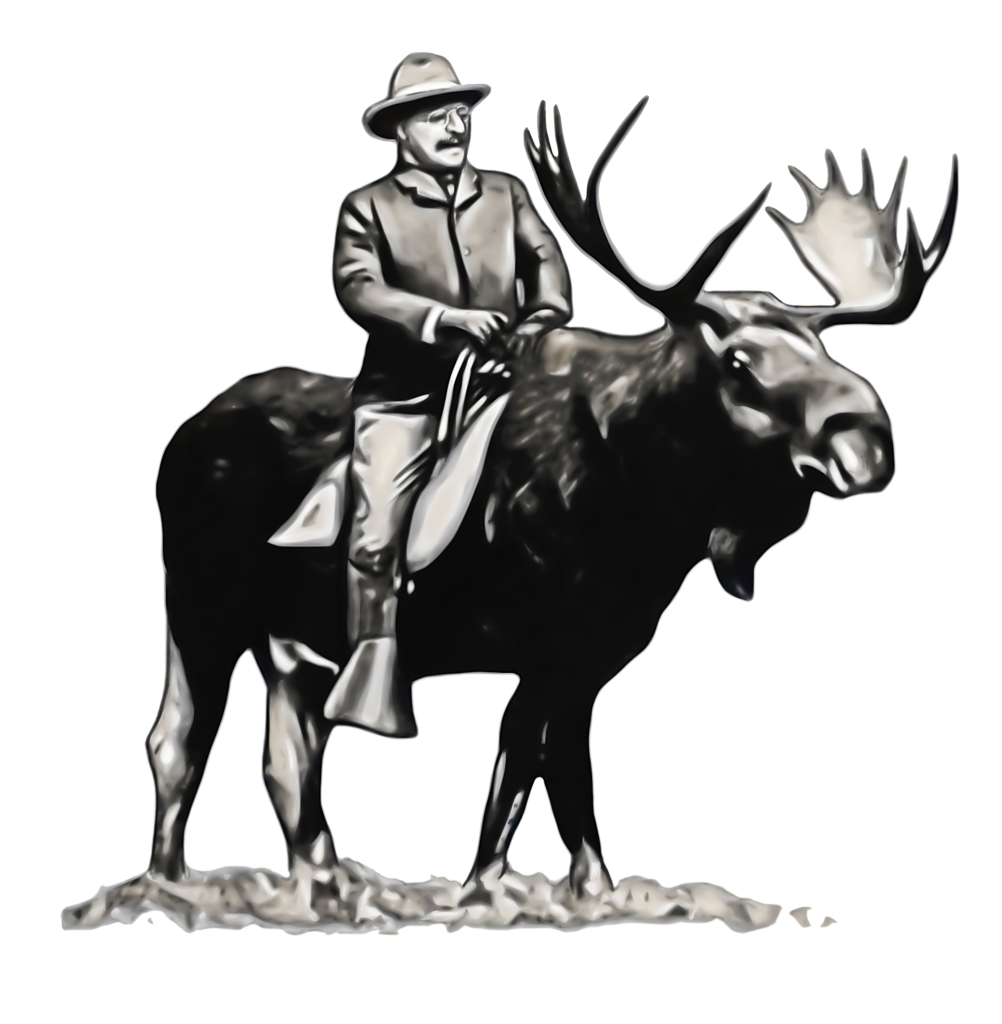
The strenuous life is not a fitness slogan. It is a civilizational argument – the claim that a man, and by extension a people, becomes what he is willing to endure, and that comfort pursued as an end produces exactly the kind of softness that makes decline inevitable. Theodore Roosevelt (1858-1919) understood this not as an abstraction but as a personal fact he had to prove to himself before he could preach it to anyone else. The asthmatic child who remade his body through sheer will, the young widower who went to the Dakota badlands and came back someone harder, the New York patrician who charged up San Juan Hill when he had every credential to stay behind a desk – by the time he became the 26th President, the man and the doctrine were inseparable. What the managerial state has spent a century trying to convince you is impractical idealism, Roosevelt lived as literal operating procedure.
His record does not reduce neatly to a party platform, and that is precisely why it still irritates people across the spectrum. He broke industrial trusts with federal power and would do it again without apology. He placed 230 million acres beyond the reach of extraction and called it a patriotic duty. He delivered “Citizenship in a Republic” at the Sorbonne in 1910 – the speech that contains the Man in the Arena passage – to an audience of the credentialed and comfortable, and told them, in the most courteous possible terms, that the critic in the stands is worth nothing. Taken together, his speeches, his Autobiography, and his conservation and hunting writing constitute something the present political vocabulary has real trouble naming: a nationalism grounded in character rather than bureaucracy, a conservatism that actually meant conserving something, a cult of will that never confused toughness with cruelty.
The quotes collected here move from the personal ethic outward – from the discipline of the individual will, through the stewardship of the American land, into the obligations of leadership and citizenship, and finally into the courage Roosevelt treated not as a virtue among many but as the precondition for all the others. Read them in order if you want the architecture. Or find the one that lands hardest and sit with it. Either way, Roosevelt has a habit of making the reader feel that the excuses he was running are somewhat less defensible than they were a few minutes ago.
The Strenuous Life and the Man in the Arena
“Unless a man is master of his soul, all other kinds of mastery amount to little.”
- Theodore Roosevelt
“The unforgivable crime is soft hitting. Do not hit at all if it can be avoided; but never hit softly.”
- Theodore Roosevelt
“I cannot consent to take the position that the door of hope – the door of opportunity – is to be shut upon any man, no matter how worthy, purely upon the grounds of race or color. Such an attitude would, according to my convictions, be fundamentally wrong.”
- Theodore Roosevelt
“Nothing in this world is worth having or worth doing unless it means effort, pain, difficulty.”
- Theodore Roosevelt
“Be practical as well as generous in your ideals. Keep your eyes on the stars, but remember to keep your feet on the ground.”
- Theodore Roosevelt
“Do what you can, with what you have, where you are.”
- Theodore Roosevelt
“I don’t pity any man who does hard work worth doing. I admire him. I pity the creature who does not work, at whichever end of the social scale he may regard himself as being.”
- Theodore Roosevelt
“Life is a great adventure … accept it in such a spirit.”
- Theodore Roosevelt
“To sit home, read one’s favorite paper, and scoff at the misdeeds of the men who do things is easy, but it is markedly ineffective. It is what evil men count upon the good men’s doing.”
- Theodore Roosevelt
“A soft, easy life is not worth living, if it impairs the fibre of brain and heart and muscle. We must dare to be great; and we must realize that greatness is the fruit of toil and sacrifice and high courage…
For us is the life of action, of strenuous performance of duty; let us live in the harness, striving mightily; let us rather run the risk of wearing out than rusting out.”
- Theodore Roosevelt
Conservation, Nature, and the American Wilderness
“This country will not be a permanently good place for any of us to live in unless we make it a reasonably good place for all of us to live in.”
- Theodore Roosevelt
“Optimism is a good characteristic, but if carried to an excess, it becomes foolishness. We are prone to speak of the resources of this country as inexhaustible; this is not so.”
- Theodore Roosevelt
“The time has come to inquire seriously what will happen when our forests are gone, when the coal, the iron, the oil, and the gas are exhausted.
We must ask what will happen when the soils shall have been still further impoverished and washed into the streams, polluting the rivers, denuding the fields, and obstructing navigation.”
- Theodore Roosevelt
“There is a delight in the hardy life of the open. There are no words that can tell the hidden spirit of the wilderness that can reveal its mystery, its melancholy and its charm.
The nation behaves well if it treats the natural resources as assets which it must turn over to the next generation increased and not impaired in value. Conservation means development as much as it does protection.”
- Theodore Roosevelt
“We have fallen heirs to the most glorious heritage a people ever received, and each one must do his part if we wish to show that the nation is worthy of its good fortune.”
- Theodore Roosevelt
“Surely our people do not understand even yet the rich heritage that is theirs. There can be nothing in the world more beautiful than the Yosemite, the groves of giant sequoias and redwoods, the Canyon of the Colorado, the Canyon of the Yellowstone, the Three Tetons;
and our people should see to it that they are preserved for their children and their children’s children forever, with their majesty all unmarred.”
- Theodore Roosevelt
“The farther one gets into the wilderness, the greater is the attraction of its lonely freedom.”
- Theodore Roosevelt
“The lack of power to take joy in outdoor nature is as real a misfortune as the lack of power to take joy in books.”
- Theodore Roosevelt
“A grove of giant redwood or sequoias should be kept just as we keep a great and beautiful cathedral.”
- Theodore Roosevelt
“No, I’m not a good shot, but I shoot often.”
- Theodore Roosevelt
Leadership and Citizenship
“Patriotism means to stand by the country. It does not mean to stand by the president or any other public official, save exactly to the degree in which he himself stands by the country.
It is patriotic to support him insofar as he efficiently serves the country. It is unpatriotic not to oppose him to the exact extent that by inefficiency or otherwise he fails in his duty to stand by the country. In either event, it is unpatriotic not to tell the truth, whether about the president or anyone else.”
- Theodore Roosevelt
“People ask the difference between a leader and a boss … The leader works in the open, and the boss in covert. The leader leads, and the boss drives.”
- Theodore Roosevelt
“No people is wholly civilized where a distinction is drawn between stealing an office and stealing a purse.”
- Theodore Roosevelt
“To announce that there must be no criticism of the president … is morally treasonable to the American public.”
- Theodore Roosevelt
“No man is above the law and no man is below it; nor do we ask any man’s permission when we require him to obey it. Obedience to the law is demanded as a right; not asked as a favor.”
- Theodore Roosevelt
“A typical vice of American politics is the avoidance of saying anything real on real issues.”
- Theodore Roosevelt
Courage and the Strenuous Will
“No man is worth his salt who is not ready at all times to risk his well-being, to risk his body, to risk his life, in a great cause.”
- Theodore Roosevelt
“We must dare to be great; and we must realize that greatness is the fruit of toil and sacrifice and high courage.”
- Theodore Roosevelt
“There were all kinds of things I was afraid of at first, ranging from grizzly bears to ‘mean’ horses and gun-fighters; but by acting as if I was not afraid I gradually ceased to be afraid.”
- Theodore Roosevelt
“Far better it is to dare mighty things, to win glorious triumphs, even though checkered by failure, than to take rank with those poor spirits who neither enjoy nor suffer much, because they live in the gray twilight that knows neither victory nor defeat.”
- Theodore Roosevelt
Wit and Humor
“A man who has never gone to school may steal from a freight car; but if he has a university education, he may steal the whole railroad.”
- Theodore Roosevelt
“I am only an average man but, by George, I work harder at it than the average man.”
- Theodore Roosevelt
“When you are asked if you can do a job, tell ’em, ‘Certainly I can!’ Then get busy and find out how to do it.”
- Theodore Roosevelt
“Nine-tenths of wisdom is being wise in time.”
- Theodore Roosevelt
“Get action. Seize the moment. Man was never intended to become an oyster.”
- Theodore Roosevelt
“I think there is only one quality worse than hardness of heart and that is softness of head.”
- Theodore Roosevelt
“When they call the roll in the Senate, the Senators do not know whether to answer ‘Present’ or ‘Not guilty.’”
- Theodore Roosevelt
Final Thoughts
Roosevelt is one of the few American leaders who lived hard enough to make the worldview believable. He didn’t write about courage from a desk; he wrote about it after charging up San Juan Hill, after losing his wife and mother on the same day, after nearly dying on the Amazon. The quotes hold up because the life behind them does.
If you want the full life behind the quotes, The Rise of Theodore Roosevelt by Edmund Morris (1979, the first of a three-volume biography that won both the Pulitzer Prize and the National Book Award) is the definitive treatment. It tracks Roosevelt from birth through the day he learned of McKinley’s assassination – Volume Two picks up at the presidency.