
 BY
BY Surveillance Capitalism
Table of Contents
Surveillance capitalism is the term for a business model in which corporations collect vast amounts of personal data from ordinary people and use that data to predict, influence, and sell human behavior. The term was developed by Harvard professor Shoshana Zuboff in her 2019 book The Age of Surveillance Capitalism.
Surveillance capitalism is the business model in which your behavior, attention, and preferences are the commodity being extracted and sold, not the product you believe you purchased. The corporation does not charge you for the app. It charges the advertiser for you, packaged as a behavioral prediction, calibrated by everything you clicked, searched, and said near a device with an open microphone. The corporate-government complex finds this arrangement useful for reasons that have nothing to do with selling you boots.
What a household defends when it refuses the surveillance architecture is not privacy in the abstract. It is the free son in the unmonitored room, forming his own thoughts without an algorithm shaping the first one he reaches for.
Where the Term Comes From
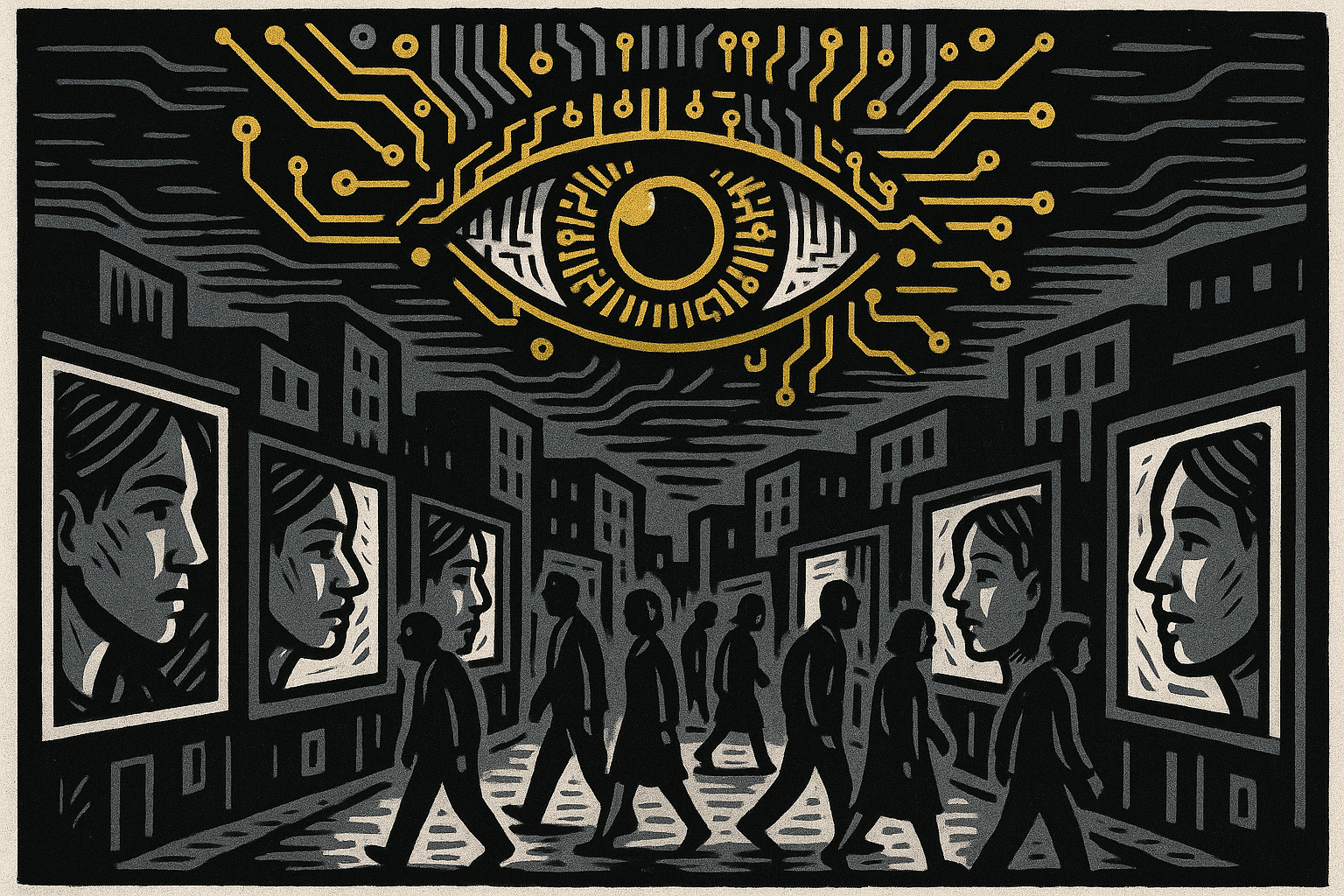
You search for a new pair of work boots on Tuesday. By Wednesday, ads for boots follow you from site to site. Your phone heard you mention a restaurant. Now it shows up in your feed. That is surveillance capitalism in its everyday form.
Shoshana Zuboff named and mapped it in The Age of Surveillance Capitalism: The Fight for a Human Future at the New Frontier of Power. Her core claim is blunt. Big Tech does not simply sell you products. It sells predictions about you to whoever will pay.
Zuboff writes that surveillance capitalism “feeds on every aspect of every human experience.” Not just your shopping cart. Your sleep patterns. Your politics. Your fears.
A related term is informational capitalism. It treats data the same way an older economy treated coal or oil. You have probably heard the phrase yourself: data is the new oil. That is not a metaphor. It is a business plan.
What They Collect and How
Most people think of data collection as social media likes and search histories. That is only the front door.
Big Tech pulls data from your phone, your car, your television, and the smart speaker on your kitchen counter. The Internet of Things means your refrigerator can, in principle, report back. Every device you own that connects to a network is a data point.
The NSA whistleblower Edward Snowden put the government side of this clearly in Glenn Greenwald’s No Place to Hide. The stated goal of the surveillance apparatus is to collect every piece of electronic communication from every person on the globe. That is not an exaggeration. That is the mission as written.
Snowden also noted the deeper danger. When one party can see everything and the other party sees nothing, power becomes absolute. It is a one-way mirror. The watchers are invisible. You are not.
Where Big Tech Ends and the State Begins
The line between corporate surveillance and government surveillance is thinner than most people assume.
Big Tech collects the data. The managerial state wants the data. The two have found each other useful. Law enforcement agencies buy location data from data brokers rather than get a warrant. The Fourth Amendment has a hole in it big enough to drive a truck through.
This is what makes surveillance capitalism more than a privacy nuisance. It builds the tools. The state shows up later to use them.
The panopticon - the old prison design where every inmate can be watched at any moment by an unseen guard - was a theory in the eighteenth century. It is a product offering in the twenty-first.
Rights, Oversight, and the Conservative Case for Privacy
Some conservatives hear “data regulation” and think big government. That reaction is understandable. But it misses the target.
The right to be left alone is a negative right. It asks nothing from anyone else. It only asks that a corporation not harvest your life and sell it. That is not a demand for someone else’s labor. It is a demand to be left in peace.
This is different from positive rights, which require someone else to provide you something. Saying “stop tracking my truck” is not the same as saying “give me a truck.” The contrast between negative and positive rights matters here.
The founders understood that power without accountability is the oldest threat in politics. Jefferson wrote that men must be bound down by the chains of the Constitution. The chains of a terms-of-service agreement are not the same thing.
Why It Matters Beyond Your Inbox
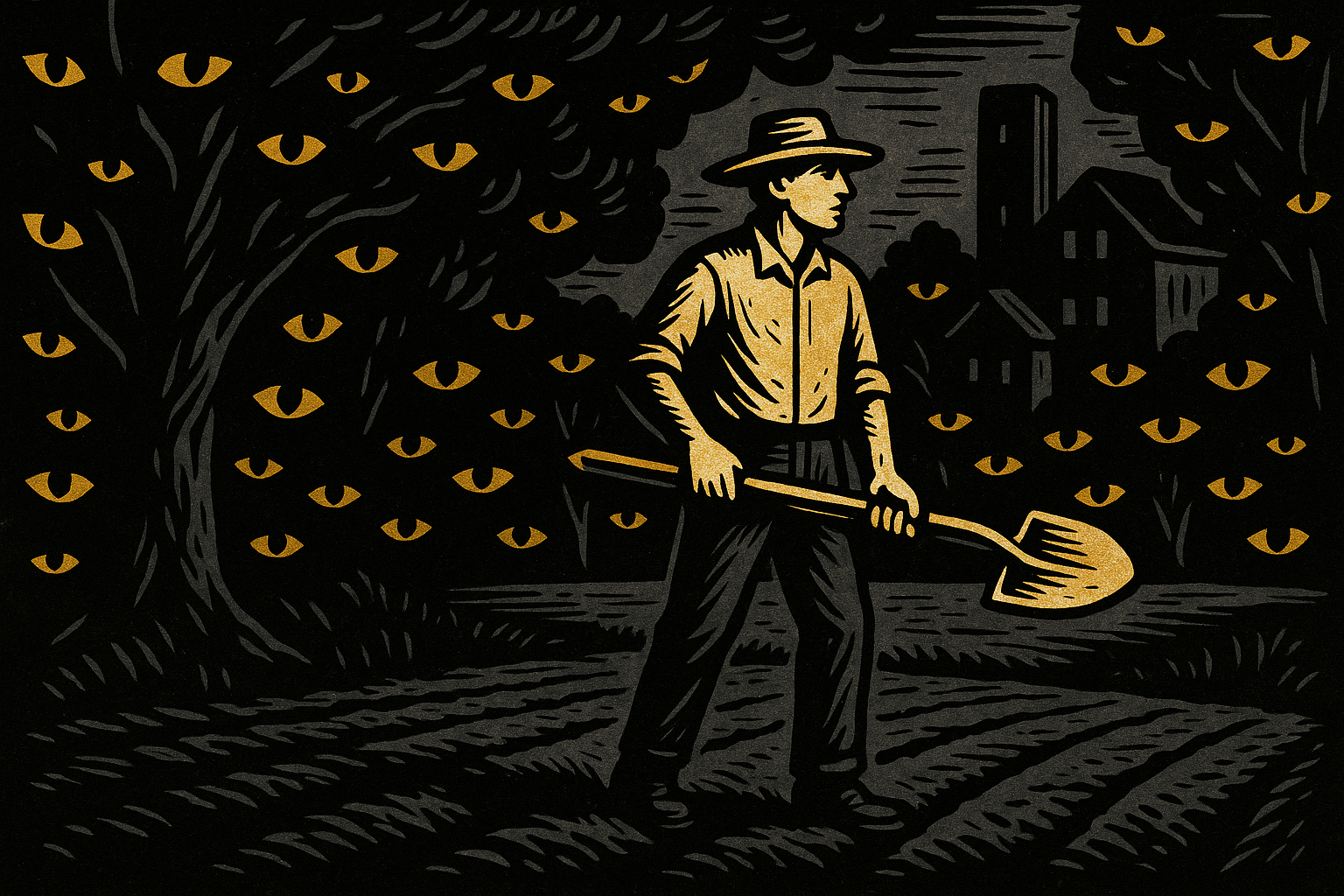
Surveillance capitalism does not end with targeted ads. It ends with targeted behavior.
If a platform knows what frightens you, what angers you, and what you want, it can feed you content that nudges you toward whatever serves its interests. That is behavior modification at industrial scale. Not by a government with a visible face. By an algorithm with no face at all.
This connects directly to neo-feudalism. A small digital elite accumulates knowledge about everyone else. That knowledge is power. The ordinary man - the mechanic, the farmer, the small-business owner - has no reciprocal view into the people watching him.
The result is a society where a handful of corporations know more about your habits than your own family does. And they are under no obligation to tell you what they know, who they told, or what they plan to do with it next.
For the full case on the government side of this, read Greenwald’s No Place to Hide. For Zuboff’s corporate side, read The Age of Surveillance Capitalism. Both books are long. Both are worth the time.
« Back to Glossary Index