
 BY
BY Table of Contents
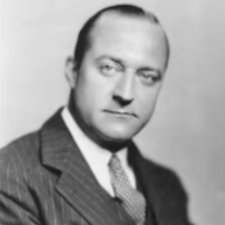
Hazlitt’s gift was making economics readable. Economics in One Lesson, published in 1946, distilled the entire Austrian school into a single rule that most policymakers still refuse to internalize: the art of economics consists in looking not merely at the immediate effects of any act or policy, but at the longer effects. He spent the rest of his career applying that one rule to inflation, taxation, the welfare state, and every fashionable government scheme of the twentieth century.
These quotes are drawn from Economics in One Lesson, The Failure of the New Economics, Man vs. The Welfare State, and his decades of journalism for the Wall Street Journal, Newsweek, and the New York Times. They cover what governments break when they intervene, why subsidies are never free, and why bad economic ideas keep returning no matter how thoroughly they are refuted.
Henry Hazlitt Quotes
“The envious are more likely to be mollified by seeing others deprived of some advantage than by gaining it for themselves. It is not what they lack that chiefly troubles them, but what others have. The envious are not satisfied with equality; they secretly yearn for superiority and revenge.”
– Henry Hazlitt, The Wisdom of Henry Hazlitt (pg 265-266)
“The government has nothing to give to anybody that it doesn’t first take from someone else.”
– Henry Hazlitt, Man vs. The Welfare State (pg 70)
“In a thousand fields the welfarists, statists, socialists, and interventionists are daily driving for more restrictions on individual liberty; and the libertarians must combat them. But few of us individually have the time, energy, and special knowledge in more than a handful of subjects to be able to do this.”
– Henry Hazlitt, Man vs. The Welfare State (pg 200)
“No matter whether it is their intention or not, almost anything that the rich can legally do tends to help the poor. The spending of the rich gives employment to the poor. But the saving of the rich, and their investment of these savings in the means of production, gives just as much employment, and in addition makes that employment constantly more productive and more highly paid, while it also constantly increases and cheapens the production of necessities and amenities for the masses.”
– Henry Hazlitt, The Wisdom of Henry Hazlitt (pg 206)
“The whole gospel of Karl Marx can be summed up in a single sentence: Hate the man who is better off than you are. Never under any circumstances admit that his success may be due to his own efforts, to the productive contribution he has made to the whole community. Always attribute his success to the exploitation, the cheating, the more or less open robbery of others. Never under any circumstances admit that your own failure may be owing to your own weakness, or that the failure of anyone else may be due to his own defects – his laziness, incompetence, improvidence, or stupidity.”
– Henry Hazlitt, Marxism in One Minute, The Freeman 1966 (pg 79)
“A man who is good from docility, and not from stern self-control, has no character.”
– Henry Hazlitt, The Way to Will-Power (pg 23)
“Forming a new habit is like forging for yourself a new path in the woods, through stubborn underbrush and prickly thorns, while all the while it is possible for you to take the well-worn, hard-trodden, pleasant path that already exists. But you can reflect that every time you travel through the new path you are going to tramp down more shrubbery and clear more entanglements from the way. Every time you take the path it is going to become easier.”
– Henry Hazlitt, The Way to Will-Power (pg 55)
“Contrary to age-old prejudices, the wealth of the rich is not the cause of the poverty of the poor, but helps to alleviate that poverty.”
– Henry Hazlitt, The Conquest of Poverty (pg 227)

“The future of human liberty…means the future of civilization.”
– Henry Hazlitt, The Wisdom of Henry Hazlitt
“Only if the modern state can be held within a strictly limited agenda…can it be prevented from regimenting, conquering, and ultimately devouring the society which gave it birth.”
– Henry Hazlitt, Is Politics Insoluble?
“The essential function of the State is to maintain peace, justice, law, and order, and to protect the individual citizen against aggression, violence, theft, and fraud.”
– Henry Hazlitt, Man vs. The Welfare State
“When Alexander the Great visited the philosopher Diogenes and asked whether he could do anything for him, Diogenes is said to have replied: ‘Yes, stand a little less between me and the sun.’ It is what every citizen is entitled to ask of his government.”
– Henry Hazlitt, Is Politics Insoluble?
Economics in One Lesson Quotes
“The art of economics consists in looking not merely at the immediate but at the longer effects of any act or policy; it consists in tracing the consequences of that policy not merely for one group but for all groups.”
– Henry Hazlitt, Economics in One Lesson (pg 5)
“The bad economist sees only what immediately strikes the eye; the good economist also looks beyond. The bad economist sees only the direct consequences of a proposed course; the good economist looks also at the longer and indirect consequences. The bad economist sees only what the effect of a given policy has been or will be on one particular group; the good economist inquires also what the effect of the policy will be on all groups.”
– Henry Hazlitt, Economics in One Lesson (pg 4)
“Economics is haunted by more fallacies than any other study known to man. This is no accident. The inherent difficulties of the subject would be great enough in any case, but they are multiplied a thousandfold by a factor that is insignificant in, say, physics, mathematics or medicine – the special pleading of selfish interests.”
– Henry Hazlitt, Economics in One Lesson (pg 3)
“Inflation itself is a form of taxation. It is perhaps the worst possible form, which usually bears hardest on those least able to pay.”
– Henry Hazlitt, Economics in One Lesson (pg 161)
“The thing so great that ‘private capital could not have built it’ has in fact been built by private capital – the capital that was expropriated in taxes (or, if the money was borrowed, that eventually must be expropriated in taxes).”
– Henry Hazlitt, Economics in One Lesson (pg 23)
“When your money is taken by a thief you get nothing in return. When your money is taken through taxes to support needless bureaucrats, precisely the same situation exists. We are lucky, indeed, if the needless bureaucrats are mere easy-going loafers. They are more likely today to be energetic reformers busily discouraging and disrupting production.”
– Henry Hazlitt, Economics in One Lesson (pg 58)
“We cannot distribute more wealth than is created. We cannot in the long run pay labor as a whole more than it produces.”
– Henry Hazlitt, Economics in One Lesson (pg 122)
“The larger the percentage of the national income taken by taxes the greater the deterrent to private production and employment.”
– Henry Hazlitt, Economics in One Lesson (pg 26)
“There is a similar effect when personal incomes are taxed 50, 60 or 70 percent. People begin to ask themselves why they should work six, eight or nine months of the entire year for the government, and only six, four or three months for themselves and their families. If they lose the whole dollar when they lose, but can keep only a fraction of it when they win, they decide that it is foolish to take risks with their capital.”
– Henry Hazlitt, Economics in One Lesson (pg 26)
“The belief that public works necessarily create new jobs is false. If the money was raised by taxation, we saw, then for every dollar that the government spent on public works one less dollar was spent by the taxpayers to meet their own wants, and for every public job created one private job was destroyed.”
– Henry Hazlitt, Economics in One Lesson (pg 160)
“Necessary policemen, firemen, street cleaners, health officers, judges, legislators and executives perform productive services as important as those of anyone in private industry.”
– Henry Hazlitt, Economics in One Lesson (pg 57)
“Everything we get, outside of the free gifts of nature, must in some way be paid for. The world is full of so-called economists who in turn are full of schemes for getting something for nothing. They tell us that the government can spend and spend without taxing at all; that it can continue to pile up debt without ever paying it off, because ‘we owe it to ourselves.'”
– Henry Hazlitt, Economics in One Lesson (pg 18)
“Now all loans, in the eyes of honest borrowers, must eventually be repaid. All credit is debt. Proposals for an increased volume of credit, therefore, are merely another name for proposals for an increased burden of debt. They would seem considerably less inviting if they were habitually referred to by the second name instead of by the first.”
– Henry Hazlitt, Economics in One Lesson (pg 28)
“There is a strange idea abroad, held by all monetary cranks, that credit is something a banker gives to a man. Credit, on the contrary, is something a man already has. He has it, perhaps, because he already has marketable assets of a greater cash value than the loan for which he is asking. Or he has it because his character and past record have earned it. He brings it into the bank with him. That is why the banker makes him the loan. The banker is not giving something for nothing.”
– Henry Hazlitt, Economics in One Lesson (pg 31)
“It is significant that while there is a word ‘profiteer’ to stigmatize those who make allegedly excessive profits, there is no such word as ‘wageer’ – or ‘losseer.'”
– Henry Hazlitt, Economics in One Lesson (pg 144)
“You cannot make a man worth a given amount by making it illegal for anyone to offer him anything less. You merely deprive him of the right to earn the amount that his abilities and situation would permit him to earn, while you deprive the community even of the moderate services that he is capable of rendering. In brief, for a low wage you substitute unemployment. You do harm all around, with no comparable compensation.”
– Henry Hazlitt, Economics in One Lesson (pg 119)
“Heavy unemployment means that fewer goods are produced, that the nation is poorer, and that there is less for everybody.”
– Henry Hazlitt, Economics in One Lesson (pg 117)
“Everywhere the means is erected into the end, and the end itself is forgotten.”
– Henry Hazlitt, Economics in One Lesson (pg 48)
“Today is already the tomorrow which the bad economist yesterday urged us to ignore.”
– Henry Hazlitt, Economics in One Lesson (pg 5)
Henry Hazlitt Quotes on History
“The ideas which now pass for brilliant innovations and advances are in fact mere revivals of ancient errors, and a further proof of the dictum that those who are ignorant of the past are condemned to repeat it.”
– Henry Hazlitt, Economics in One Lesson (pg vii-viii)
“The first (lesson) which we meet again and again in history, is that once the dole or similar relief programs are introduced, they seem almost inevitably – unless surrounded by the most rigid restrictions – to get out of hand. The second lesson is that once this happens the poor become more numerous and worse off than they were before, not only because they have lost self-reliance, but because the sources of wealth and production on which they depend for either doles or jobs are diminished or destroyed.”
– Henry Hazlitt, Poor Relief in Ancient Rome
“The long-run historical tendency of capitalism has not only been to increase real incomes more or less proportionately nearly all along the line, but to benefit the masses even more than the rich.”
– Henry Hazlitt, The Conquest of Poverty (pg 54)
“There may have been somewhere, as a few eighteenth-century philosophers dreamed, a group of peaceful men who got together one evening after work and drew up a Social Contract to form the state. But nobody has been able to find an actual record of it. Practically all the governments whose origins are historically established were the result of conquest – of one tribe by another, one city by another, one people by another. Of course there have been constitutional conventions, but they merely changed the working rules of governments already in being.”
– Henry Hazlitt, Is Politics Insoluble? (pg 33)
Henry Hazlitt Quotes on Subsidies
“The only real cure for poverty is production.”
– Henry Hazlitt, Man vs. The Welfare State (pg 95)
“When the government makes loans or subsidies to business, what it does is to tax successful private business in order to support unsuccessful private business.”
– Henry Hazlitt, Economics in One Lesson (pg 35)
“The surest way for a poor nation to stay poor is to harass, hobble, and straitjacket private enterprise or to discourage or destroy it by subsidized government competition, oppressive taxation, or outright expropriation.”
– Henry Hazlitt, Man vs. The Welfare State (pg 170)
“The army of relief and other subsidy recipients will continue to grow, and the solvency of the government will become increasingly untenable, as long as part of the population can vote to force the other part to support it.”
– Henry Hazlitt, Man vs. The Welfare State (pg 219)
Final Thoughts
Hazlitt spent a lifetime pointing out what should be obvious but somehow never is: that every government program has a cost, that every subsidy comes from somewhere, and that the people who pay are almost never the people who get credit for the giving. His writing is not angry or polemical – it is patient, clear, and relentless. That patience is what makes him dangerous to bad ideas.
If you read one economics book in your life, make it Economics in One Lesson. It is short, free, and more relevant now than the year it was published. Hazlitt’s core insight – that the art of economics consists in looking at the long-term consequences for all groups, not just the short-term benefits for one – is the single best filter for evaluating any policy anyone proposes to you.
The fact that this book has been in print for nearly 80 years and still reads like it was written yesterday tells you everything about how little the fundamental mistakes of economic thinking have changed.