
 BY
BY Table of Contents
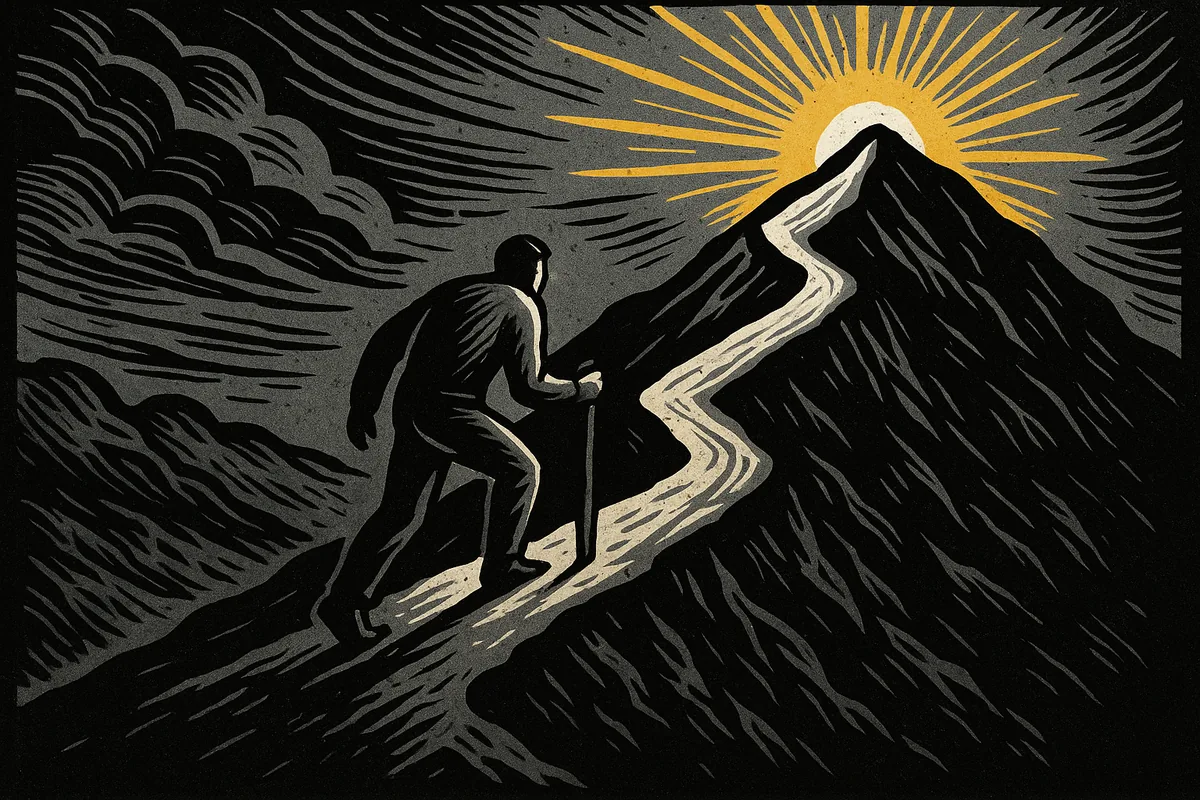
Eudaimonia is not happiness. That mistranslation has done serious damage. Happiness is a mood, a weather condition, something that happens to you. Eudaimonia is what you build – the Greek root is eu (good) plus daimon (spirit, inner nature), which is closer to “the full realization of what you actually are” than to any hedonic state your circumstances might produce. Aristotle was precise about this: it requires activity, virtuous activity, sustained over a life, not a lucky afternoon. The Stoics systematized it further. The definition survived twenty-four centuries because it describes something real about human beings – that we are the kind of creature that can fail to become what we are, and that this failure, however comfortable, is a form of death that arrives before the fact.
What the quotes collected here share is not a school or a century but a diagnostic agreement: the good life has a structure, that structure demands daily execution, and the whole project terminates in a death that either confirms or indicts everything that preceded it. Marcus Aurelius understood this from the inside of an empire that made every distraction available and required him to refuse most of them. Mark Twain understood it from the outside, through irony sharp enough to carry the same weight. Tecumseh understood it on a battlefield. The voices here span the ancient school, the Stoic practicum, the Enlightenment’s more serious registers, and a handful of modern writers who found their way back to the same set of questions – not because the tradition is prestigious, but because the alternative frameworks have not held up particularly well under pressure.
Read them in the order they appear or cut straight to the section that has the most immediate claim on you. Either way, the organizing logic is cumulative: what the thing is, how you actually do it on a Tuesday, what it looks like when the accounting comes due. The reader who finishes this page with a cleaner sense of what he is for and what he is wasting has gotten something the managerial culture around him will not offer – and is actively incentivized not to.
Defining the Good Life
“One swallow does not make a summer, neither does one fine day; similarly one day or brief time of happiness does not make a person entirely happy.”
- Aristotle, Nicomachean Ethics, Book I, Chapter 7 (I.7)
“These virtues are formed in man by his doing the actions… The good of man is a working of the soul in the way of excellence in a complete life.”
- Aristotle, Nicomachean Ethics, Book I, Chapter 7 (I.7) for 'good of man'; the 'virtues formed by doing' element is from Book II, Chapter 1 (II.1)
“Eudaimonia is commonly translated as happiness, but I believe it’s more closely related to having a meaningful life or fulfilling one’s potential.”
- Derrick Jensen, Likely freemansperspective.com or Jensen's official site derrickjensen.org; possibly his essay 'Fate' on derrickjensen.org which discusses eudaimonia explicitly
“O vitae Philosophia dux! O virtutum indagatrix expultrixque vitiorum! Unus dies, bene et ex praeceptis tuis actus, peccanti immortalitati est anteponendus.
O philosophy, guide of life! O searcher-out of virtues and expeller of vices! One day spent well, and in accordance with your precepts, is to be preferred to an eternity of error.”
- Cicero, Tusculan Disputations, Book V, section 2.5 (Loeb Classical Library ed., 1927)
Living It Daily
“Waste no more time arguing what a good man should be. Be one.”
- Marcus Aurelius, Meditations, Book VII, section 8 (Penguin Classics / Staniforth translation)
“Morality is not the doctrine of how we may make ourselves happy, but how we may make ourselves worthy of happiness.”
- Immanuel Kant, Critique of Practical Reason (1788)
“Make the most of yourself…for that is all there is of you.”
- Ralph Waldo Emerson, Widely attributed to Emerson; specific essay or speech not identified in available sources
“One ought, every day at least, to hear a little song, read a good poem, see a fine picture, and, if it were possible, to speak a few reasonable words.”
- Johann Wolfgang von Goethe, Wilhelm Meister's Apprenticeship (Wilhelm Meisters Lehrjahre), Book V, Chapter 1
The Death You Earn
“Let us so live that when we come to die even the undertaker will be sorry.”
- Mark Twain, Pudd'nhead Wilson's Calendar, in The Tragedy of Pudd'nhead Wilson (1894)
“Live your life that the fear of death can never enter your heart.”
- Attributed to Tecumseh, A Sourcebook for Earth's Community of Religions (1995), Joel Diederik Beversluis; also attributed to Wapasha chiefs, Sitting Bull, Crazy Horse, Wovoka in Ernest Thompson Seton, The Gospel of the Red Man (2006)
“God gave us the gift of life; it is up to us to give ourselves the gift of living well.”
- Voltaire, Oeuvres completes de Voltaire (1880 edition), appendix section 'Extracts from a Manuscript in the Hand of M. de Voltaire'; English translation first appeared in Jean Orieux's 1979 biography of Voltaire
The Modern Take

“If someone has those four things – work ethic, taste, integrity, and curiosity – it’s hard to stop them.”
- Matt Mullenweg, The Tim Ferriss Show, Episode #190 (October 2016); transcript published 2018-06-05
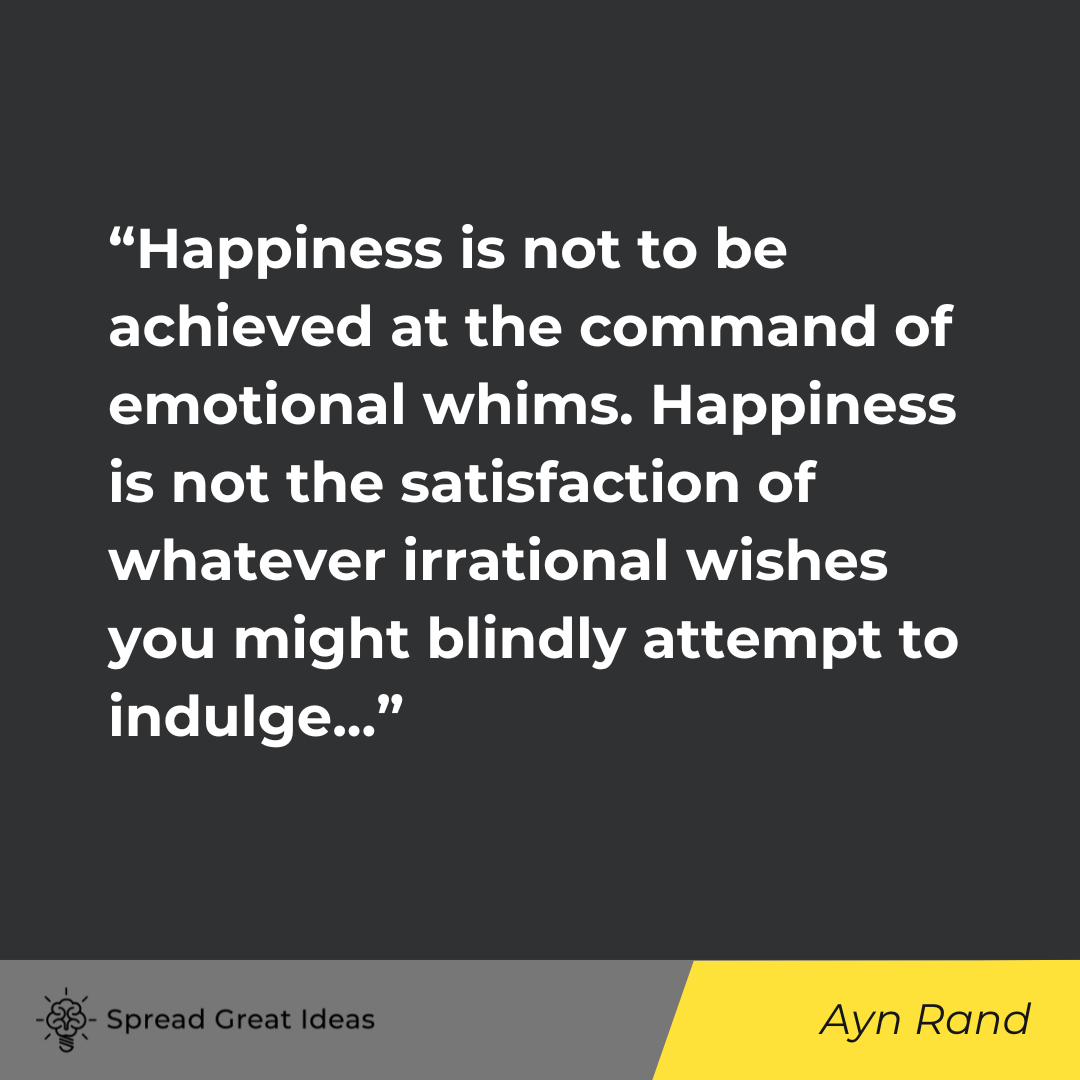
“Happiness is not to be achieved at the command of emotional whims. Happiness is the successful state of life, the state of joy and pride that comes from the achievement of one’s values.”
- Ayn Rand, 'The Objectivist Ethics,' in The Virtue of Selfishness (1964), p. 27
“Make your time on Earth matter; make your 90-year-old self proud.”
- Paul Rosenberg, Likely from Free-Man's Perspective newsletter or freemansperspective.com; specific issue not found via public search
Final Thoughts
Eudaimonia is not a feeling. It is a verdict you pass on a life – usually retrospectively, sometimes by witnesses, occasionally by yourself if you are honest. The Greek tradition treats it as something you build action by action and lose only through abandonment. The modern translations that reduce it to “happiness” smuggle in the wrong question. Happiness asks how you feel today. Eudaimonia asks what your life is becoming.
If you read just one book on this subject, read Aristotle’s Nicomachean Ethics. The whole concept comes from him; everyone since is in conversation with what he set down. Two and a half millennia of philosophy has not improved on Book I’s central argument: the good life is the life lived in accordance with virtue, and virtue is built by practice. Read it slowly. The book is short and the work it asks of you is long.