
 BY
BY Table of Contents
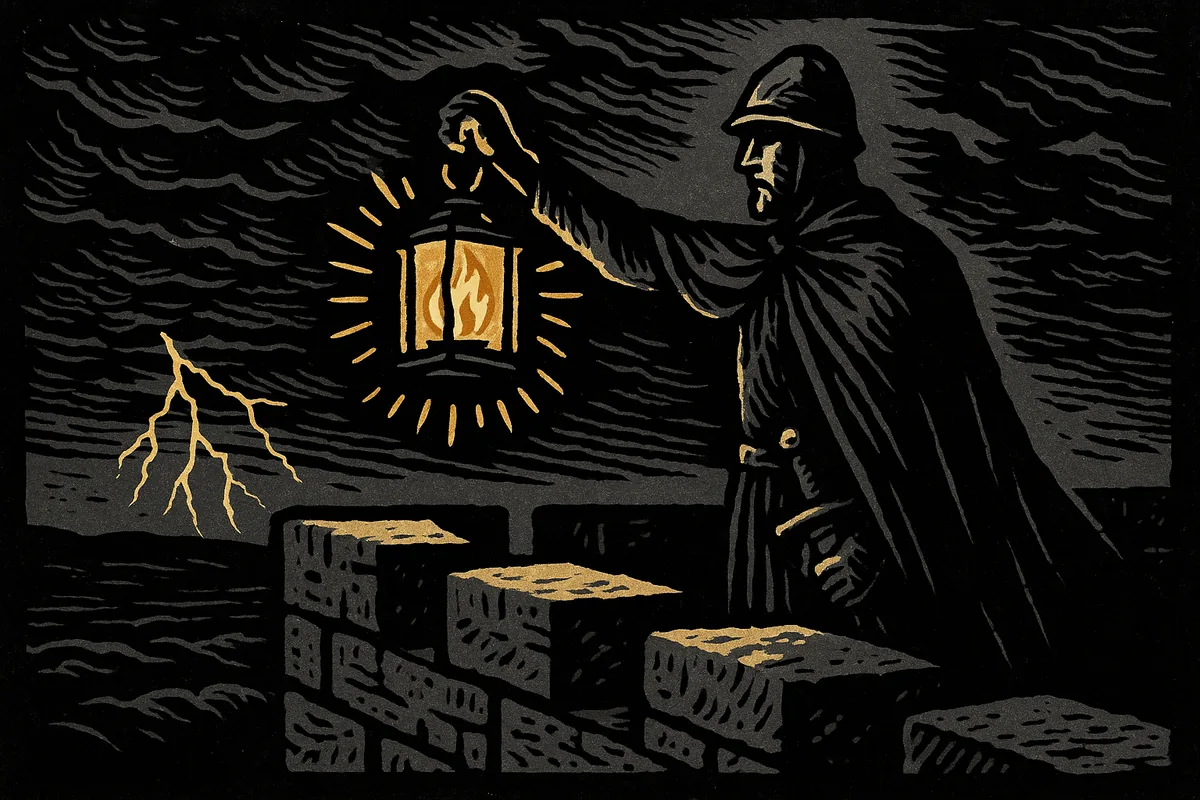
Liberty is a term of art, not sentiment. It names something precise: the condition under which you govern your own life without requiring permission from someone who has appointed himself your superior. Freedom, by contrast, has been laundered into meaninglessness – it now covers everything from consumer choice to the vague psychic release of a long weekend. The Founding Fathers used liberty because they meant something harder and narrower: a structured absence of coercion, held in place by explicit limits on what government could do to you, not a list of benefits government might provide. That distinction matters because once you lose it, you lose the ability to diagnose what is happening to you.
The structural problem is not a bad party or a corrupt administration. Every government, regardless of who staffs it, faces the same permanent temptation: more revenue, more jurisdiction, more dependents. Politicians purchase constituencies with pieces of your autonomy repackaged as security. Bureaucracies expand by discovering new categories of risk that require their management. The managerial state does not need villains to grow – it only needs the slow, compounding arithmetic of small concessions that each look reasonable in isolation. Benjamin Franklin understood the terminal logic of that arithmetic. So did George Orwell, who grasped that once you surrender the right to say unwelcome things, every other right becomes a courtesy extended at someone else’s discretion. The quotes collected here are not decorative. They are diagnostic – written by people who had watched free societies rot and wanted to name the disease before the symptoms became the new normal.
Read them in that spirit. The organizing questions are old ones: how much vigilance does self-government actually require, what do you really get when you trade liberty for security, why free speech is the load-bearing wall and not merely one liberty among equals, what sovereignty over your own life looks like in practice, and where precisely the appetite of the state comes from. Answer those questions honestly and you will find that most of what passes for political debate today is a argument conducted several floors above the foundation, by people who have never checked whether the foundation is still there.
The Vigilance of Free People
“Give me liberty or give me death!”
– Patrick Henry, Speech to the Second Virginia Convention, March 23, 1775
“Those who expect to reap the blessings of freedom, must, like men, undergo the fatigues of supporting it.”
- Thomas Paine, The American Crisis, No. 4, September 11, 1777
“It is the common fate of the indolent to see their rights become a prey to the active. The condition upon which God hath given liberty to man is eternal vigilance.”
- John Philpot Curran, Speech upon the Right of Election of Lord Mayor of Dublin, July 10, 1790
“Liberty, once lost, is lost forever.”
- John Adams, Letter to Abigail Adams, July 17, 1775
“Experience should teach us to be most on our guard to protect liberty when the government’s purposes are beneficent. Men born to freedom are naturally alert to repel invasion of their liberty by evil-minded rulers. The greatest dangers to liberty lurk in insidious encroachment by men of zeal, well-meaning but without understanding.”
- Louis D. Brandeis, Olmstead v. United States, 277 U.S. 438 (1928), dissenting
“Freedom is never more than one generation away from extinction. We didn’t pass it on to our children in the bloodstream. It must be fought for, protected, and handed on for them to do the same, or one day we will spend our sunset years telling our children and our children’s children what it was once like in the United States where men were free.”
- Ronald Reagan, Address to the Annual Meeting of the Phoenix Chamber of Commerce, March 30, 1961
Liberty vs Security: A Trade That Always Loses
“They who can give up essential liberty to obtain a little temporary safety deserve neither liberty nor safety.”
- Benjamin Franklin, Pennsylvania Assembly: Reply to the Governor, November 11, 1755
“The ideal Government of all reflective men, from Aristotle onward, is one which lets the individual alone – one which barely escapes being no government at all.”
- H. L. Mencken, A Mencken Chrestomathy
Free Speech as Liberty’s Foundation
“If liberty means anything at all, it means the right to tell people what they do not want to hear.”
- George Orwell, The Freedom of the Press (unused preface to Animal Farm, 1945)
“Whoever would overthrow the liberty of a nation must begin by subduing the freeness of speech.”
- Benjamin Franklin, Silence Dogood, No. 8 (The New-England Courant, July 9, 1722)
“Without Freedom of Thought, there can be no such Thing as Wisdom; and no such Thing as public Liberty, without Freedom of Speech; which is the Right of every Man, as far as by it, he does not hurt or controul the Right of another:
And this is the only Check it ought to suffer, and the only Bounds it ought to know.”
- Benjamin Franklin, Silence Dogood, No. 8 (The New-England Courant, July 9, 1722)
The Sovereign Individual
“A state which dwarfs its men, in order that they may be more docile instruments in its hands even for beneficial purposes–will find that with small men no great thing can really be accomplished.”
- John Stuart Mill, On Liberty (1859)
“Even despotism does not produce its worst effects, so long as individuality exists under it; and whatever crushes individuality is despotism, by whatever name it may be called, and whether it professes to be enforcing the will of God or the injunctions of men.”
- John Stuart Mill, On Liberty (1859)
“This is my doctrine: Give every other human being every right you claim for yourself.”
- Robert G. Ingersoll, The Liberty of Man, Woman and Child (1877)
“Liberty means responsibility. That is why most men dread it.”
- George Bernard Shaw, Man and Superman (1903), Maxims for Revolutionists
“For to be free is not merely to cast off one’s chains, but to live in a way that respects and enhances the freedom of others.”
- Nelson Mandela, Long Walk to Freedom (1994)
“I am an American; free born and free bred, where I acknowledge no man as my superior, except for his own worth, or as my inferior, except for his own demerit.”
- Theodore Roosevelt, True Americanism (1894), in American Ideals and Other Essays (1897)
“Disobedience is the true foundation of liberty. The obedient must be slaves.”
- Henry David Thoreau, Attribution contested
The Government’s Permanent Temptation

“We hold these truths to be self-evident, that all men are created equal, that they are endowed by their Creator with certain unalienable Rights, that among these are Life, Liberty and the pursuit of Happiness.”
- The US Declaration of Independence, The Declaration of Independence (1776)
“I would die to preserve the law upon a solid foundation; but take away liberty, and the foundation is destroyed.”
- Alexander Hamilton, A Full Vindication of the Measures of Congress, December 15, 1774
“Those who deny freedom to others, deserve it not for themselves.”
– Abraham Lincoln, Letter to Henry L. Pierce, April 6, 1859

“Don’t interfere with anything in the Constitution. That must be maintained, for it is the only safeguard of our liberties. And not to Democrats alone do I make this appeal, but to all who love these great and true principles.”
- Abraham Lincoln, Speech at Kalamazoo, Michigan, August 27, 1856
“I would rather be exposed to the inconveniences attending too much liberty than to those attending too small a degree of it.”
- Thomas Jefferson, Letter to Archibald Stuart, December 23, 1791
“Liberty, when it begins to take root, is a plant of rapid growth. The checks he endeavors to give it, however warrantable by ancient usage, will, more than probably, kindle a flame which may not easily be extinguished”
- George Washington, Letter to James Madison, March 2, 1788
“Whenever a separation is made between liberty and justice, neither, in my opinion, is safe.”
- Edmund Burke, Attribution contested
“Every friend of freedom, and I know you are one, must be as revolted as I am by the prospect of turning the United States into an armed camp, by the vision of jails filled with casual drug users and of an army of enforcers empowered to invade the liberty of citizens on slight evidence.”
– Milton Friedman, Open Letter to Bill Bennett, The Wall Street Journal, September 7, 1989
“Liberty has never come from the government. Liberty has always come from the subjects of the government. The history of liberty is a history of resistance. The history of liberty is a history of the limitation of governmental power, not the increase of it.
– Woodrow Wilson, <a href=”https://www.woodrowwilson.org/blog/2019/1/21/woodrow-wilson-quotes” target=”_blank” rel=”noopener”><em>Address to the New York Press Club, September 9, </em></a><em><a href=”https://www.woodrowwilson.org/blog/2019/1/21/woodrow-wilson-quotes” target=”_blank” rel=”noopener”>1912</a></em></p>
</div>
<!– /wp:html –>
<!– wp:html –>
<div class=”wp-block-image”>
<figure class=”aligncenter size-large”></figure>
<p>“In the early ages of the world, according to the scripture chronology, there were no kings; the consequence of which was there were no wars; it is the pride of kings which throws mankind into confusion.”
- Woodrow Wilson, The New Freedom: A Call for the Emancipation of the Generous Energies of a People (1913)
“We are living in a world in which nobody is free, in which hardly anybody is secure, in which it is almost impossible to be honest and to remain alive.”
- George Orwell, The Road to Wigan Pier
Final Thoughts
Liberty is one of those subjects where the right book changes how you read everything else. The Constitution of Liberty by F.A. Hayek (1960) is still the most rigorous philosophical case for a system of negative liberty ever made; it explains why the government’s incentives reliably push against liberty even when individual policymakers mean well. Common Sense by Thomas Paine (1776) is the shorter, hotter argument – the one that actually got Americans to fight for it. Read in that order, the second one stops sounding rhetorical.
The pattern you should carry out of this page is a diagnostic one. Identify who is asking you to trade liberty for something else, identify what they are calling the something else, and then ask whether that thing has ever been delivered at the price quoted. Security becomes surveillance. Convenience becomes dependency. Reasonable regulation becomes the permanent bureaucratic apparatus that outlives every emergency that justified it. The managerial state is not a conspiracy; it is a structure, and structures do not require villains to produce predictable outcomes. The liberal of yore understood this. He knew that the gentry running the licensing board were not malicious – they were simply rational actors inside a system that rewarded expansion and punished restraint. You are living inside the same system, further along in the same process, which means the quotes above are not historical curiosities. They are a field guide to what is happening now.
The recommended book for this page is Democracy: The God That Failed by Hans-Hermann Hoppe. The argument is structural, not sentimental: democratic governance systematically produces high time-preference rulers who have every incentive to liquidate the future for present political gain, and almost no incentive to protect inherited liberties they did not build and cannot be made to value. Where the Founding Fathers diagnosed the temptation toward tyranny in executive power, Hoppe locates the same disease in the voting mechanism itself – in the regime’s capacity to launder confiscation through majority consent. You do not have to accept every conclusion to get significant use out of the diagnosis. Read it as a counterweight to any comfortable assumption that the ballot box is a sufficient guardian of the liberties this page is about. It is not a comfortable book, which is exactly the reason to read it.