
 BY
BY Table of Contents
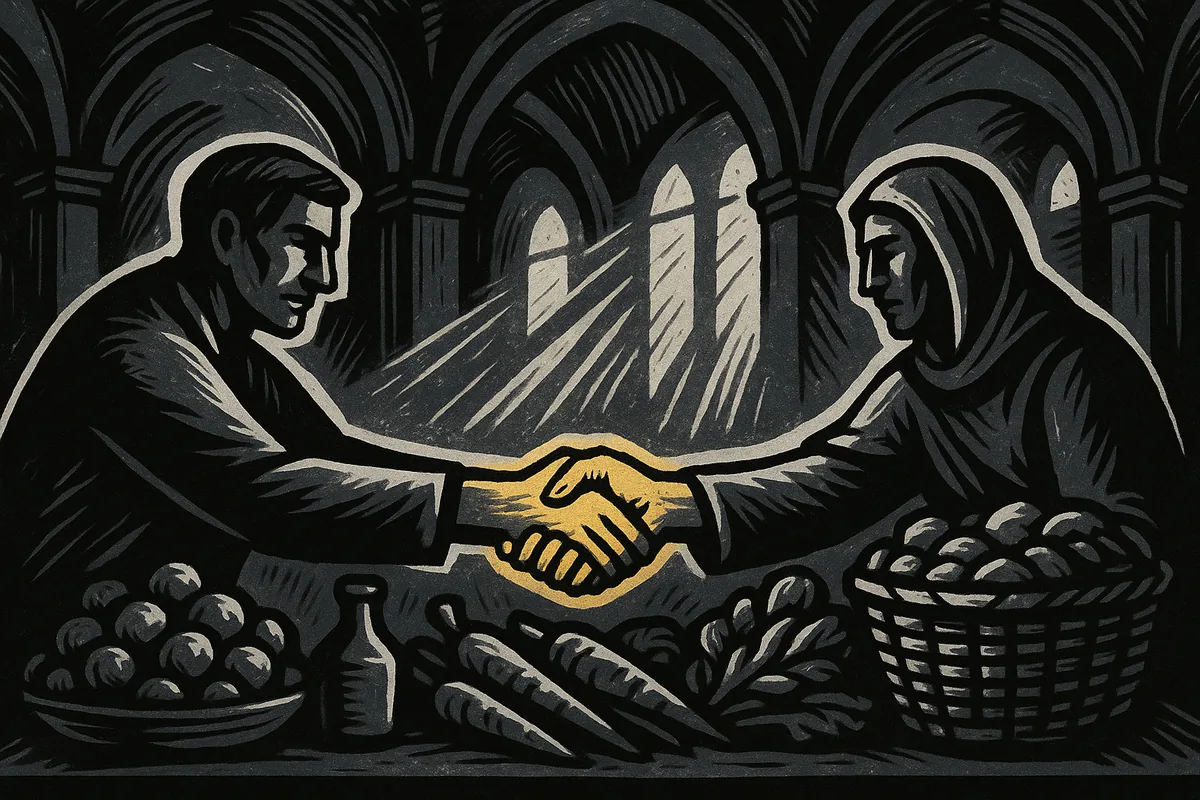
Capitalism is a simple thing made controversial by people with an interest in complicating it. Strip away the polemics and you get this: private ownership of productive property, prices set by voluntary exchange, and individuals keeping what they earn. That is the whole system. What the managerial state and its attached intellectual class have spent two centuries arguing is that this arrangement is either morally deficient or practically unstable – that left alone, markets produce exploitation, inequality, and barbarism, and that trained administrators can improve on the results. The evidence has not been kind to that position. Every mass escape from grinding poverty in recorded history has run through markets, not away from them. The ideological superstructure erected to obscure that fact is impressive in its persistence, if nothing else.
The writers collected here – Ayn Rand, Milton Friedman, Thomas Sowell, Hayek, and the others assembled across this page – do not all share the same moral framework, which is itself worth noting. Rand grounds her defense of capitalism in the rational nature of man and will not hear objections. Hayek barely uses the word “capitalism” at all; his argument is epistemological, about what any central planner cannot know, and it does not require you to love markets to find it devastating. Friedman’s case runs through incentives and output. Sowell’s runs through the difference between intentions and results. The convergence of these distinct lines of argument on the same conclusion is more persuasive than any single one of them would be alone. When a Thomist, a libertarian, and an empiricist all arrive at the same destination by different roads, it is worth asking what is actually at the destination.
The quotes below are organized to follow the argument in the order it needs to be made. The moral foundations come first, because without them the practical case floats free of any anchor. Then voluntary cooperation and the individual, because the unit of analysis matters – capitalism is what happens between persons, not between statistical aggregates. Then what markets actually produce in terms of human flourishing, against which the socialist critique can be weighed honestly rather than in a vacuum. And finally the ironies and challenges that capitalism’s serious defenders have always acknowledged, because a position that cannot face its own weaknesses is not a position, it is a slogan. Conservative Inc. produces slogans. The people on this page produced arguments. There is a difference, and you will see it in the first paragraph of almost any quote here.
The Moral Foundations of Capitalism
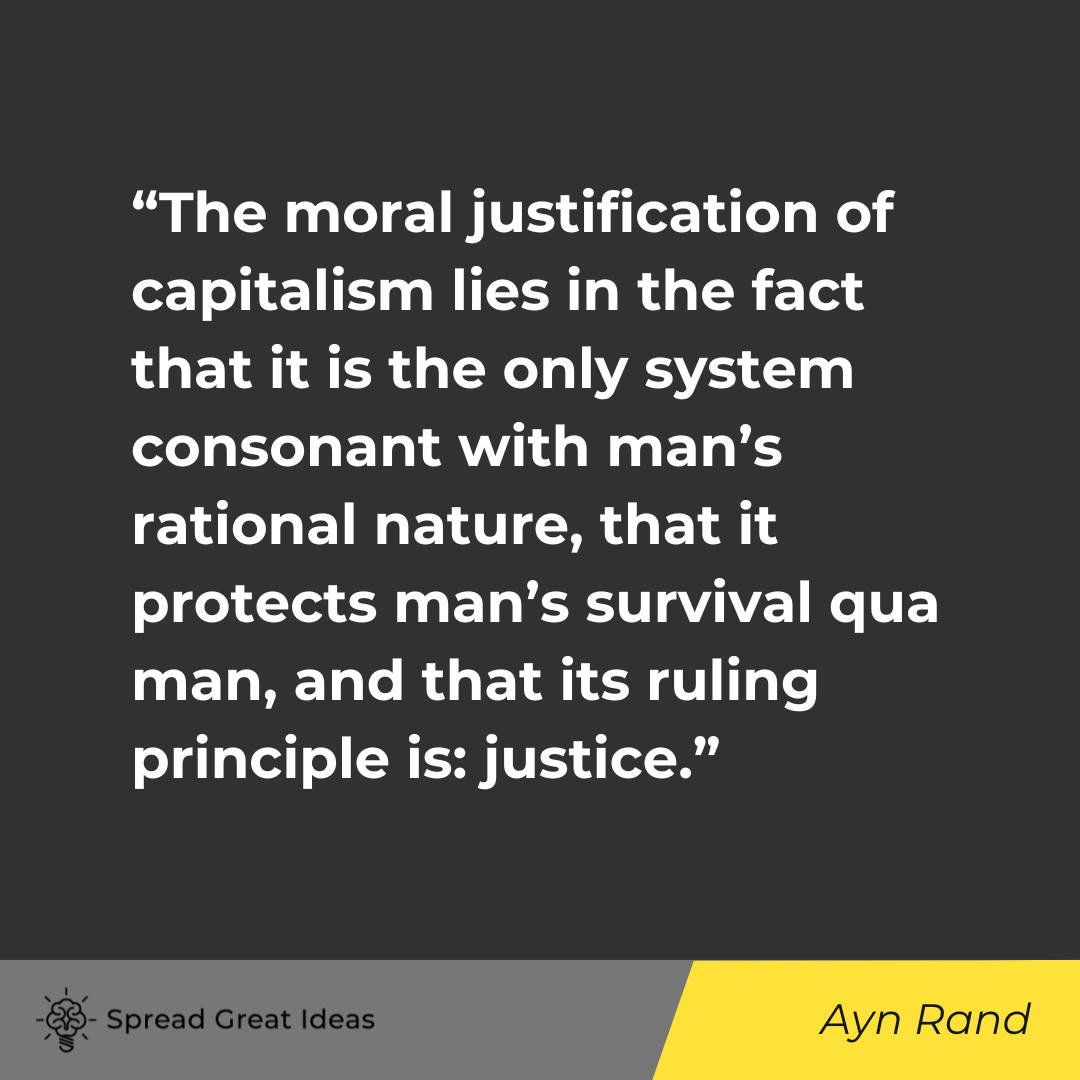
“The moral justification of capitalism lies in the fact that it is the only system consonant with man’s rational nature, that it protects man’s survival <em>qua </em>man, and that its ruling principle is: <em>justice</em>.”
- Ayn Rand, Capitalism: The Unknown Ideal (1966)
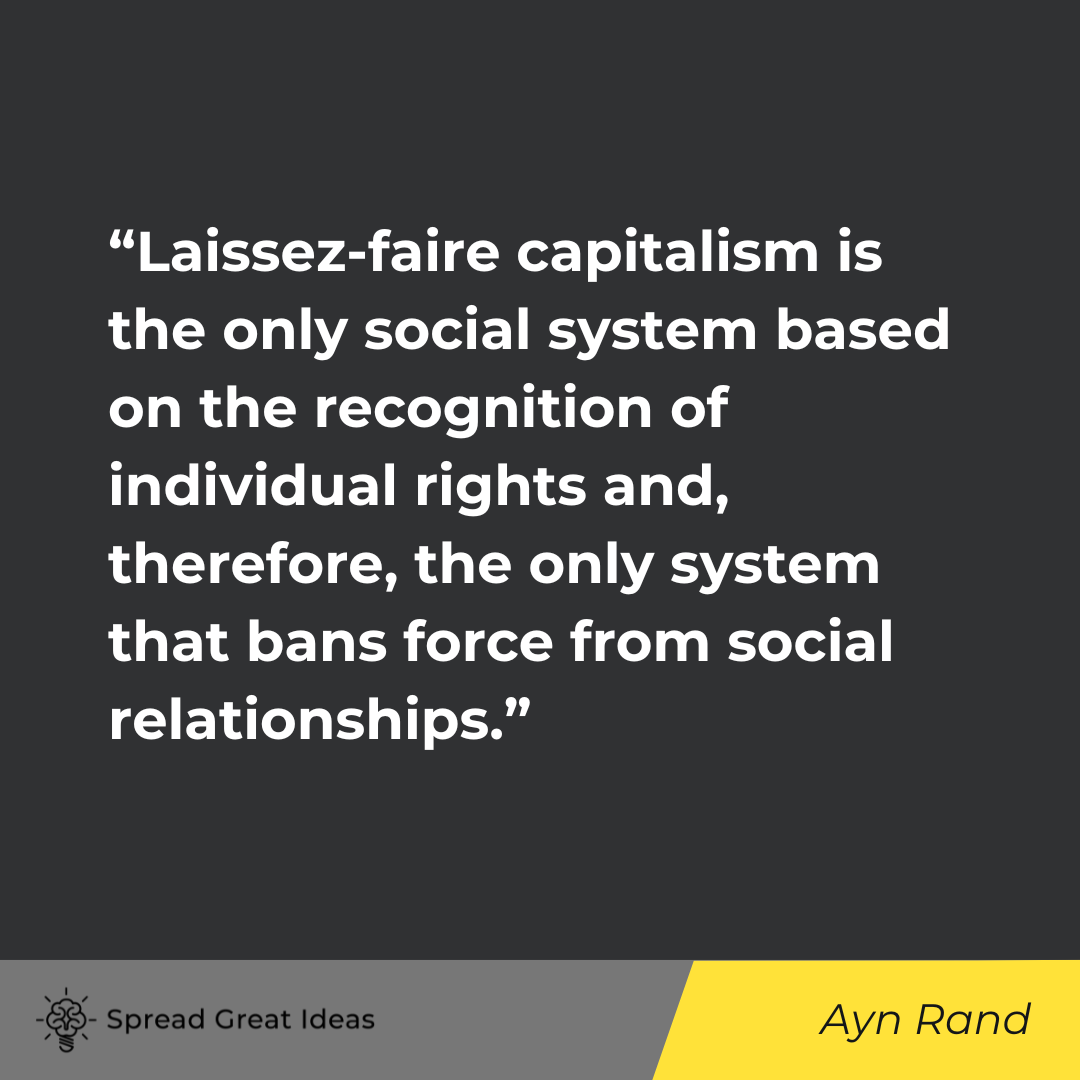
“Laissez-faire capitalism is the only social system based on the recognition of individual rights and, therefore, the only system that bans force from social relationships. By the nature of its basic principles and interests, it is the only system fundamentally opposed to war.”
- Ayn Rand, Capitalism: The Unknown Ideal (1966)
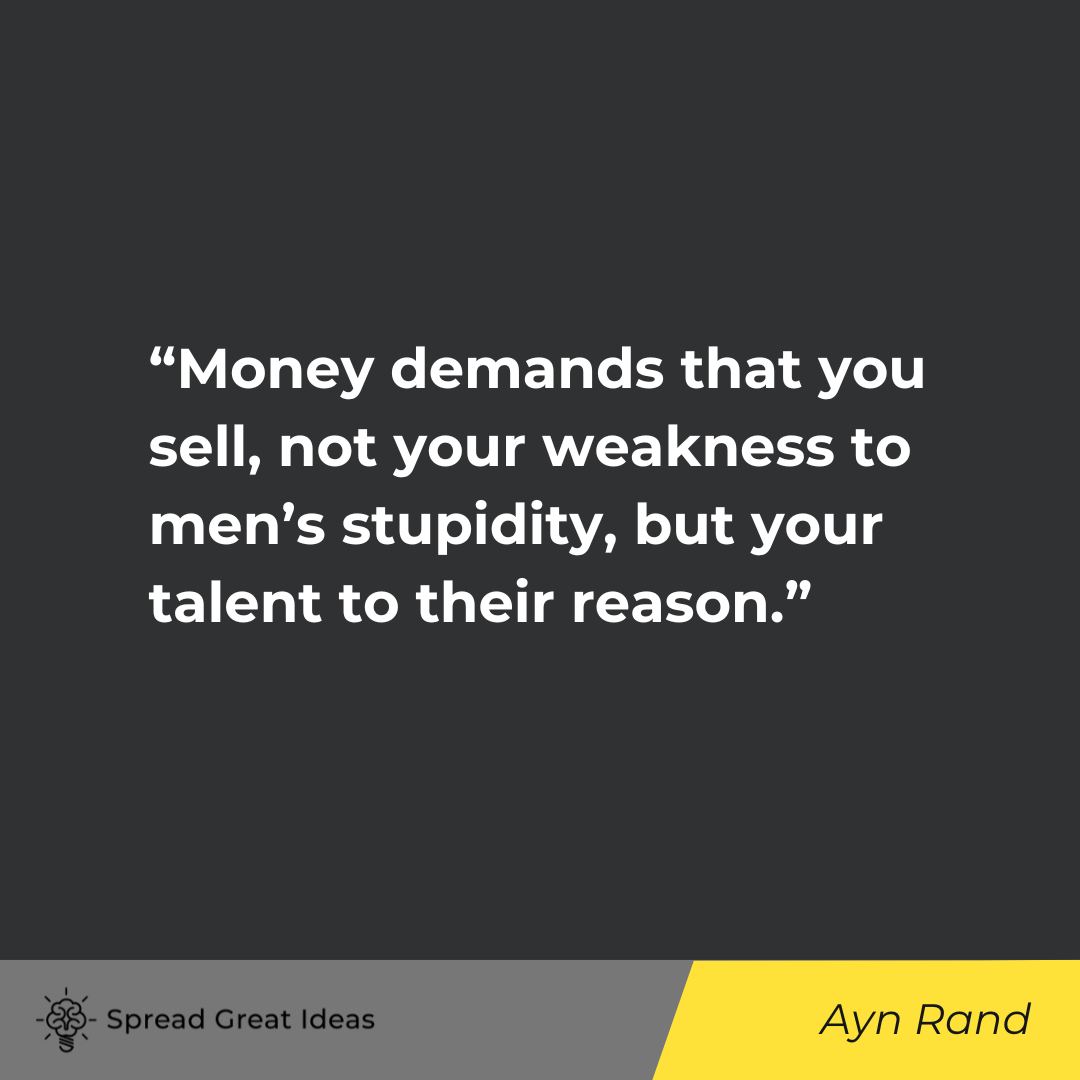
“Money demands that you sell, not your weakness to men’s stupidity, but your talent to their reason.”
- Ayn Rand, Atlas Shrugged (1957), Francisco's money speech
“Capitalism demands the best of every man – his rationality – and rewards him accordingly.
It leaves every man free to choose the work he likes, to specialize in it, to trade his product for the products of others, and to go as far on the road of achievement as his ability and ambition will carry him.”
- Ayn Rand, For the New Intellectual (1961)
“Corresponding to the four branches of philosophy, the four keystones of capitalism are: metaphysically, the requirements of man’s nature and survival – epistemologically, reason – ethically, individual rights, politically, freedom.”
- Ayn Rand, Capitalism: The Unknown Ideal (1966)
“Capitalism was the only system in history where wealth was not acquired by looting, but by production, not by force, but by trade, the only system that stood for man’s right to his own mind, to his work, to his life, to his happiness, to himself.”
- Ayn Rand, Capitalism: The Unknown Ideal (1966)
Freedom, Voluntary Cooperation, and the Individual
“Capitalism is not an ‘ism.’ It is closer to being the opposite of an ‘ism,’ because it is simply the freedom of ordinary people to make whatever economic transactions they can mutually agree to.”
- Thomas Sowell, Basic Economics: A Citizen's Guide to the Economy
“The essential notion of a capitalist society … is voluntary cooperation voluntary exchange. The essential notion of a socialist society is force.”
- Milton Friedman, Free to Choose (1980)
“Prior to capitalism, the way people amassed great wealth was by looting, plundering and enslaving their fellow man. Capitalism made it possible to become wealthy by serving your fellow man.”
- Walter E. Williams, American Contempt for Liberty (2015)
“The economic value of a man’s work is determined, on a free market, by a single principle: by the voluntary consent of those who are willing to trade him their work or products in return. This is the moral meaning of the law of supply and demand.”
- Ayn Rand, Capitalism: The Unknown Ideal (1966)
“We have been ruled by men who live by illusions … the illusion that there is some other way of creating wealth than hard work and satisfying your customers.”
– Margaret Thatcher, Speech to the Conservative Party Conference, October 10, 1975
Productivity, Progress, and Prosperity
“In the only cases in which the masses have escaped from the kind of grinding poverty you’re talking about, the only cases in recorded history, are where they have had capitalism and largely free trade.”
- Milton Friedman, Free to Choose (1980)
“Capitalism has brought with it progress, not merely in production but also in knowledge.”
- Albert Einstein, Why Socialism? (1949)
“Capitalism will continue to eliminate mass poverty in more and more places and to an increasingly marked extent if it is merely permitted to do so.”
- Henry Hazlitt, The Conquest of Poverty (1973)
“The superior freedom of the capitalist system, its superior justice, and its superior productivity are not three superiorities, but one. The justice follows from the freedom and the productivity follows from the freedom and the justice.”
- Henry Hazlitt, The Conquest of Poverty (1973)
“Two decades ago, however, socialism and communism died rudely, then were buried forever by the empirical demonstration of the superiority of market capitalism everywhere from Thatcher’s England to Deng’s China, where just the partial abolition of socialism lifted more people out of poverty than ever in human history.”
- Charles Krauthammer, Things That Matter (2013)
“As we’ve learned from countless examples throughout history, including now Venezuela, the main difference between capitalism and socialism is this: Capitalism works.”
- Mark J. Perry, AEIdeas: 20 Quotes That Explain Why Capitalism Is Better Than Socialism (2014)
“I regard the preservation of what is known as the capitalist system, of the system of free markets and the private ownership of the means of production, as an essential condition of the very survival of mankind.”
- Friedrich Hayek, The Road to Serfdom (1944)
The Critique of Socialism and Government Control
“The inherent vice of capitalism is the unequal sharing of blessings; the inherent virtue of socialism is the equal sharing of miseries.”
- Winston Churchill, Speech in the House of Commons, October 22, 1945
“Since the State necessarily lives by the compulsory confiscation of private capital, and since its expansion necessarily involves ever-greater incursions on private individuals and private enterprise, we must assert that the state is profoundly and inherently anti-capitalist.”
- Murray Rothbard, For a New Liberty (1973)
“The champions of socialism call themselves progressives, but they recommend a system which is characterized by rigid observance of routine and by a resistance to every kind of improvement.
They call themselves liberals, but they are intent upon abolishing liberty. They call themselves democrats, but they yearn for dictatorship.
They call themselves revolutionaries, but they want to make the government omnipotent. They promise the blessings of the Garden of Eden, but they plan to transform the world into a gigantic post office.
Every man but one a subordinate clerk in a bureau.
What an alluring utopia! What a noble cause to fight!”
- Ludwig von Mises, Planning for Freedom (1952)
“One of the bitter ironies of the 20th century was that communism, which began as an egalitarian doctrine accusing capitalism of selfishness and calloused sacrifices of others, became in power a system whose selfishness and callousness toward others made the sins of capitalism pale.”
- Thomas Sowell, Intellectuals and Society (2009)
“Capitalism makes people unequally rich. Communism makes people equally poor.”
- Thomas L. Friedman, The Lexus and the Olive Tree (1999)
“Capitalism should not be condemned, since we haven’t had capitalism.”
- Ron Paul, End the Fed (2009)
“Capitalism under democracy has a further advantage: its enemies, even when it is attacked, are scattered and weak, and it is usually easily able to array one half of them against the other half, and thus dispose of both.”
- H. L. Mencken, Notes on Democracy (1926)
Perspectives, Ironies, and Challenges
“All systems are capitalist. It’s just a matter of who owns and controls the capital – ancient king, dictator, or private individual.
We should properly be looking at the contrast between a free market system where individuals have the right to live like kings if they have the ability to earn that right and government control of the market system such as we find today in socialist nations.”
- Ronald Reagan, Speech, Phoenix Chamber of Commerce, March 30, 1961
“A system of capitalism presumes sound money, not fiat money manipulated by a central bank. Capitalism cherishes voluntary contracts and interest rates that are determined by savings, not credit creation by a central bank.”
- Ron Paul, End the Fed (2009)
Final Thoughts
Three books anchor the case made on this page. The Wealth of Nations by Adam Smith (1776) is the founding document – the book that first explained why a society of self-interested actors organized by markets ends up better off than one organized by central planners. The Constitution of Liberty by F.A. Hayek (1960) makes the modern philosophical case, with the price system and the knowledge problem at its center. And Capitalism: The Unknown Ideal by Ayn Rand (1966) makes the moral case at its bluntest – the version most Americans either love or hate without having read it.
What holds these quotes together is not a single ideology. Rand is writing moral philosophy. Sowell is writing social observation. Friedman is pointing at historical data. They disagree on method and sometimes on emphasis, but they converge on one thing: the question of who decides. In a market, you decide – when you walk into a store, when you take a job, when you turn one down. The transaction happens because both parties prefer it to the alternative. Nobody appointed a committee to approve the terms. The liberal of yore understood this as the core of the thing, and called it freedom. What the quotes in the socialism and government control section are really documenting is what happens when that principle gets inverted – when a central authority decides it knows better than the parties to the exchange what the terms should be, and then backs that judgment with force. You can dress that arrangement in a hundred different names. The outcome tends to rhyme.
For a ground-level account of how markets actually allocate resources – and why the price signal carries information that no planner’s spreadsheet can replicate – Economics in One Lesson by Henry Hazlitt remains the most efficient case ever made. It was written in 1946. Read it. Then read the quotes above again.