
 BY
BY Status Anxiety
Table of Contents
Status anxiety is the dread a person feels when comparing his rank, income, or reputation to those around him and finding himself lacking. The term was popularized by the philosopher Alain de Botton in his 2004 book of the same name.
Status anxiety is the chronic unease that comes from measuring your worth against the people around you and finding the comparison unfavorable. Alain de Botton, who gave the term its contemporary currency in his 2004 book, traced the condition to modernity’s central promise: that merit alone determines where a man ends up. When a man believes that, every gap between his position and his neighbor’s becomes a verdict on his character.
The older moral traditions named the same phenomenon under different headings. Hobbes called it emulation. Tocqueville observed that democratic equality, by abolishing fixed ranks, paradoxically intensifies the competition for distinction. Adam Smith noted that men seek approval from an imagined impartial spectator before they seek it from anyone real. What Russell Kirk called the “permanent things,” the goods that cannot be ranked on any career ladder, have always been the antidote. The man who knows what he owes his family and his parish does not need the picnic to go his way.
Where the Term Comes From
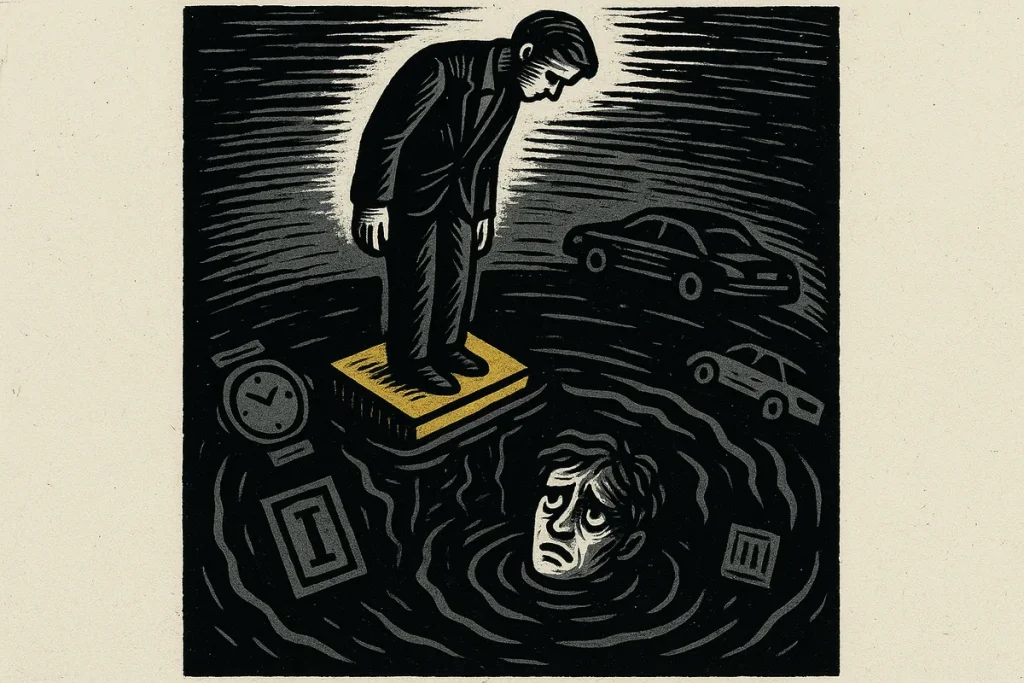
Picture a man at a company picnic. His neighbor just got promoted. His brother-in-law drives a newer truck. He is not hungry or cold. But something gnaws at him. That gnaw has a name.
Alain de Botton gave it the name in Status Anxiety (2004). The book traced the idea back further - to the ancient Stoics, to Montaigne, to the simple observation that human beings measure themselves against the people standing next to them.
The pain is not new. What is new is the scale. A medieval peasant compared himself to his village. We compare ourselves to everyone, all day, through a screen in our pocket.
Why Meritocracy Makes It Worse
A feudal serf knew his station was set at birth. He could not blame himself for it. That was cold comfort, but it was comfort of a kind.
A meritocracy tells a different story. Work hard, make good choices, and you will rise. That story has real truth in it. But it carries a hidden sting: if your success is your own doing, then your failure is too.
When the factory closes or the small business folds, the meritocratic story whispers that you must have deserved it. That whisper is status anxiety at its sharpest.
De Botton was careful here. He did not say meritocracy is wrong. He said it imposes a psychological cost that most people carry alone, without any name for what is hurting them.
Air Rage and the Visible Reminder
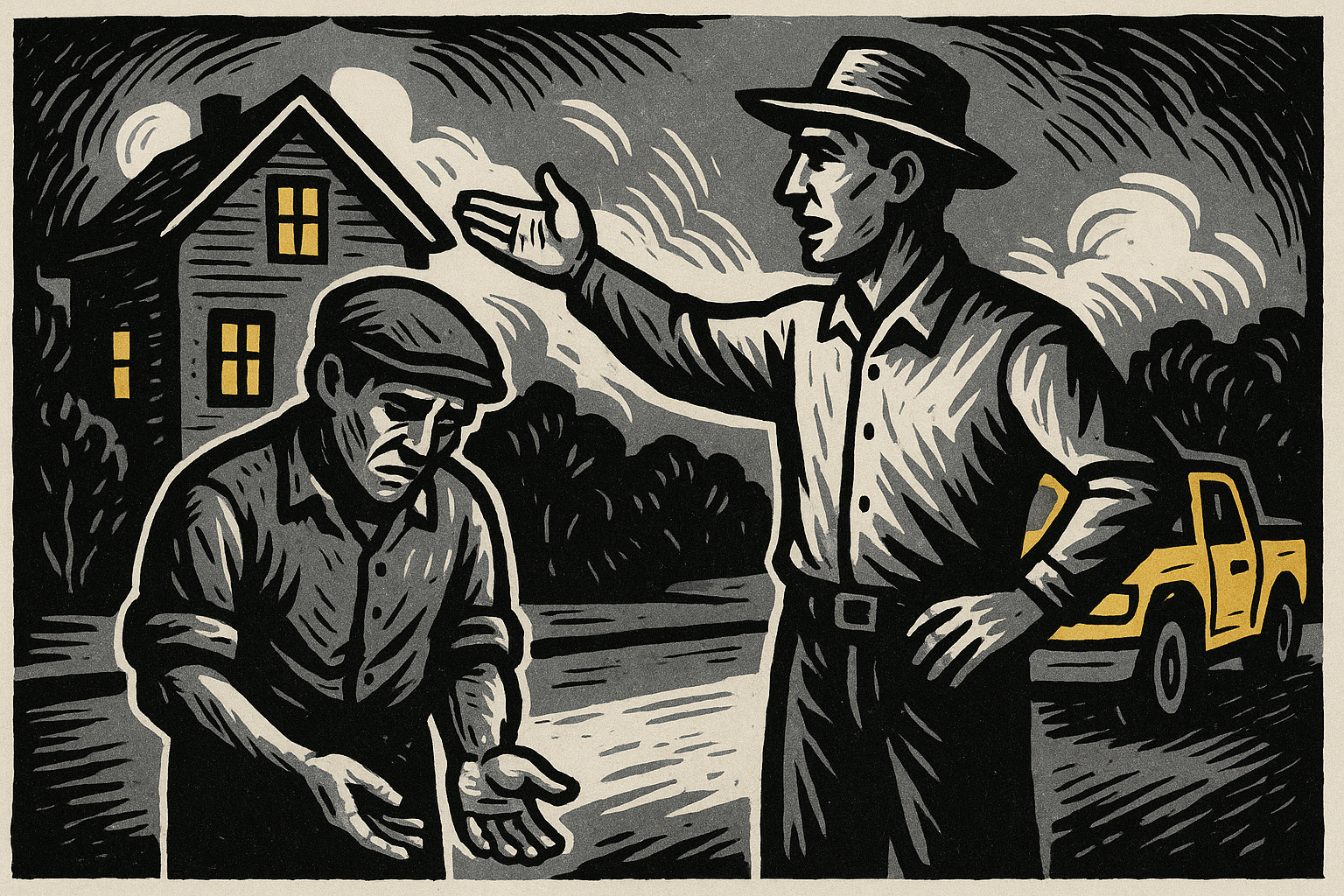
Researchers studying air rage found something telling. Passengers in coach were far more likely to lose their tempers on flights that had a first-class section - and far more likely still when they had to walk through that section to reach their seats.
The problem was not the legroom. The problem was the reminder.
Most of the time, inequality is abstract. A walk through first class makes it concrete and personal. The man in the middle seat is not angry about statistics. He is angry about what he just walked past.
This is status anxiety in working order. It does not require poverty. It requires comparison.
The Connection to Social Inequality
Status anxiety tracks inequality the way a barometer tracks weather. When the gap between the top and the bottom widens, the anxiety sharpens for everyone - not just the poor.
This is one reason the neo-feudal drift of the last thirty years matters beyond politics. A society where asset prices and credentials separate winners from losers at birth does not just produce economic unfairness. It produces a permanent low-grade dread.
The man who cannot buy a house in the town where he grew up is not simply priced out. He feels it as a verdict on his worth. That feeling is a tax the system imposes on him, and nobody calls it that.
The Cure: Knowing What You Are Actually After
De Botton’s diagnosis came with a prescription. Status anxiety loosens its grip when a man knows what he genuinely wants - not what the people around him want, not what the culture tells him to want.
Most people chase status. But status is a proxy. It stands in for something else: security, respect, love, the sense that one’s life has counted for something. Chase the proxy and you run forever. Chase the real thing and you have a target.
Abraham Maslow mapped this decades ago in his hierarchy of needs. Self-actualization - becoming what you are built to become - sits above esteem. The man who gets there stops needing the neighbor’s approval.
This is not a call to stop caring about achievement. It is a call to aim at the right target. A man who pursues craftsmanship in his trade, loyalty to his family, and faithfulness to his parish has a full life. He has less time for envy. That is the practical cure.
For a deeper treatment, read Status Anxiety by de Botton. For the ancient version of the same argument, Seneca’s letters are available free through the Online Library of Liberty. For the connection between self-knowledge and achievement, the human potential movement entry covers the modern context.
What to Do With the Diagnosis
Naming the thing helps. When you feel the gnaw, you can ask: is this real information, or is it the comparison machine running on its own?
Often it is the machine. Your neighbor’s promotion says nothing about your worth. The truck in his driveway is not a verdict.
The Stoics had a word for this kind of clear-eyed self-assessment. De Botton called it sprezzatura - the easy confidence of a man who knows who he is and does not need to prove it to the room.
That is the goal. Not indifference to the world. Not false modesty. Just a man who knows what he is building and keeps building it.
« Back to Glossary Index