
 BY
BY Table of Contents
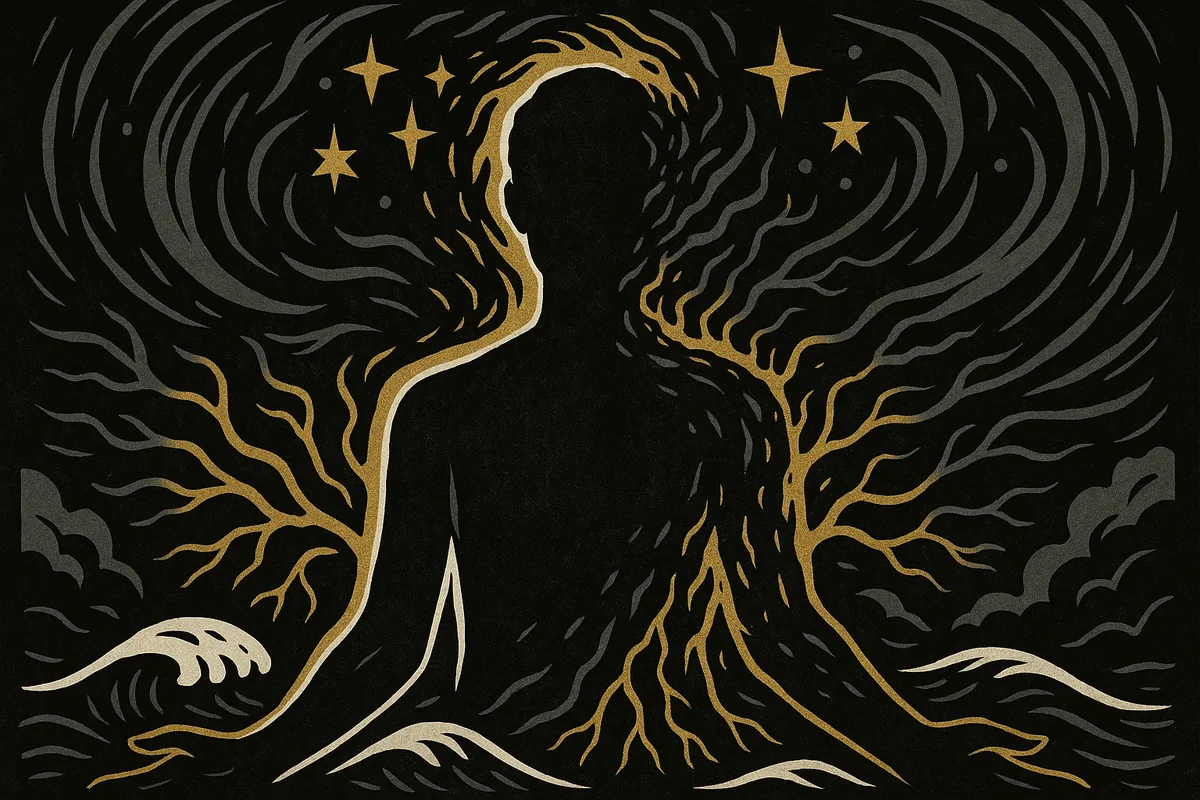
Psychedelics occupy a strange position in the modern world – simultaneously ancient and taboo, clinically promising and legally suppressed. The managerial state, which licenses what you may ingest, how you may worship, and what constitutes legitimate inquiry into consciousness, has a structural interest in keeping certain modes of perception off the table. The prohibition is not primarily a health measure. It is, as Terence McKenna observed directly, a defense of the opinion structures and behavioral models that sustain managed consent. When a substance dissolves those structures, the regime notices.
That diagnosis does not settle the deeper question of what psychedelics are and what they are for. The thinkers collected here – researchers, writers, chemists, philosophers, and mystics – converge on a point worth stating plainly: used with intention and seriousness, psychedelics belong to the same category as meditation, contemplative prayer, or rigorous philosophical practice. They are instruments of perception, not ends in themselves. Alan Watts said it concisely: if you get the message, hang up the phone. The biologist does not sit with his eye permanently fixed to the microscope.
The mysticism section below extends the frame beyond chemistry. The unknown does not become unknowable simply because institutional science has not yet classified it. G.K. Chesterton’s point stands: you cannot lock all the gates of a region you have never mapped. What the quotes here collectively argue is that the inner world is real, that it rewards investigation, and that the tools available for that investigation are more numerous than the corporate-government complex typically acknowledges. Read them as a map, not a prescription.
Psychedelics as Instruments of Perception
“If you get the message, hang up the phone. For psychedelic drugs are simply instruments, like microscopes, telescopes, and telephones. The biologist does not sit with eye permanently glued to the microscope, he goes away and works on what he has seen.”
- Alan Watts, Goodreads
“Psychedelics, used responsibly and with proper caution, would be for psychiatry what the microscope is for biology and medicine or the telescope is for astronomy.”
- Stanislav Grof, Psychedelic Library
“Psychedelics are illegal not because a loving government is concerned that you may jump out of a third-story window.
Psychedelics are illegal because they dissolve opinion structures and culturally laid down models of behavior and information processing. They open you up to the possibility that everything you know is wrong.”
- Terence McKenna, Wikiquote
“I am 100 percent in favor of the intelligent use of drugs, and 1,000 percent against the thoughtless use of them, whether caffeine or LSD. And drugs are not central to my life.”
- Timothy Leary, LibQuotes
“How odd it is that writers like Belloc and Chesterton may sing the praises of alcohol (which is responsible for about two-thirds of the car accidents and three-quarters of the crimes of violence) and be regarded as good Christians and noble fellows.
Whereas anyone who ventures to suggest that there may be other and less harmful shortcuts to self-transcendence is treated as a dangerous drug fiend and wicked perverter of weak-minded humanity.”
- Aldous Huxley, Google Books
“There is a wealth of information built into us…tucked away in the genetic material in every one of our cells…without some means of access, there is no way even to begin to guess at the extent and quality of what is there.
The psychedelic drugs allow exploration of this interior world and insights into its nature.”
- Alexander Shulgin, LibQuotes
Ego, Consciousness, and the Inner Universe
“When we look within ourselves with psilocybin, we discover that we do not have to look outward toward the futile promise of life that circles distant stars in order to still our cosmic loneliness.
We should look within; the paths of the heart lead to nearby universes full of life and affection for humanity.”
- Terence McKenna, Goodreads
“Taking LSD was a profound experience, one of the most important things in my life. LSD shows you that there’s another side to the coin, and you can’t remember it when it wears off, but you know it.
It reinforced my sense of what was important – creating great things instead of making money, putting things back into the stream of history and of human consciousness as much as I could.”
- Steve Jobs, Business Insider
“LSD was an incredible experience. Not that I’m recommending it for anybody else; but for me, it kind of hammered home to me that reality was not a fixed thing.
That the reality that we saw about us every day was one reality, and a valid one but that there were others, different perspectives where different things have meaning that was just as valid. That had a profound effect on me.”
– Alan Moore
“It’s a very salutary thing to realize that the rather dull universe in which most of us spend most of our time is not the only universe there is. I think it’s healthy that people should have this experience.”
- Aldous Huxley, Moksha: Writings on Psychedelics & the Visionary Experience
“The man who comes back through the Door in the Wall will never be quite the same as the man who went out. He will be wiser but less sure, happier but less self-satisfied, humbler in acknowledging his ignorance yet better equipped to understand the relationship of words to things, of systematic reasoning to the unfathomable mystery which he tries, forever vainly, to comprehend.”
- Aldous Huxley, The Doors of Perception
“There are experiences that most of us are hesitant to speak about, because they do not conform to everyday reality and defy rational explanation. These are not particular external occurrences, but rather events of our inner lives, which are generally dismissed as figments of the imagination and barred from our memory.
Suddenly, the familiar view of our surroundings is transformed in a strange, delightful, or alarming way: it appears to us in a new light, takes on a special meaning. Such an experience can be as light and fleeting as a breath of air, or it can imprint itself deeply upon our minds.”
- Albert Hofmann, LSD: My Problem Child
Mysticism, the Unknown, and the Philosophic Quest
“Lao Tzu once said, ‘Nature doesn’t hurry, yet everything is accomplished.’ A single seed planted, eventually becomes a garden in time – when things get tough, tend to the garden in your mind.”
- Jennifer Sodini, Goodreads
“Do you not think that there are things which you cannot understand, and yet which are; that some people see things that others cannot?
But there are things old and new which must not be contemplated by men’s eyes, because they know – or think they know – some things which other men have told them. Ah, it is the fault of our science that it wants to explain all; and if it explain not, then it says there is nothing to explain.”
- Bram Stoker, Dracula
“Surely we cannot take an open question like the supernatural and shut it with a bang, turning the key of the madhouse on all the mystics of history.
You cannot take the region of the unknown and calmly say that, though you know nothing about it, you know all the gates are locked. We do not know enough about the unknown to know that it is unknowable.”
- G.K. Chesterton, Google Books
“The goals of an intelligent life, according to Socrates, is to pursue the philosophic quest – to increase one’s knowledge of self and world.”
- Timothy Leary, Brandon Gaille
Final Thoughts
What the quotes above share, across disciplines and centuries, is a refusal to accept the managed consensus about the boundaries of human experience. The managerial state – medical, legal, academic – has strong institutional reasons to police the perimeter of consciousness. Approved inputs, approved outputs, approved therapies. What these thinkers argue, each in their own register, is that the interior world does not obey those jurisdictional lines. The mystic and the psychonaut and the philosopher are not in separate traditions. They are pointing at the same unmapped territory from different angles.
The practical takeaway is the one Alan Watts supplied: the instrument is not the destination. Psychedelics, meditation, contemplative reading, philosophical practice – these are all methods for loosening the grip of habituated perception, not lifestyle identities to be adopted wholesale. For a rigorous account of how philosophy itself functions as a lived practice of self-transformation rather than a credentialing exercise, Pierre Hadot’s Philosophy as a Way of Life is the right starting point. Hadot demonstrates that what the ancient schools were actually teaching – Stoic, Epicurean, Platonic – was a set of exercises for changing how one sees, not merely what one believes. That project and the one described across these quotes are, at bottom, the same project.