
 BY
BY Table of Contents
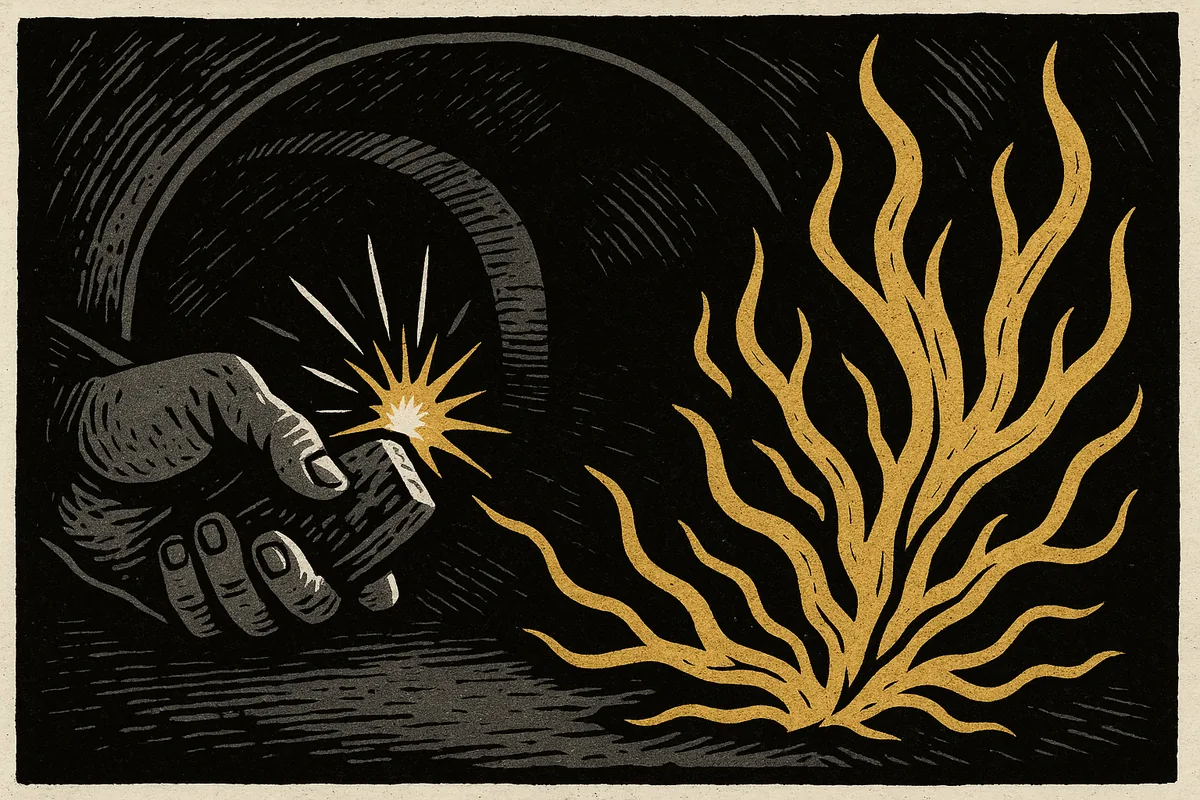
Ideas are not decoration. They are the operating code of civilizations – the invisible architecture that determines what gets built, what gets torn down, and who holds the levers in between. The regime of any given era is downstream of the ideas that captured its most consequential minds one or two generations prior. That is not a romantic notion. It is a structural observation confirmed by every major historical inflection point on record.
What makes ideas uniquely dangerous – and uniquely liberating – is their durability. You can imprison a man, destroy a press, or dissolve an institution. You cannot as easily kill a well-formed idea once it has taken root in a critical number of minds. Aldous Huxley understood this. So did Goethe. The history of political thought from Etienne de la Boetie’s The Politics of Obedience to James Burnham’s The Managerial Revolution is essentially a history of ideas reshaping power arrangements that looked, from the inside, permanent and inevitable.
The quotes collected below come from thinkers and builders across different centuries and disciplines. What they share is a clear-eyed account of how ideas originate, how they compound, and how one well-timed insight can unlock what years of effort could not. Read them as diagnostics, not motivational filler.
Ideas as a Historical Force
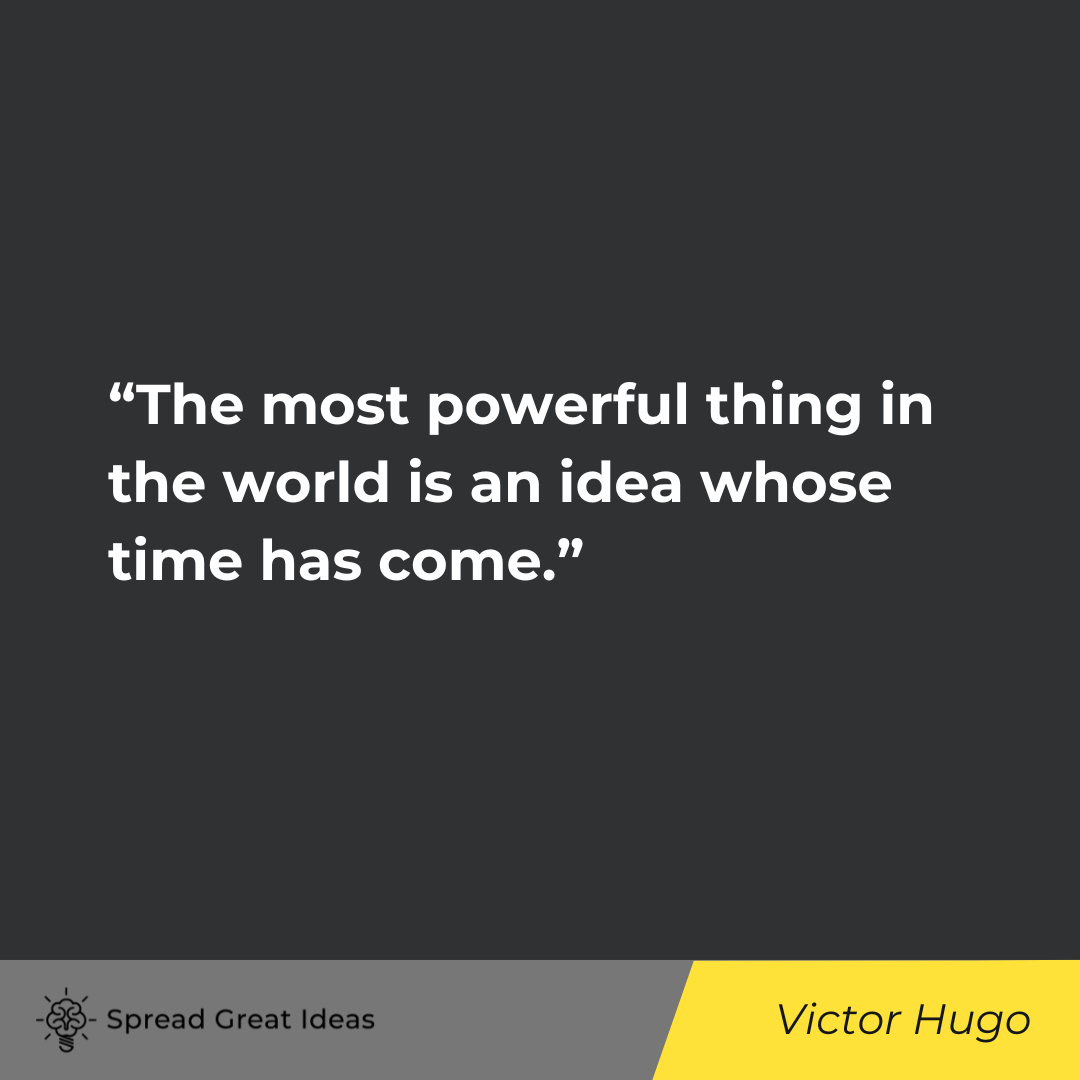
“The most powerful thing in the world is an idea whose time has come.”
- Victor Hugo, Victor Hugo – Google Books
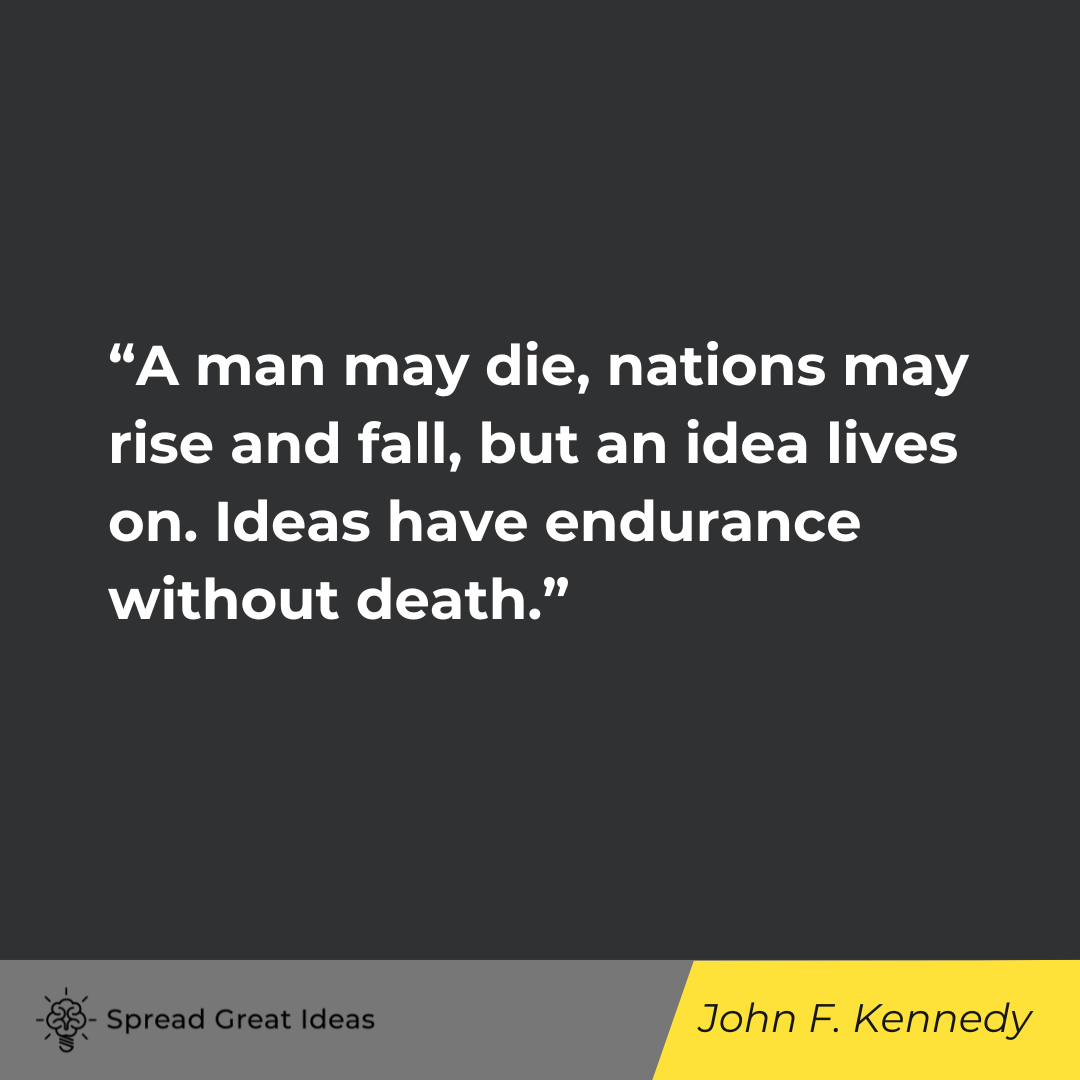
“A man may die, nations may rise and fall, but an idea lives on. Ideas have endurance without death.”
- John F. Kennedy, Remarks Recorded for the Opening of USIA Transmitter – Greenville, North Carolina
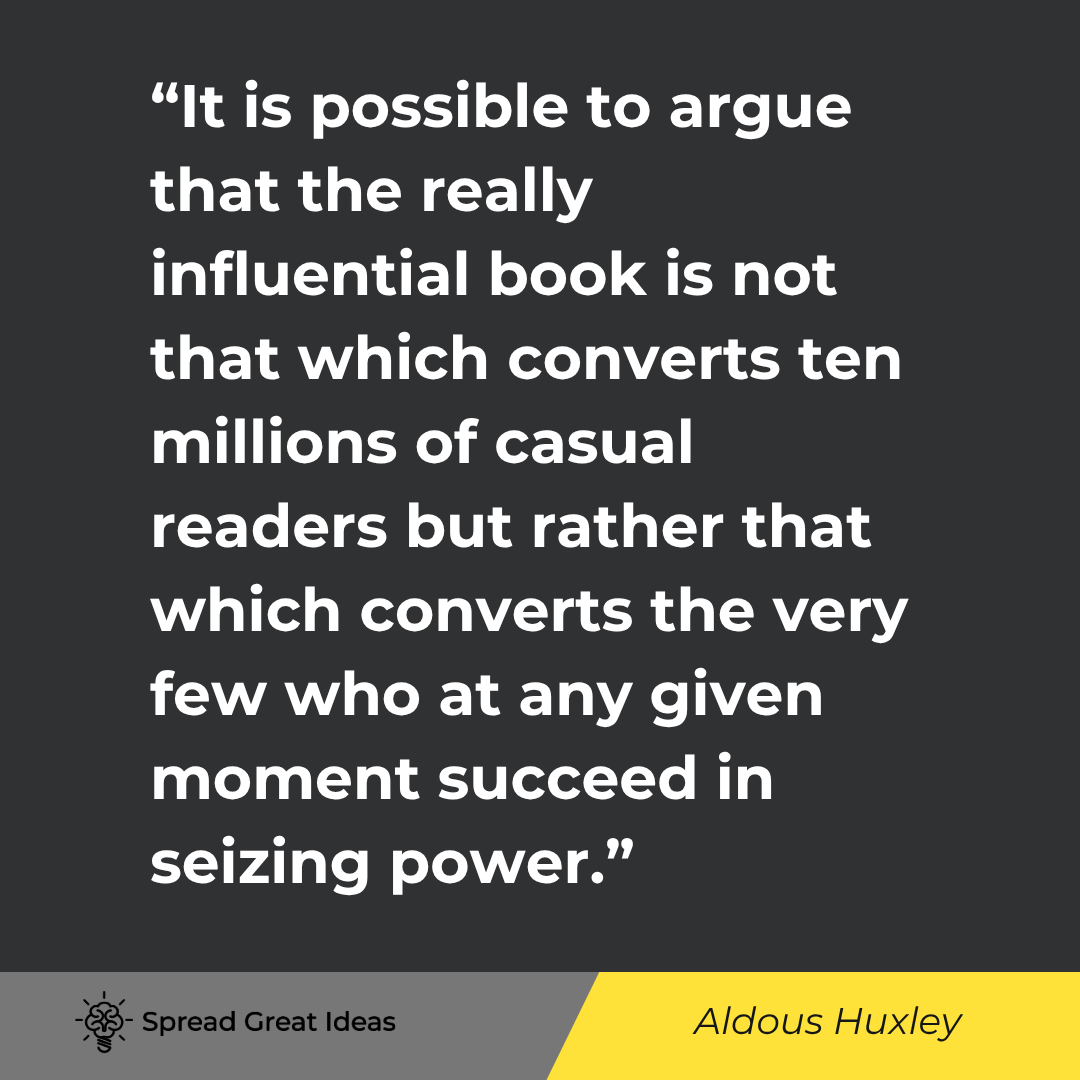
“It is possible to argue that the really influential book is not that which converts ten millions of casual readers but rather that which converts the very few who at any given moment succeed in seizing power.
Marx and Sorel have been influential in the modern world. Not so much because they were best sellers. But because among their few readers were two men called respectively Lenin and Mussolini.”
– Aldous Huxley, Aldous Quotes
Ideas Require Action to Matter
“Daring ideas are like chessmen moved forward. They may be beaten, but they may start a winning game.”
- Johann Wolfgang von Goethe, Goethe on BrainyQuote
“Everyone who’s ever taken a shower has an idea. It’s the person who gets out of the shower, dries off and does something about it who makes a difference.”
- Nolan Bushnell, Nolan Bushnell on BrainyQuote
“Ideas can be life-changing. Sometimes all you need is just one more in a series of good ideas. It’s like dialing the numbers into the lock. You’ve got 5 or 6 numbers dialed into the lock, and the lock still won’t come up. But you don’t need 5 or 6 more numbers. Maybe you just need one more.”
- Jim Rohn, Jim Rohn on BrainyQuote
The Currency of the Mind
“Be less curious about people and more curious about ideas.”
- Marie Curie, MIT – Be Less Curious About People and More Curious About Ideas
Final Thoughts
The through-line across these quotes is not optimism – it is mechanism. Hugo’s observation that an idea whose time has come is unstoppable is not a feel-good sentiment. It is a description of how power shifts. Huxley’s point cuts even deeper: the mass audience is largely irrelevant. What determines the trajectory of a society is which ideas reach the handful of people positioned to act on them at scale. That is a structural argument about how change actually works, and it should recalibrate where you direct your intellectual energy.
For a foundational account of how ideas and consent interact to sustain – or dissolve – political arrangements, Etienne de la Boetie’s The Politics of Obedience: The Discourse of Voluntary Servitude remains essential. Written in the sixteenth century, it asks the question that underlies every quote on this page: why do people accept the ideas handed to them, and what happens when they stop? Pair it with James Burnham’s The Managerial Revolution for a twentieth-century structural account of how new classes capture institutional life by first capturing its dominant ideas. Together, they form a diagnostic toolkit that no collection of inspirational quotes can replace – but that these quotes, read seriously, point directly toward.