
 BY
BY Table of Contents
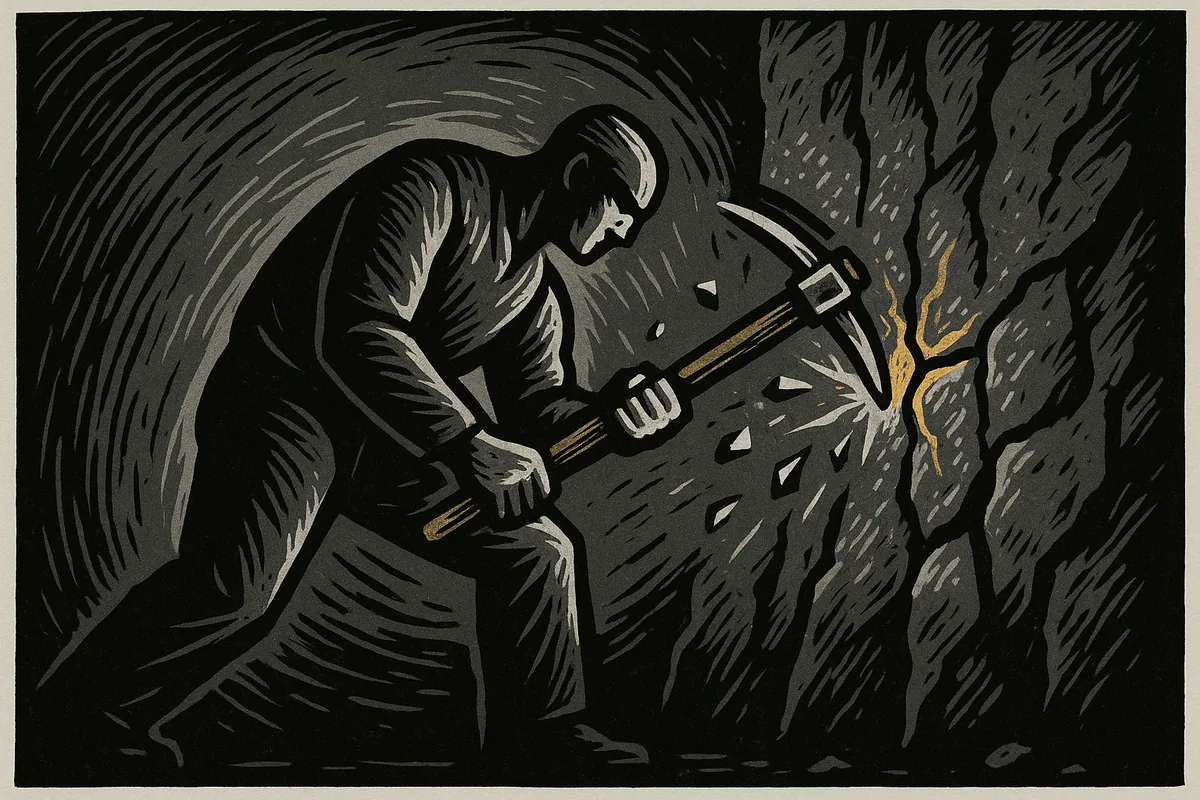
Hard work is not a virtue the modern managerial culture is equipped to discuss honestly. What it produces – competence, self-sufficiency, the earned confidence of a man who has actually done something – is precisely what the therapeutic regime finds threatening and the credentialing apparatus finds inconvenient. So the subject gets softened: rebranded as “hustle,” gamified into productivity systems, or dissolved into discourse about systemic barriers to effort. What gets lost in that translation is the actual structure of the thing. Hard work is not motivation. It is not passion. It is the disciplined application of effort over time, in the presence of difficulty, in the absence of immediate reward. Theodore Roosevelt understood this, and so did Thomas Jefferson. The distinction matters because a culture that cannot name a thing correctly cannot transmit it.
The quotes collected here converge on three structural observations that hold up across every domain where performance is actually measurable. The first is that persistence is not temperament – it is a practice, and the people who outlast their early failures tend to win not because they felt more optimistic but because they kept working when optimism was not available. The second is that effort precedes excellence and is not its byproduct: mastery has no shortcut, and what looks like natural talent is almost always someone else’s accumulated work that you arrived too late to watch. The third is that the relevant unit of hard work is not the heroic burst – the all-nighter, the sprint, the dramatic comeback – but the daily practice, the unglamorous repetition that compounds across months and years into something that cannot be faked or borrowed.
These are not motivational observations. They are diagnostic ones. Read them that way and they are considerably more useful.
The Discipline of Persistence
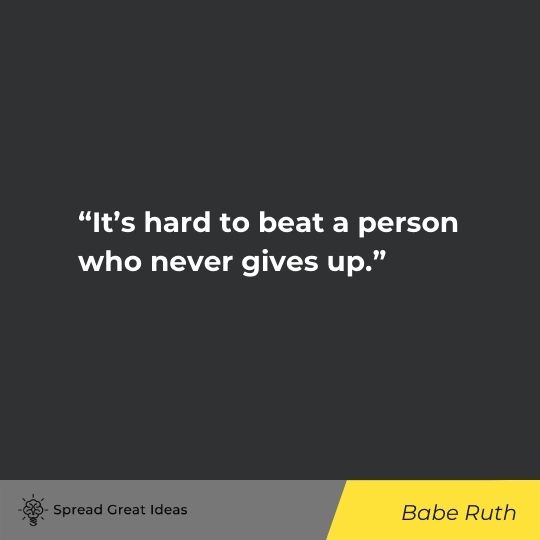
“It’s hard to beat a person who never gives up.”
– Babe Ruth
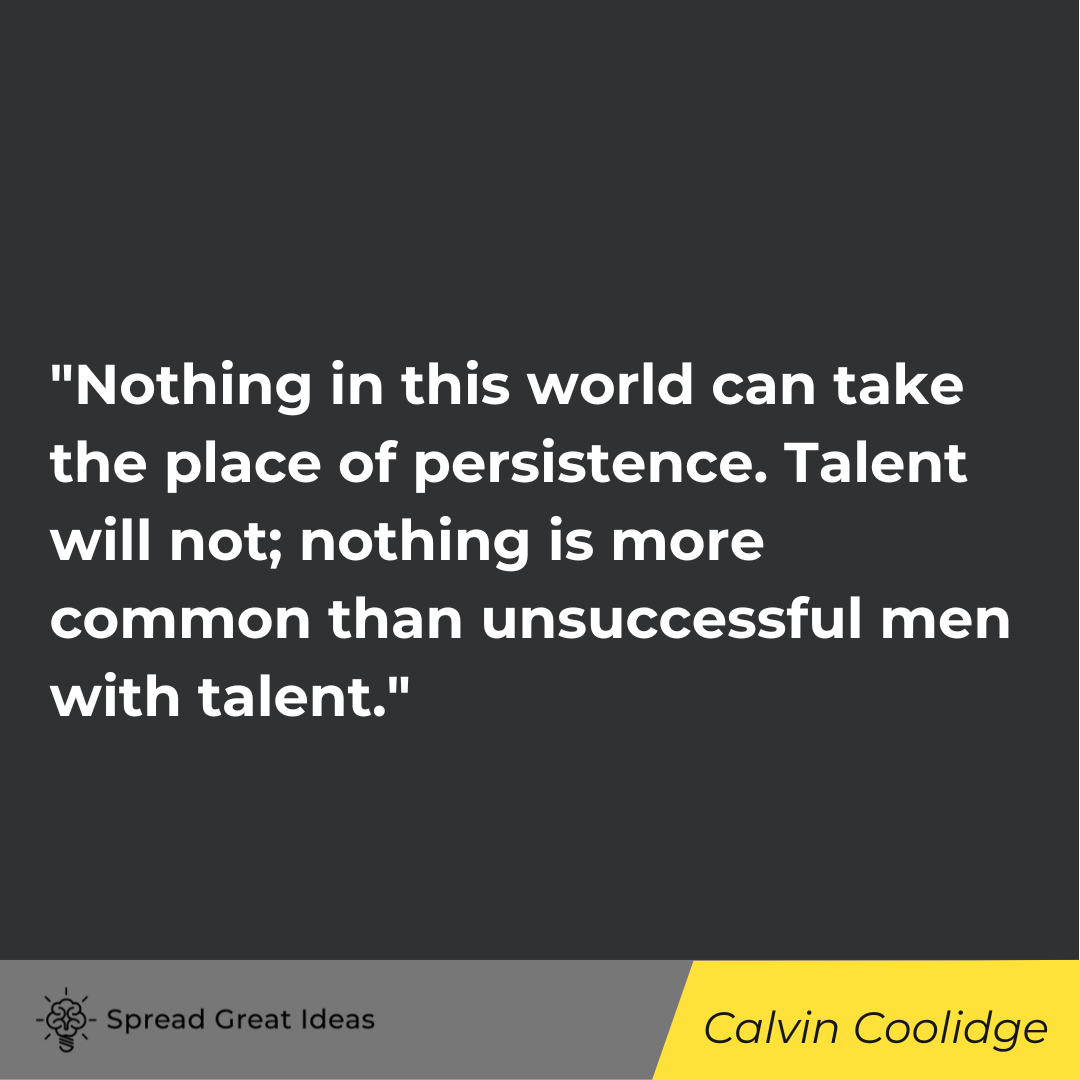
“Nothing in this world can take the place of persistence. Talent will not; nothing is more common than unsuccessful men with talent. Genius will not; unrewarded genius is almost a proverb.
Education will not; the world is full of educated derelicts. Persistence and determination alone are omnipotent.”
– Calvin Coolidge
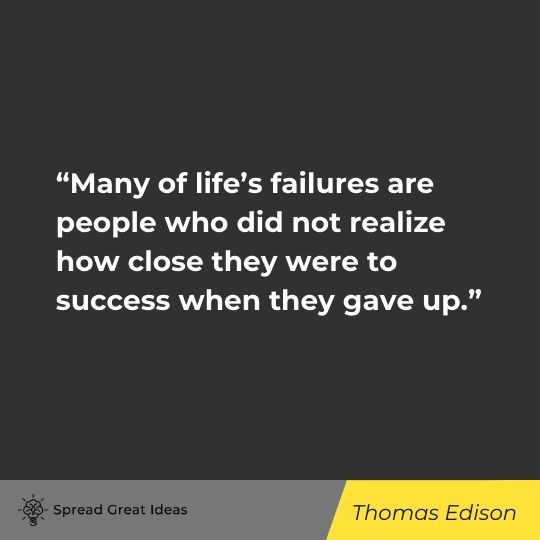
“Many of life’s failures are people who did not realize how close they were to success when they gave up.”
– Thomas Edison
“Success is not final, failure is not fatal: it is the courage to continue that counts.”
– Winston Churchill, Attribution contested
“Perseverance is not a long race; it is many short races one after the other.”
– Walter Elliot
“Freedom is obedience to self-formulated rules.”
– Aristotle, Attribution contested
“Hold yourself responsible for a higher standard than anybody else expects of you. Never excuse yourself.”
- Henry Ward Beecher

“Determine never to be idle. No person will have occasion to complain of the want of time, who never loses any. It is wonderful how much may be done if we are always doing.”
- Thomas Jefferson, Letter to Martha Jefferson

“With self-discipline most anything is possible.”
- Theodore Roosevelt

“Lack of direction, not lack of time, is the problem. We all have twenty-four hour days.”
- Zig Ziglar

“I love quotes…but, in the end, knowledge has to be converted to action or it’s worthless.”
- Tony Robbins
Effort as the Source of Excellence
“Nothing in the world is worth having or worth doing unless it means effort, pain, difficulty…I have never in my life envied a human being who led an easy life. I have envied a great many people who led difficult lives and led them well.”
- Theodore Roosevelt, The Strenuous Life (1900)
“Allowing only ordinary ability and opportunity, we may explain success mainly by one word and that word is WORK! WORK!! WORK!!! WORK!!!!…”
- Frederick Douglass, Self-Made Men, lecture (1859)

“Genius is one percent inspiration and ninety-nine percent perspiration.”
– Thomas Edison

“Inspiration exists, but it has to find you working.”
– Pablo Picasso

“If you want to be the best, you have to do things other people aren’t willing to do.”
– Michael Phelps
“If people knew how hard I had to work to gain my mastery, it would not seem so wonderful at all.”
– Michelangelo, Attribution contested
“The dictionary is the only place that success comes before work. Work is the key to success, and hard work can help you accomplish anything.”
- Vince Lombardi
Hard Work vs Talent: Why Effort Wins

“I’m a great believer in luck, and I find the harder I work the more I have of it.”
– Thomas Jefferson, Attribution contested
“Hard work beats talent when talent doesn’t work hard.”
– Tim Notke
“Talent is cheaper than table salt. What separates the talented individual from the successful one is a lot of hard work.”
- Stephen King, On Writing: A Memoir of the Craft (2000)
“If hard work is the key to success, most people would rather pick the lock.”
– Claude McDonald

“It is amateurs who have one big bright beautiful idea that they can never abandon. Professionals know they have to produce theory after theory before they are likely to hit the jackpot.”
- Francis Crick, What Mad Pursuit
The Daily Practice

“Your real resume is just a cataloging of all your suffering.”
- Naval Ravikant
“Success is the sum of small efforts, repeated day in and day out.”
– Robert Collier

“The man who moves a mountain begins by carrying away small stones.”
– Confucius
“Be grateful for adversity, for it forces the human spirit to grow.”
- Jim Rohn, Cultivating an Unshakable Character

“Suffer the pain of discipline or suffer the pain of regret.”
– Jim Rohn
“Don’t watch the clock; do what it does. Keep going.”
– Sam Levenson
“We must all suffer from one of two pains: the pain of discipline or the pain of regret. The difference is discipline weighs ounces while regret weighs tons.”
- Jim Rohn
“The difference between successful people and very successful people is that very successful people say ‘no’ to almost everything.”
- Warren Buffett

“Action speaks louder than words but not nearly as often.”
- Mark Twain

“All hat; no cattle.”
- American proverb
Final Thoughts
Theodore Roosevelt’s The Strenuous Life (1900) is the founding document of the American case for hard work as a moral position. Frederick Douglass’s Self-Made Men lecture (1859) is the version that anchors the same argument in the experience of someone who had every reason to believe luck mattered more than work. Both are short reads. For the modern version, Jim Rohn’s lectures are the cleanest distillation of the argument applied to ordinary life.
What holds these quotes together is not optimism. Optimism is cheap. What holds them together is a specific structural claim: that the outcome of sustained effort is more predictable than the outcome of talent, connection, or circumstance. Jefferson’s luck quote is in this collection not because it flatters hard workers but because it states something empirically true – the person who shows up every day simply has more shots. Babe Ruth strikes out more than almost anyone else who ever played. Roosevelt, by the time he wrote The Strenuous Life, had buried a wife and his mother on the same day and was working a cattle ranch in the Badlands. The men and women quoted on this page are not arguing that effort removes hardship. They are arguing that effort is the correct response to it, and that the response, repeated, produces something the person who waits for favorable conditions never builds.
If you want one book to read alongside this page, the honest recommendation is Douglass’s lecture in full – but for something that applies the same logic to the structure of daily work, Mastery by Robert Greene is the closest modern equivalent to what these quotes are pointing at. Greene traces the working lives of people who became genuinely exceptional – not through shortcuts, not through raw talent alone – and the pattern he finds is the same one Jefferson, Roosevelt, and Douglass already knew. You already suspected it. The quotes above just make it harder to keep ignoring.