
 BY
BY Table of Contents
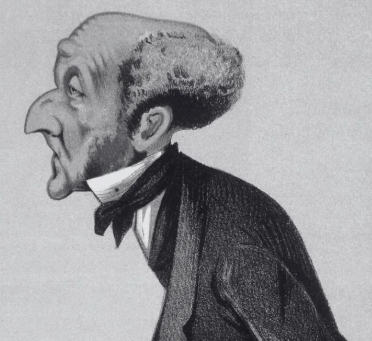
John Stuart Mill is the philosopher the managerial state loves to misquote. The harm principle – power may only be exercised over a citizen against his will to prevent harm to others – sounds like a bureaucrat’s blank check until you read what Mill actually wrote. On Liberty (1859) is not a permission slip for every downstream regulation issued in the name of public welfare. It is a systematic argument that the gravest threat to a free society is not the despot with a crown but the majority with a clipboard: slow, ambient, socially enforced conformity that grinds down the individual before he ever sees the inside of a courtroom.
Mill grew up as a deliberate intellectual experiment – Greek at three, Latin at eight, the full weight of the Western curriculum loaded onto a child who had no say in the matter – and the experiment collapsed him at twenty. What he rebuilt from that wreckage was a philosophy genuinely hostile to any authority, state or social, that substitutes collective comfort for individual development. This puts him in an awkward position for the modern left, which claims his inheritance while running precisely the regime of soft compulsion he warned against, and for the modern right, which often dismisses him as a utilitarian relativist while ignoring that his argument for free expression is stronger and less sentimental than most of what Conservative Inc. produces on the subject. The honest read is that Mill diagnosed the disease – the tyranny of prevailing opinion, the silencing of eccentric thought, the flattening of character that mass democracy quietly produces – with more precision than his admirers have ever been willing to admit.
The quotes collected here draw from On Liberty, Utilitarianism, The Subjection of Women, and his Autobiography, and they cover the terrain Mill actually cared about: the conditions under which genuine liberty is possible, the difference between a society that tolerates dissent and one that has merely not yet gotten around to punishing it, and why a civilization that stops producing vigorous individuals stops being a civilization in any meaningful sense. Read them with that argument in view and they land harder than any pull-quote presentation suggests.
John Stuart Mill On Liberty Quotes
“If the roads, the railways, the banks, the insurance offices, the great joint-stock companies, the universities, and the public charities, were all of them branches of the government; if, in addition, the municipal corporations and local boards, with all that now devolves on them, became departments of the central administration; if the employees of all these different enterprises were appointed and paid by the government, and looked to the government for every rise in life;
not all the freedom of the press and popular constitution of the legislature would make this or any other country free otherwise than in name.”
- John Stuart Mill, On Liberty
“[T]he sole end for which mankind are warranted, individually or collectively, in interfering with the liberty of action of any of their number, is self-protection.
That the only purpose for which power can be rightfully exercised over any member of a civilized community, against his will, is to prevent harm to others.”
- John Stuart Mill, On Liberty
“The only freedom which deserves the name, is that of pursuing our own good in our own way, so long as we do not attempt to deprive others of theirs, or impede their efforts to obtain it. Each is the proper guardian of his own health, whether bodily, or mental and spiritual.
Mankind are greater gainers by suffering each other to live as seems good to themselves, than by compelling each to live as seems good to the rest.”
- John Stuart Mill, On Liberty
“Society can and does execute its own mandates:
and if it issues wrong mandates instead of right, or any mandates at all in things with which it ought not to meddle, it practises a social tyranny more formidable than many kinds of political oppression, since, though not usually upheld by such extreme penalties, it leaves fewer means of escape, penetrating much more deeply into the details of life, and enslaving the soul itself.”
- John Stuart Mill, On Liberty
“Even despotism does not produce its worst effects, so long as Individuality exists under it; and whatever crushes individuality is despotism, by whatever name it may be called, and whether it professes to be enforcing the will of God or the injunctions of men.”
- John Stuart Mill, On Liberty
“The great writers to whom the world owes what religious liberty it possesses, have mostly asserted freedom of conscience as an indefeasible right, and denied absolutely that a human being is accountable to others for his religious belief.
Yet so natural to mankind is intolerance in whatever they really care about, that religious freedom has hardly anywhere been practically realised, except where religious indifference, which dislikes to have its peace disturbed by theological quarrels, has added its weight to the scale.”
- John Stuart Mill, On Liberty
“We have a right, also, in various ways, to act upon our unfavourable opinion of any one, not to the oppression of his individuality, but in the exercise of ours.”
- John Stuart Mill, On Liberty
“No government by a democracy or a numerous aristocracy, either in its political acts or in the opinions, qualities, and tone of mind which it fosters, ever did or could rise above mediocrity,
except in so far as the sovereign Many have let themselves be guided (which in their best times they always have done) by the counsels and influence of a more highly gifted and instructed One or Few.”
- John Stuart Mill, On Liberty
“In this age, the mere example of non-conformity, the mere refusal to bend the knee to custom, is itself a service. […] That so few now dare to be eccentric, marks the chief danger of the time.”
- John Stuart Mill, On Liberty
“It really is of importance, not only what men do, but also what manner of men they are that do it. Among the works of man, which human life is rightly employed in perfecting and beautifying, the first in importance surely is man himself.”
- John Stuart Mill, On Liberty
“A general State education is a mere contrivance for moulding people to be exactly like one another;
and as the mould in which it casts them is that which pleases the predominant power in the government, whether this be a monarch, a priesthood, an aristocracy, or the majority of the existing generation, in proportion as it is efficient and successful, it establishes a despotism over the mind, leading by natural tendency to one over the body.”
- John Stuart Mill, On Liberty
“The worth of a State, in the long run, is the worth of the individuals composing it; and a State which postpones the interests of their mental expansion and elevation, to a little more of administrative skill, or of that semblance of it which practice gives, in the details of business; a State which dwarfs its men, in order that they may be more docile instruments in its hands even for beneficial purposes, will find that with small men no great thing can really be accomplished;
and that the perfection of machinery to which it has sacrificed everything, will in the end avail it nothing, for want of the vital power which, in order that the machine might work more smoothly, it has preferred to banish.”
- John Stuart Mill, On Liberty
“Every one who receives the protection of society owes a return for the benefit, and the fact of living in society renders it indispensable that each should be bound to observe a certain line of conduct towards the rest.”
- John Stuart Mill, On Liberty
John Stuart Mill Utilitarianism Quotes
“Few human creatures would consent to be changed into any of the lower animals for a promise of the fullest allowance of a beast’s pleasures;
no intelligent human being would consent to be a fool, no instructed person would be an ignoramus, no person of feeling and conscience would be selfish and base, even though they should be persuaded that the fool, the dunce, or the rascal is better satisfied with his lot than they are with theirs.”
- John Stuart Mill, Utilitarianism
“Whatever can be proved to be good, must be so by being shown to be a means to something admitted to be good without proof.”
- John Stuart Mill, Utilitarianism
“Men lose their high aspirations as they lose their intellectual tastes, because they have not time or opportunity for indulging them;
and they addict themselves to inferior pleasures, not because they deliberately prefer them, but because they are either the only ones to which they have access or the only ones which they are any longer capable of enjoying.”
- John Stuart Mill, Utilitarianism
“Pleasure, and freedom from pain, are the only things desirable as ends; and that all desirable things (which are as numerous in the utilitarian as in any other scheme) are desirable either for the pleasure inherent in themselves, or as means to the promotion of pleasure and the prevention of pain.”
- John Stuart Mill, Utilitarianism
“In the golden rule of Jesus of Nazareth, we read the complete spirit of the ethics of utility. To do as one would be done by, and to love one’s neighbour as oneself, constitute the ideal perfection of utilitarian morality.”
- John Stuart Mill, Utilitarianism
“Society should treat all equally well who have deserved equally well of it, that is, who have deserved equally well absolutely.
This is the highest abstract standard of social and distributive justice; towards which all institutions, and the efforts of all virtuous citizens, should be made in the utmost possible degree to converge.”
- John Stuart Mill, Utilitarianism
John Stuart Mill Free Speech Quotes
“If all mankind minus one, were of one opinion, and only one person were of the contrary opinion, mankind would be no more justified in silencing that one person, than he, if he had the power, would be justified in silencing mankind.”
- John Stuart Mill, On Liberty
“The peculiar evil of silencing the expression of an opinion is, that it is robbing the human race; posterity as well as the existing generation; those who dissent from the opinion, still more than those who hold it.
If the opinion is right, they are deprived of the opportunity of exchanging error for truth: if wrong, they lose, what is almost as great a benefit, the clearer perception and livelier impression of truth, produced by its collision with error.”
- John Stuart Mill, On Liberty
Final Thoughts
What the Mill quotes collected here diagnose is not a problem of bad policy or defective legislators. It is a structural problem – one that Mill himself did not fully theorize but that his best observations point directly toward. The suppression of dissent, the manufacture of conformity, the rewarding of intellectual mediocrity: these are not accidents. They are the natural outputs of any system that concentrates authority over opinion and makes the costs of heterodoxy high enough that most people stop paying them. Mill recognized that majorities can tyrannize as effectively as monarchs, and that social pressure can silence more completely than statute. What he saw in embryo, the managerial state has since perfected. The corporate-government complex that regulates speech, credentials expertise, and sets the boundaries of permissible debate is not a perversion of the liberal order – it is, on a long enough timeline, its predictable product.
The reader who takes Mill seriously is eventually forced to confront a harder question than Mill himself chose to answer: whether the institutional machinery he trusted to protect liberty is the same machinery most adapted to destroying it. That question is developed with structural precision in Democracy: The God That Failed by Hans-Hermann Hoppe. Hoppe’s argument – that democratic governance systematically shortens time horizons, expands the state, and degrades the cultural preconditions that make ordered liberty possible – functions as the civilizational autopsy that Mill’s liberalism kept postponing. The two are not in simple agreement, but Hoppe answers the question Mill raised and then set aside. If the quotes above have made the tension legible, that book makes it precise.
Mill was right that a society which punishes eccentricity and rewards compliance eventually loses the capacity to produce anything worth having. The error is in assuming that warning is sufficient – that naming the disease arrests it. It does not. Regimes that suppress opinion do not do so because they failed to read On Liberty. They do so because suppression is structurally advantageous to them. Clarity about what Mill actually saw, stripped of the progressive appropriation that has since buried it, is the starting point. What you build on that foundation is the work that remains.