
 BY
BY Table of Contents
Economists stumbled upon something interesting a while back. Two different default assumptions about the world that shape how people see almost everything.
Zero-sum thinking. There’s a fixed pool of any specific good. For you to have more, someone else has to accept less. Your gain is my loss. The pie is the pie.
Positive-sum thinking. The pool can be expanded. Your gain doesn’t require my loss. The pie grows.
These sound like abstract economic categories. They’re not. They’re mental models – and Charlie Munger would argue they’re among the most important ones you can carry around in your head.
Munger built his entire investment philosophy on collecting mental models from multiple disciplines and applying them to decisions. Zero-sum and positive-sum belong in that toolkit because once you internalize them, you start seeing which one is operating in every situation you encounter. Business negotiations. Political debates. Relationships. Institutions.
And the model that dominates is not random.
Where each model lives
Here’s a rough field-by-field breakdown:
| Domain | Model |
|---|---|
| Foreign Affairs | Zero Sum |
| Intelligence | Zero Sum |
| Politics | Zero Sum |
| Fortune 100 | Zero Sum |
| Fortune 1000 | Mixed |
| Small Commerce | Positive Sum |
| Family Life | Positive Sum |
| Friends & Neighbors | Positive Sum |
| Religion | Mixed |
| Academia (Social Sciences) | Zero Sum |
| Academia (Engineering) | Positive Sum |
| Banking | Zero Sum |
| Cryptocurrencies | Positive Sum |
| Big Pharma | Zero Sum |
| Bio-Hackers | Positive Sum |
| Government Schools | Zero Sum |
| Home Schools | Positive Sum |
These are generalizations. There are exceptions. But sit with the list for a moment and notice what jumps out.
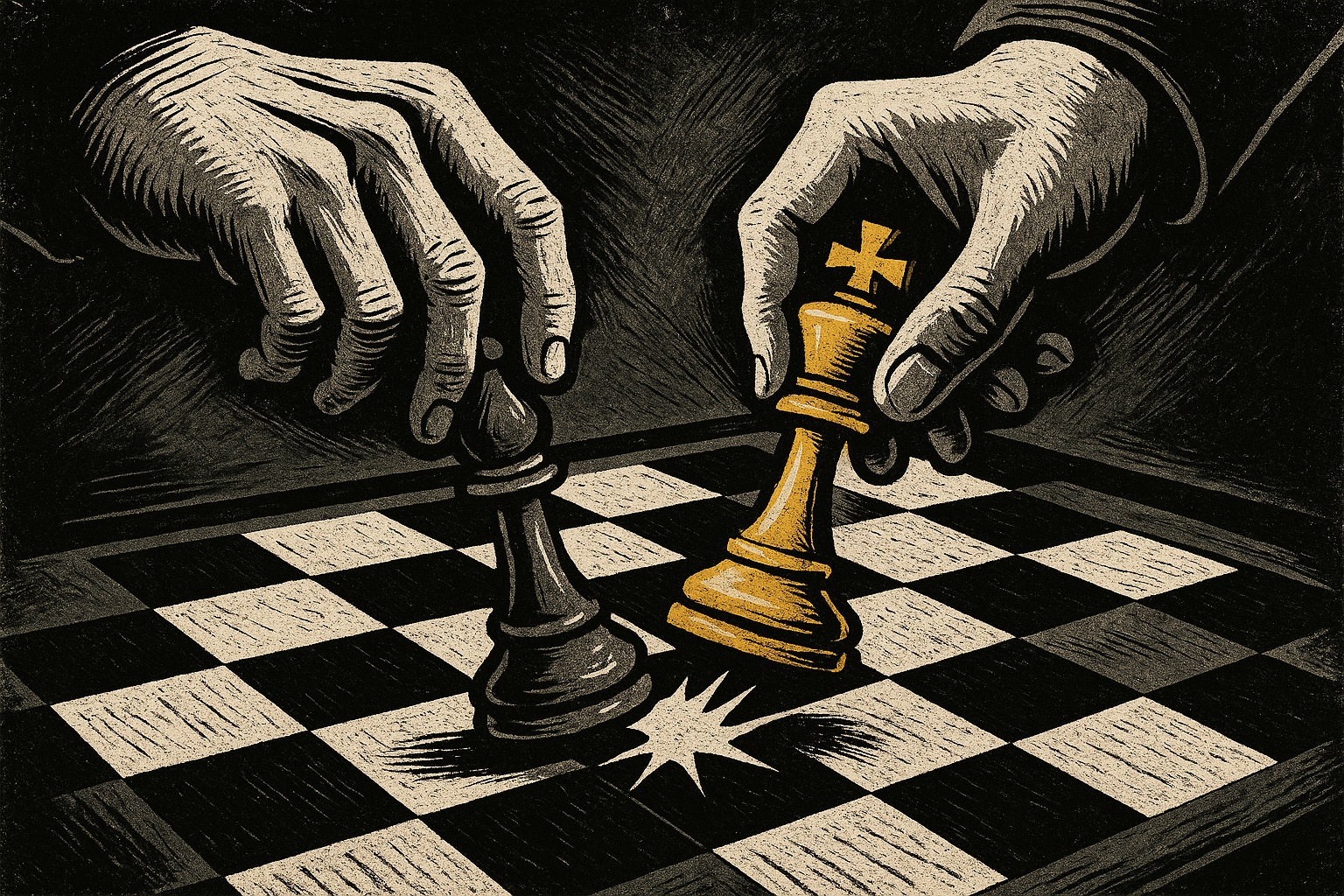
Everything in the zero-sum column is centralized. Controlled. Enforced by some combination of regulation, licensing, monopoly, or raw political power.
Everything in the positive-sum column is decentralized. Voluntary. Organic.
Enforced centralization is the driver of the zero-sum model. Without force backing them, zero-sum models dissolve. Decentralized, positive-sum models rise to take their place.
Not a coincidence.
The Third Wave
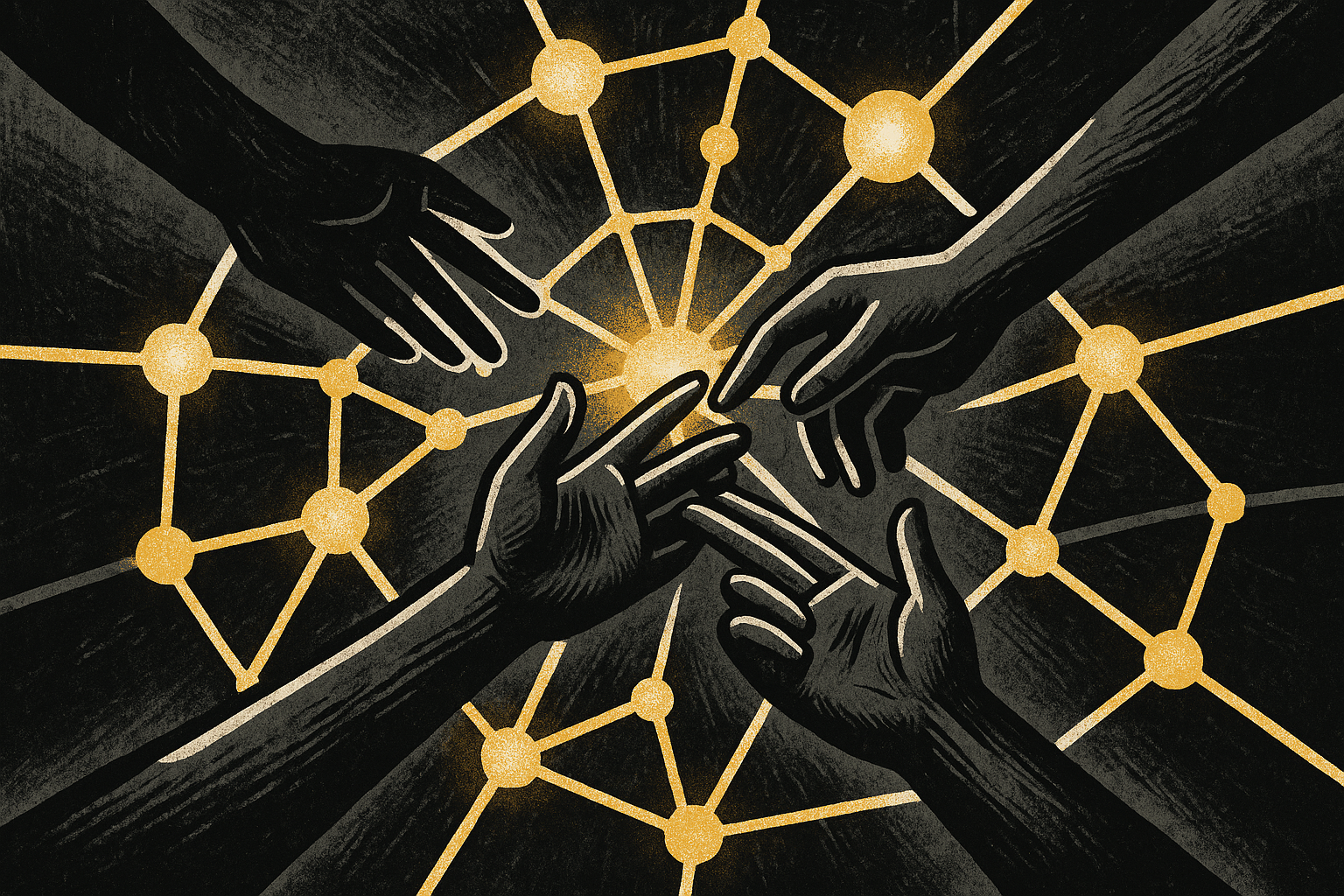
What we’re seeing now – some distance into what Alvin Toffler called the Third Wave – is that more or less every important development has had positive-sum characteristics.
The internet. Open-source software. Cryptocurrency. Biological self-experimentation. Home education. Small-scale commerce that can reach global markets from a laptop.
None of these required someone else to lose.
And now AI is emerging as maybe the most aggressively positive-sum technology we’ve ever seen.
Most analysis of AI and jobs is zero-sum by default. Anthropic’s own Economic Index shows clearly which jobs AI can theoretically do. (Spoiler: it’s mostly white-collar work.) AI can perform these tasks, ergo those jobs disappear. One wins, one loses. Fixed pie.
But that framing misses what actually happens when you make something dramatically cheaper. A friend of mine put it well recently: if accounting becomes 10x cheaper, clients still only need one tax return. Fixed demand. But for things like software, design, content, internal tools, automation? Demand is basically uncapped. Lower the cost 10x and you might unlock 50x more things worth building.
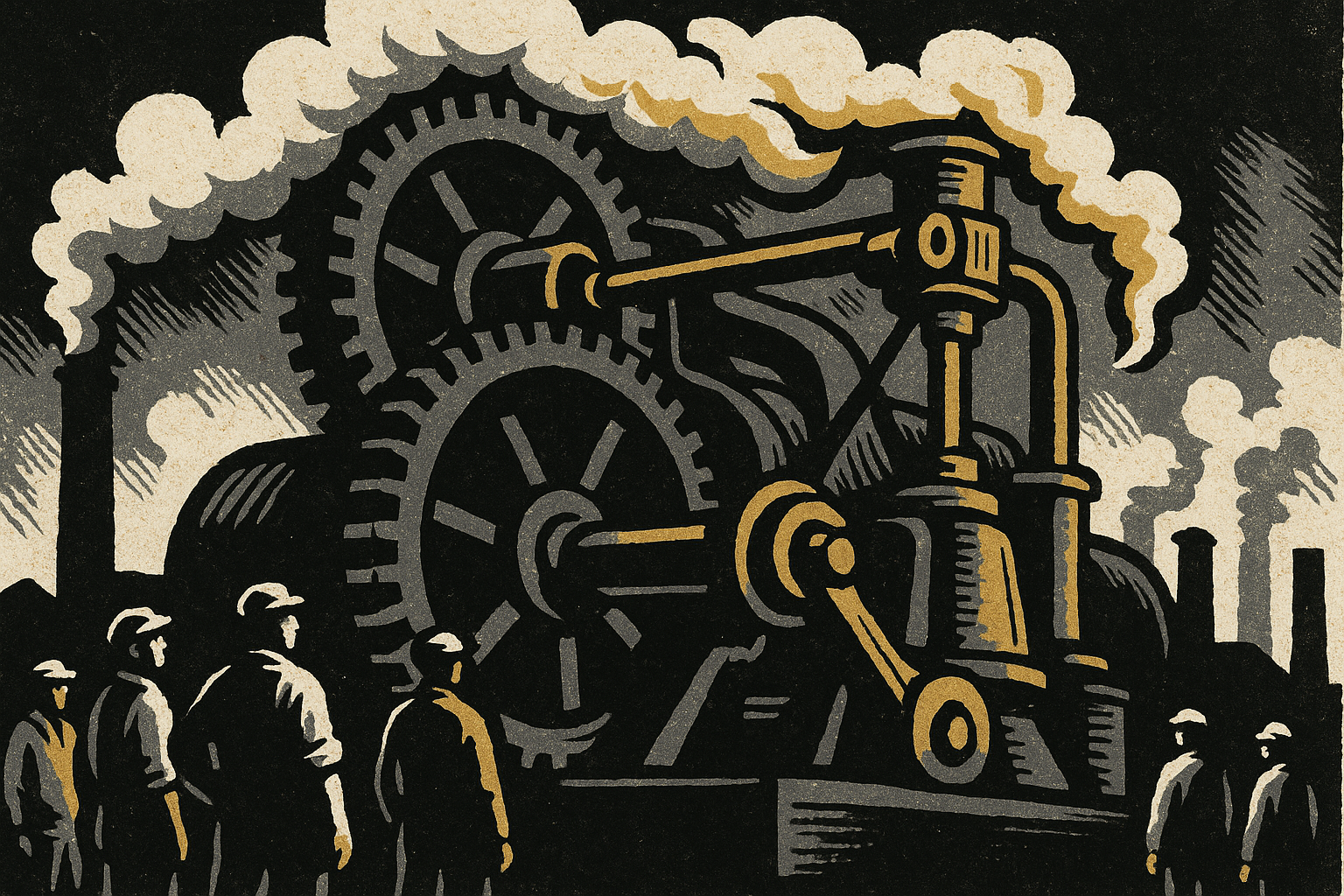
This is Jevons Paradox – making something more efficient often increases total consumption rather than decreasing it. When coal engines got more efficient in the 1800s, total coal usage went up, not down, because efficiency made new applications viable.
(Which leads to a slightly weird implication: the jobs most exposed to AI might end up being both the safest and the most disrupted. The real variable isn’t AI capability. It’s how elastic demand is for what that profession produces.)
That’s positive-sum thinking applied to a question most people are approaching with a zero-sum lens. And it changes everything about what you build, what you invest in, and how worried you should actually be.
Where zero-sum still wins
Left alone, people trade. They cooperate. They find mutual benefit, because mutual benefit is the easiest way to get what you want without getting punched in the face.
Most things have been moving from zero-sum to positive-sum. But not all things.
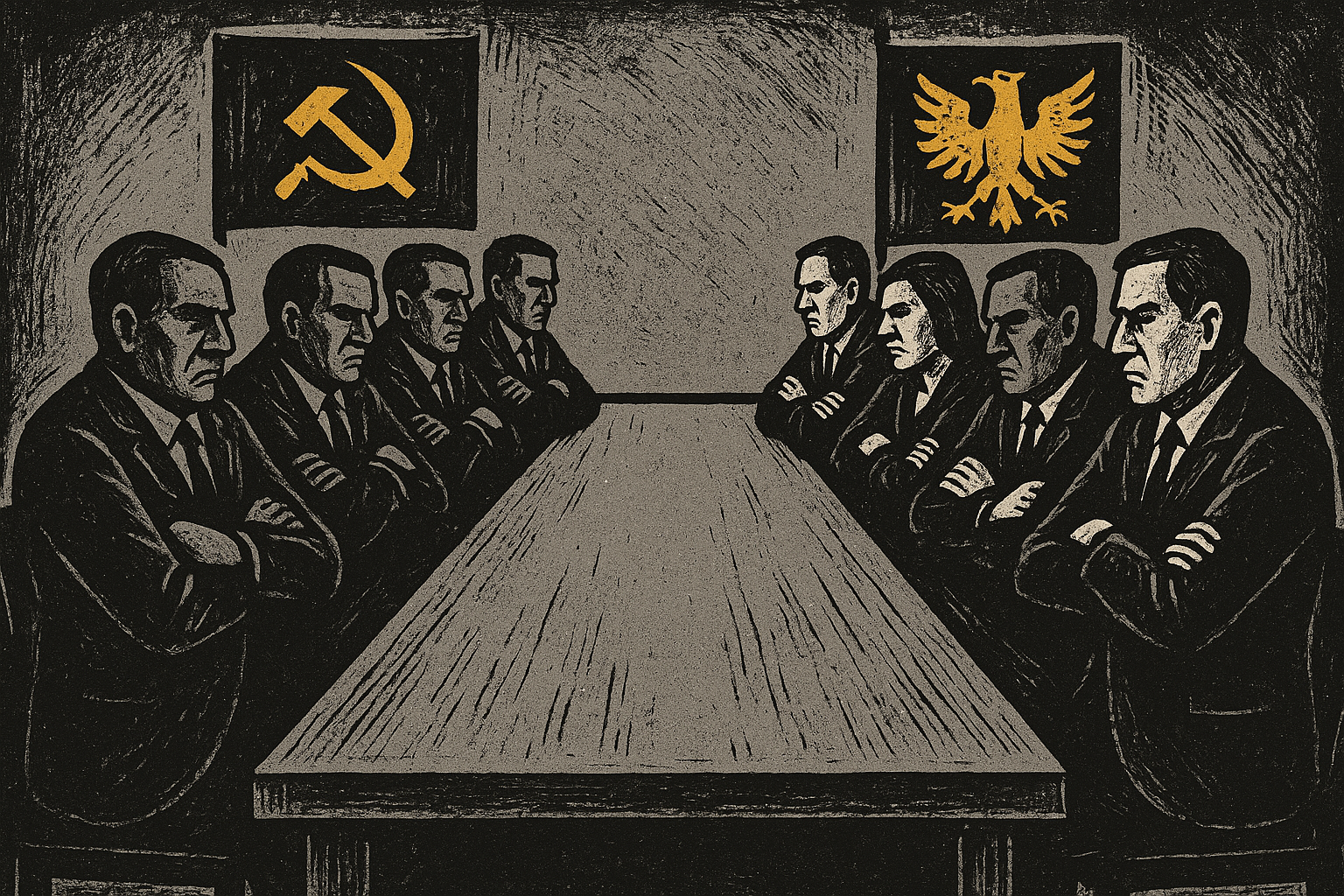
Statecraft, for example. Realpolitik. Foreign policy. Intelligence agencies. These are firmly centered on a zero-sum view of the world. For A to win, B must lose.
And there’s a reason for that. The map is fixed. There is no Terra Nova. In order for my border to expand, yours has to shrink. Territory is the original zero-sum resource.
Which is part of why seasteading and the push to colonize outer space are so interesting through this lens. They’re not just technological ambitions. They’re attempts to make geography itself positive-sum – to create more habitable space, more room for competing governance models, more freedom for individuals, more exit options. When you can’t expand the board, every move is adversarial. When you can expand it, cooperation becomes the smarter play.
We haven’t had a true frontier since the 19th century. And without one, statecraft defaults to chess.
Status as the original zero-sum game
There’s a scene in Viet Thanh Nguyen’s The Sympathizer that nails this. A character is asked the most American of questions – “are you happy?” – and responds:
“No, because happiness, American style, is a zero-sum game. For someone to be happy, he must measure his happiness against someone else’s unhappiness, a process which most certainly works in reverse… While only the pursuit of happiness is promised to all Americans, unhappiness is guaranteed for many.”
He’s describing something deeper than individual psychology. He’s describing a system.
Adam Curtis explored the same territory in his documentary work on consumerism. His argument (and it’s a compelling one) is that the consumer economy functions as a kind of social management – we’re given fake money in the form of credit, which we use to get rewards that keep us passive and happy, while the same technologies that feed us the credit monitor us in extraordinary detail. The information is used to nudge us toward the right behaviors. And in extremis, we can be cut off from the rewards.
(Keep in mind here that consumer-centered “happiness” operates exactly this way. It’s comparative by design. The entire advertising industry exists to make you feel your current life is insufficient. That’s zero-sum at the individual level – your contentment has to decrease for their revenue to increase.)
Status games are how zero-sum thinking gets installed at the personal level. You don’t wake up one morning and decide the world is a fixed pie. You get trained into it. Through status competition. Through ranking systems. Through institutions that sort people into winners and losers and call it meritocracy.
Once you’re inside a zero-sum frame, everything looks like a competition. Every interaction has a winner and a loser. Every negotiation is adversarial. Every relationship is a power dynamic.
This is why status-driven people are so exhausting. They can’t stop keeping score.
Greeks, Persians, and manufactured enemies
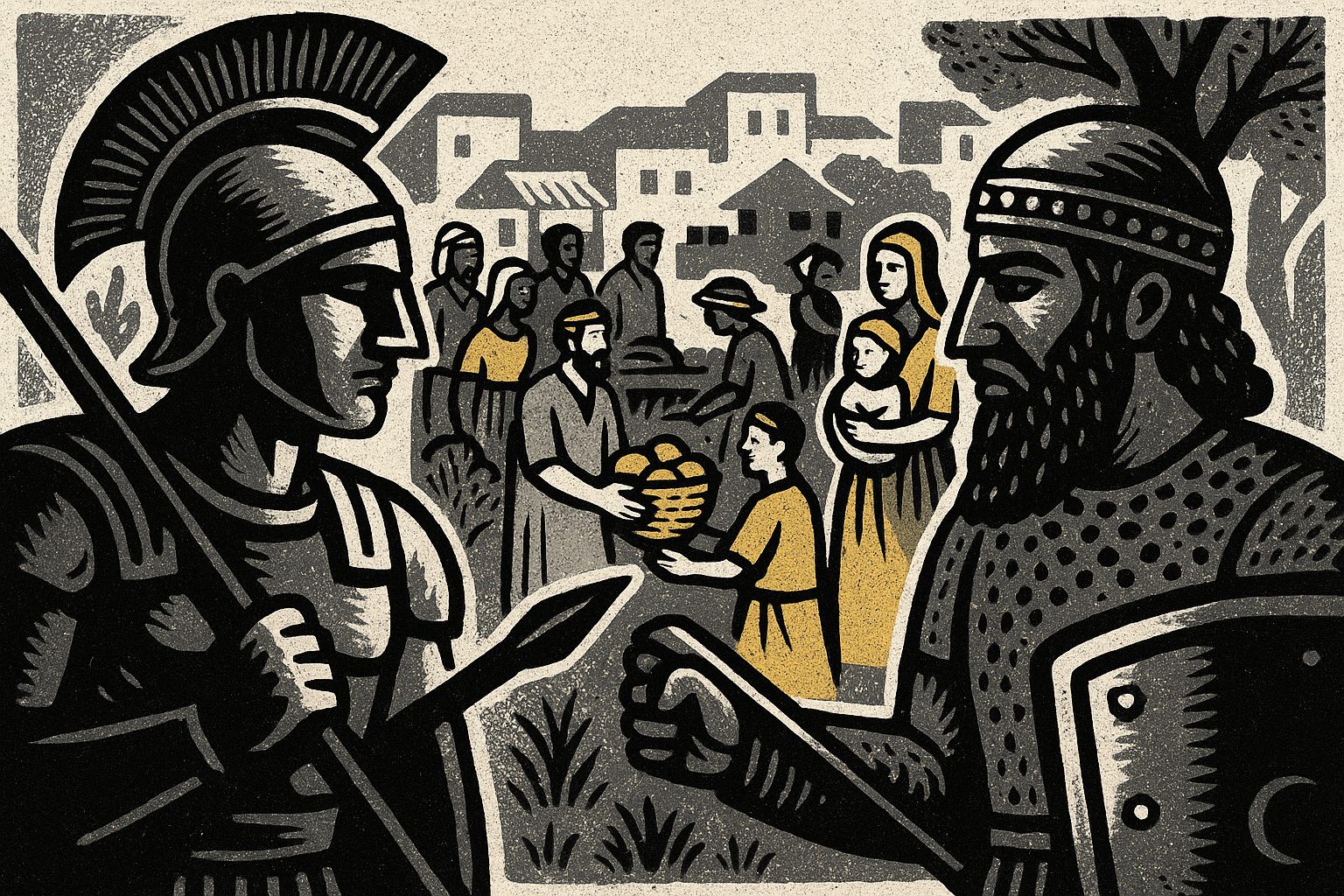
The great adversaries of the Classical age – the Greeks and the Persians – were not natural adversaries. This is often assumed, but it’s wrong.
Before the hostilities, thousands of Greek tradesmen worked happily for the Persians, going back and forth between Greek and Persian territories. Commerce was thriving. Relationships were normal. Nobody saw the other side as monsters.
It was only once the rulers gathered enough power and began to see the other as a competitor that the famous wars began.
This is the template. It has repeated for 2,500 years.
Such wars require complementary beliefs at the personal and cultural levels. If you pay attention, you’ll see case after case of rulers teaching their subjects to see their competitors as monsters. Driving overly simplistic, us-versus-them views of the world. Flattening complex, trading, intermarrying civilizations into cartoon villains.
So long as this holds, the old line about humanity needing a Klingon invasion to bring it together holds true. We need an external enemy because our rulers keep manufacturing internal ones.
But without rulership driving us apart? No Klingon invasion necessary.
The corporate version
It’s not just governments. Look at the Fortune 100 column in that table.
Large corporations play zero-sum games because they can. They’ve got the scale to lobby for regulations that crush smaller competitors. The lawyers to weaponize intellectual property law. The market power to buy or bury anything that threatens their position.
Take away the monopolistic influence of government and the biggest corporate shenanigans go with it. These operations can then turn either to positive-sum commerce or to open criminality. (At least open criminality is honest about what it is.) Much of this thinking draws on Paul Engel’s work at Freeman’s Perspective – worth reading if any of this resonates.
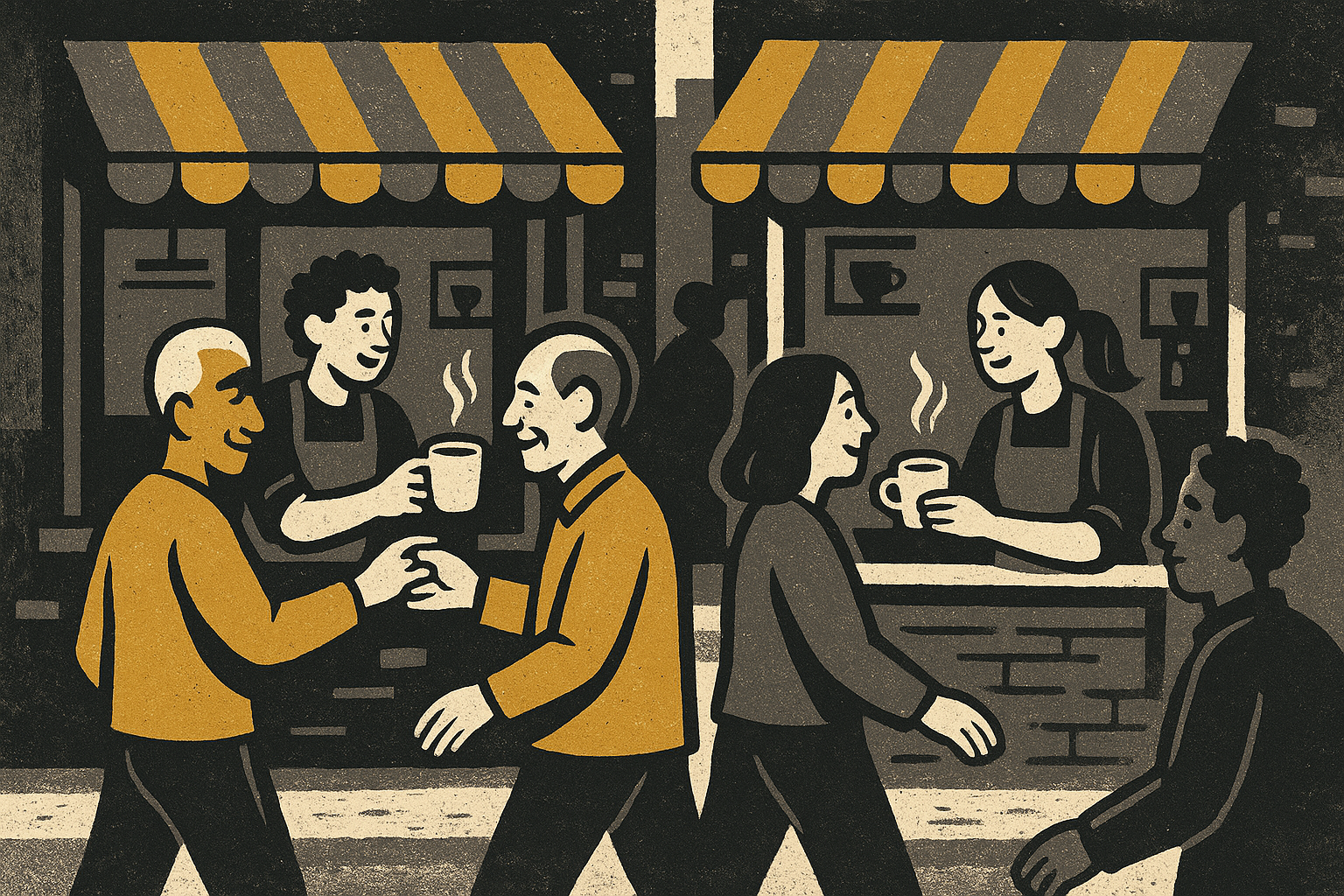
Now look at small commerce. Two coffee shops on the same block aren’t enemies. They’re drawing more foot traffic to the area. A rising tide. The baker sends customers to the florist. The florist recommends the baker. Nobody had to lose.
That’s the natural state. The zero-sum version is the aberration – the thing that has to be enforced.
The structural question
So the question isn’t “are people naturally zero-sum or positive-sum?” People are adaptable. They play whatever game the structure incentivizes.
Put someone in a bureaucracy with fixed budgets and annual performance rankings, and they’ll hoard information and sabotage peers. Not because they’re bad people. Because the structure rewards it.
Put the same person in a small business with shared upside and transparent information, and they’ll collaborate instinctively. Same person. Different structure. Different behavior.
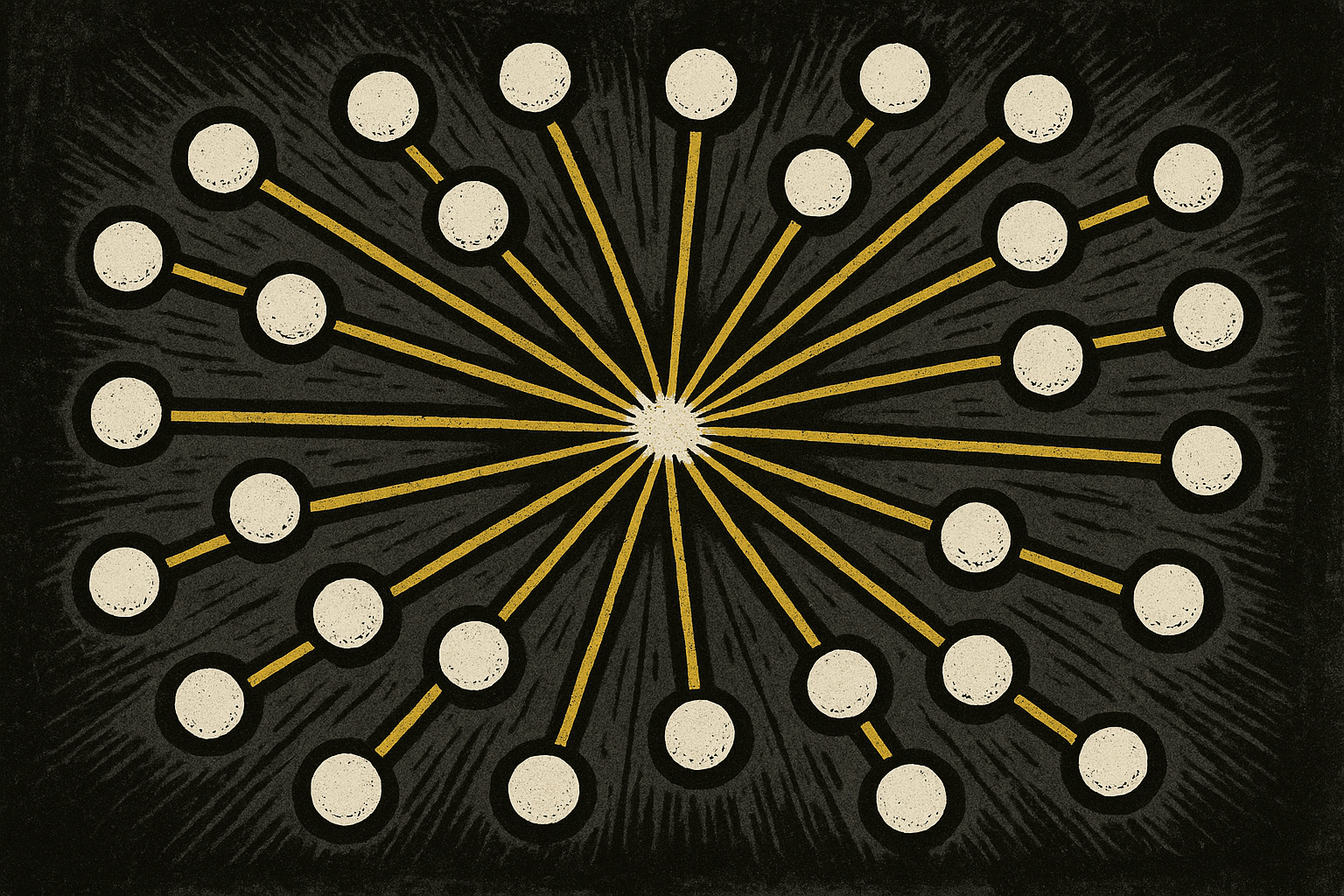
This is why decentralized technologies matter. Not because decentralization is a political position. Because decentralized systems structurally incentivize positive-sum behavior, and centralized systems structurally incentivize zero-sum behavior.
Bitcoin doesn’t care who you are. It doesn’t need to beat Visa for you to use it. Open-source software doesn’t require Microsoft to fail. A homeschool co-op doesn’t need the public school system to collapse.
These things can coexist. They can all win. That’s positive-sum in practice, not just theory.
The last stand
The zero-sum model isn’t dead. It’s concentrated. It has retreated to the places where force is still the primary currency – governments, intelligence agencies, large-scale finance, political parties.
These institutions are powerful. They’re not going away tomorrow.
But they’re increasingly surrounded by positive-sum systems that don’t need their permission to operate. Every time someone builds a business without a license, educates a child without a curriculum, transacts without a bank, or collaborates without a hierarchy, the zero-sum model loses a little more territory.
It doesn’t need to be defeated. It just needs to be routed around.
We must come to see humans as primary entities and structures as derivative. Not the other way around. The structures exist to serve us. When they stop doing that – when they start treating the chessboard as more real than the people standing on it – the correct response is not to play the game better.
It’s to leave the board.