
 BY
BY Table of Contents
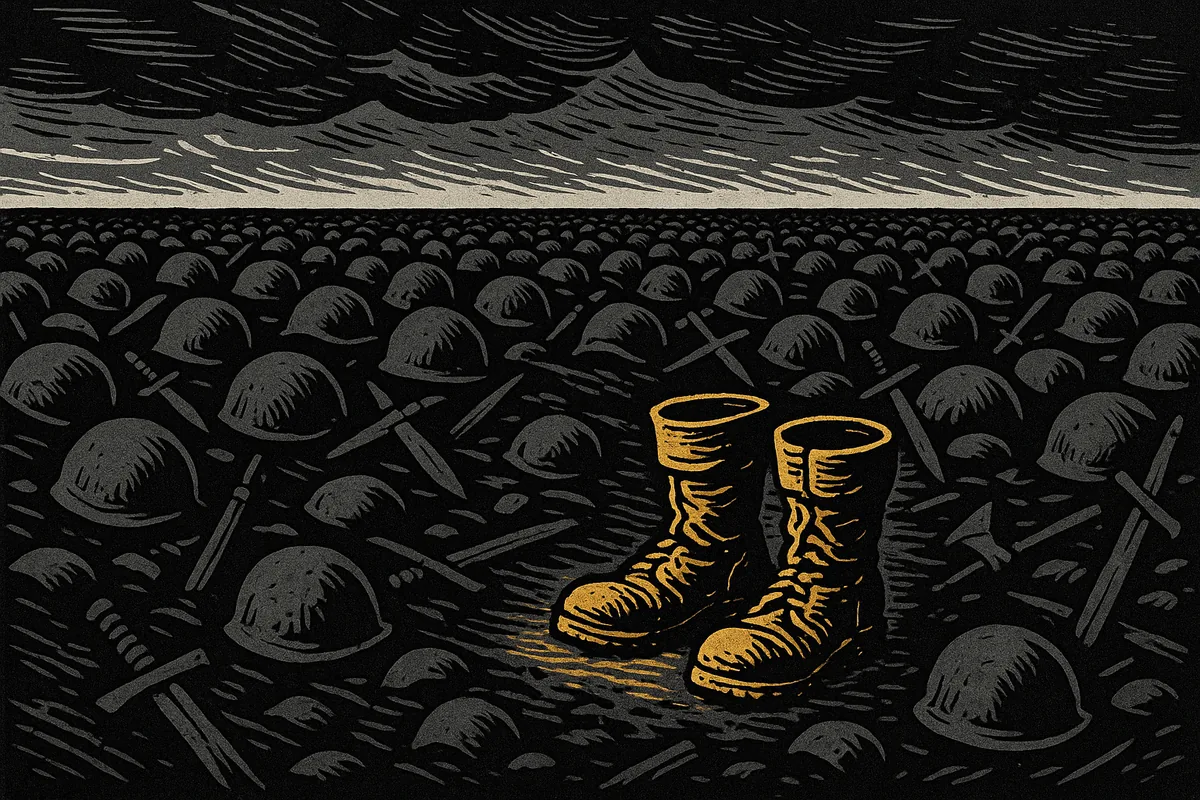
War is a decision made by one class of people and paid for by another. That is not an observation about any particular conflict – it is the structural constant across every conflict. The men who weigh the costs and pronounce the judgment are rarely the men who will be handed a rifle. The men handed the rifle rarely had a seat at the table. Any serious thinking about war has to begin there, because if you start somewhere more comfortable, you end up with the kind of analysis that fills op-ed pages and gets people killed.
What follows that structural observation is a chain of further recognitions that serious thinkers across centuries kept arriving at independently. That war generates concentrated benefits for specific interests and diffuses the costs across the population – Smedley Butler called it a racket in 1935, and the mechanism he described has not changed. That states do not stumble into wars the way individuals stumble into arguments – governments choose war, and they choose it because war is useful to the people who run governments, expanding their authority in ways that outlast the emergency that justified them. That the soldier and the civilian find out what war actually costs at ground level, while the accounting never quite reaches the people who authorized it. Madison understood that perpetual war and republican liberty are incompatible by definition, not by accident – the wartime state does not return to its former dimensions when the shooting stops, and every generation that forgets this learns it the hard way.
The quotes on this page come from soldiers who fought, statesmen who authorized, and dissenters who dissented when dissent was expensive. They are organized around the cost, the incentive, the economics, and the domestic toll – because those four angles together give you the complete picture that any single angle obscures. Read them as a curriculum, not a collection. By the end, you will have a more honest account of what war is than anything the managerial state’s credentialed commentators will offer you, and you will understand exactly why they won’t offer it.
The Cost of War: Who Actually Pays
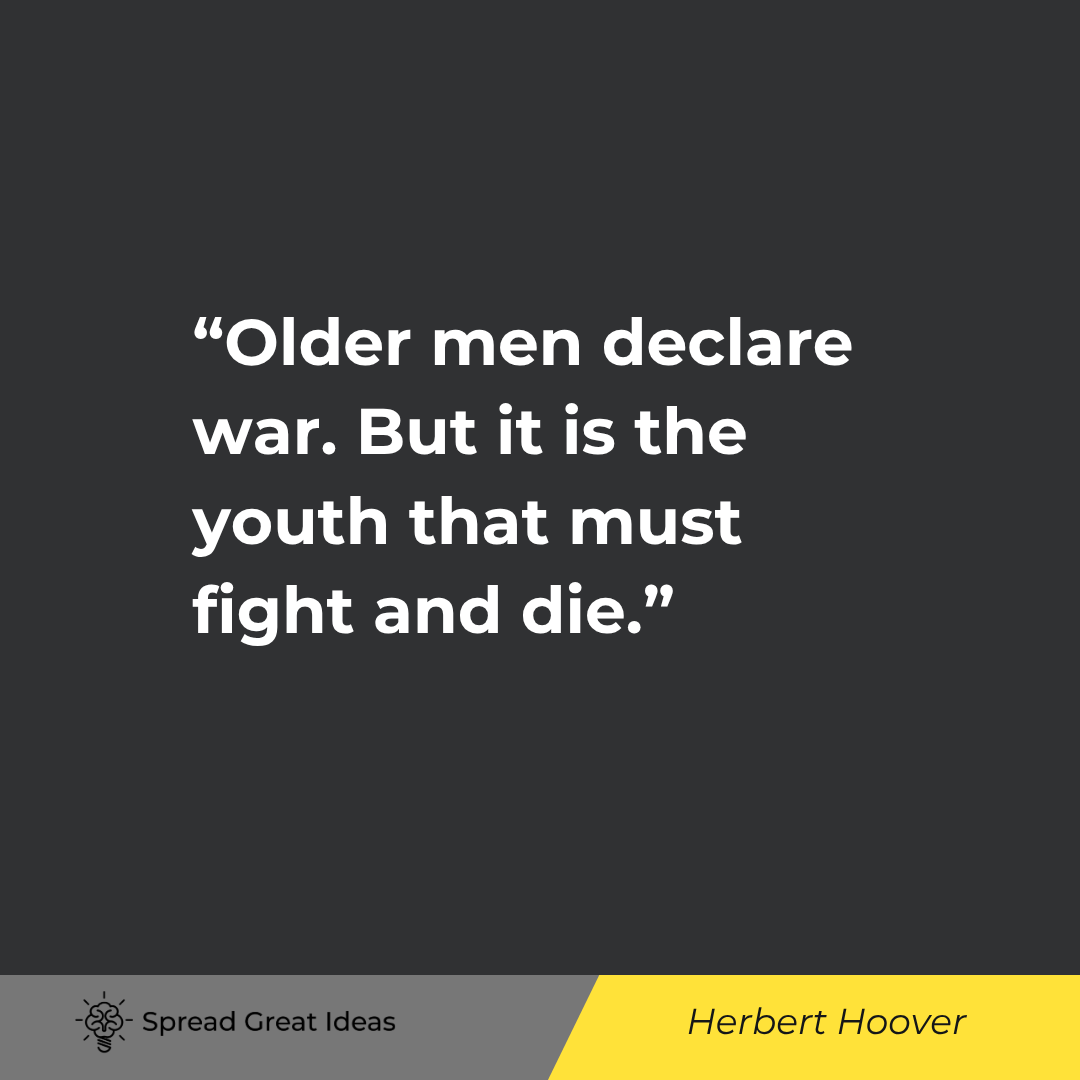
“Older men declare war. But it is the youth that must fight and die.”
– Herbert Hoover
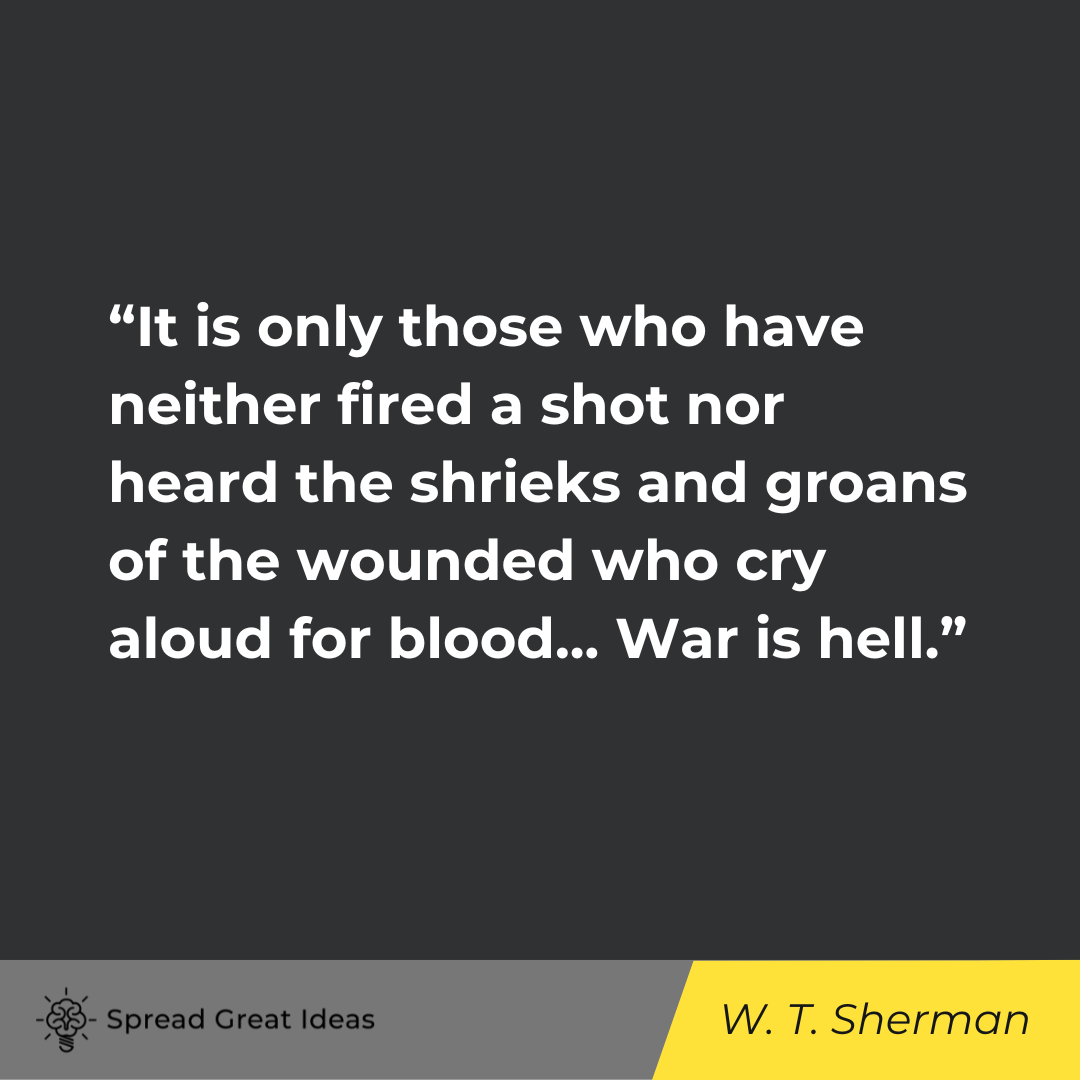
“It is only those who have neither fired a shot nor heard the shrieks and groans of the wounded who cry aloud for blood… War is hell.”
- William Tecumseh Sherman, Address at Michigan Military Academy, June 19, 1879
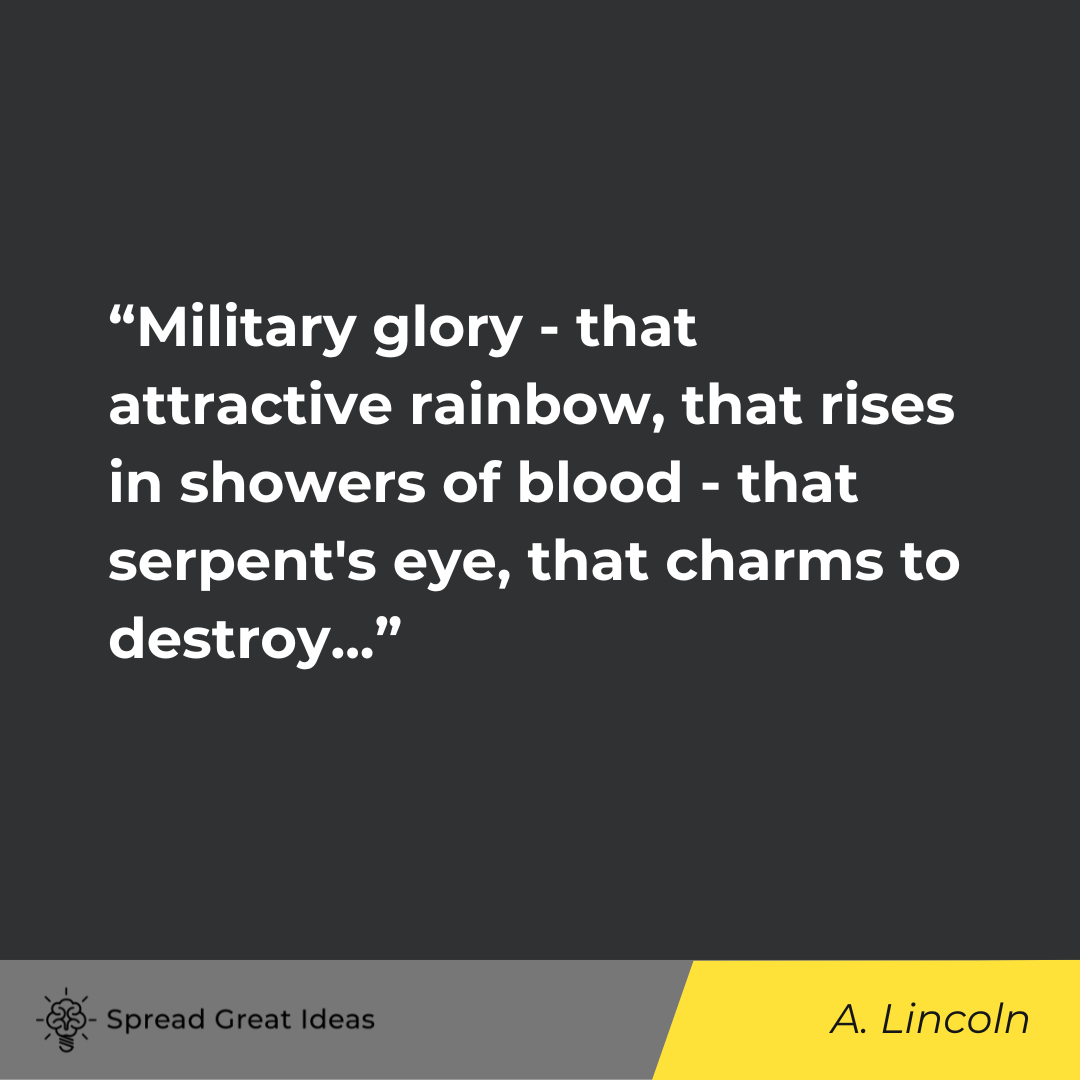
“Military glory – that attractive rainbow, that rises in showers of blood – that serpent’s eye, that charms to destroy…”
– Abraham Lincoln, Speech in the U.S. House of Representatives, January 12, 1848
Why States Choose War: The Permanent Incentive
“People do not make wars; governments do.”
- Ronald Reagan
“Wars begin when you will, but they do not end when you please.”
- Niccolò Machiavelli, History of Florence (1532)
“The belief in the possibility of a short decisive war appears to be one of the most ancient and dangerous of human illusions.”
- Robert Lynd
“The great armies, accumulated to provide security and preserve the peace, carried the nations to war by their own weight.”
- A. J. P. Taylor, The Origins of the Second World War (1961)
War as Racket: The Economics Underneath
“War is a racket. It is the only one international in scope. It is the only one in which the profits are reckoned in dollars and the losses in lives.”
- Smedley Butler, War Is a Racket (1935)
“War is a way of shattering to pieces, or pouring into the stratosphere, or sinking in the depths of the sea, materials which might otherwise be used to make the masses too comfortable, and hence, in the long run, too intelligent.”
- George Orwell, Nineteen Eighty-Four (1949)
“Only an alert and knowledgeable citizenry can compel the proper meshing of the huge industrial and military machinery of defense with our peaceful methods and goals so that security and liberty may prosper together.”
- Dwight D. Eisenhower, Farewell Address, January 17, 1961 (Military-Industrial Complex)
“Before the war is ended, the war party assumes the divine right to denounce and silence all opposition to war as unpatriotic and cowardly.”
- Robert M. La Follette, Speech in the U.S. Senate, October 6, 1917
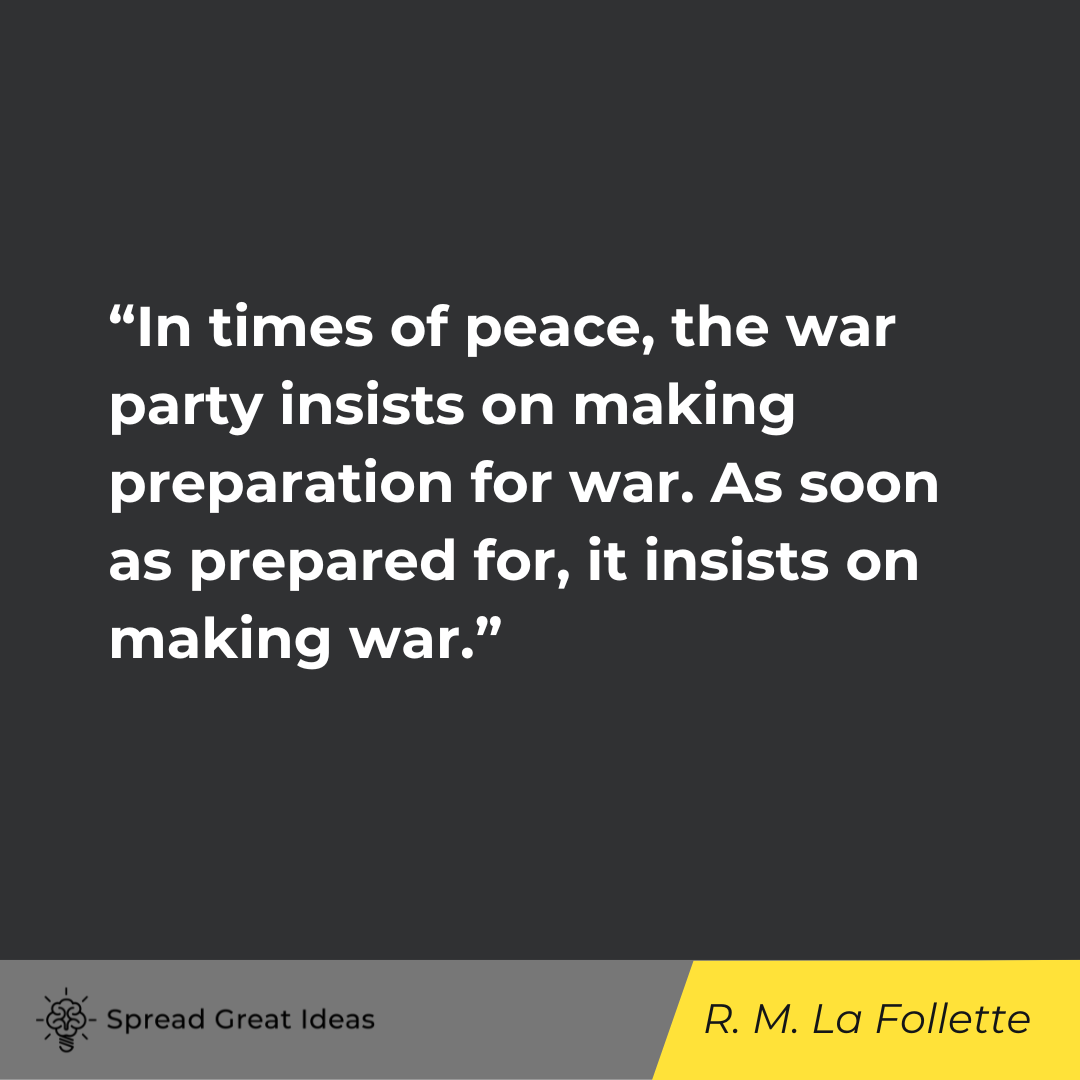
“In times of peace, the war party insists on making preparation for war. As soon as prepared for, it insists on making war.”
- Robert M. La Follette, Senator Robert M. LaFollette
War and the Cost to Liberty at Home
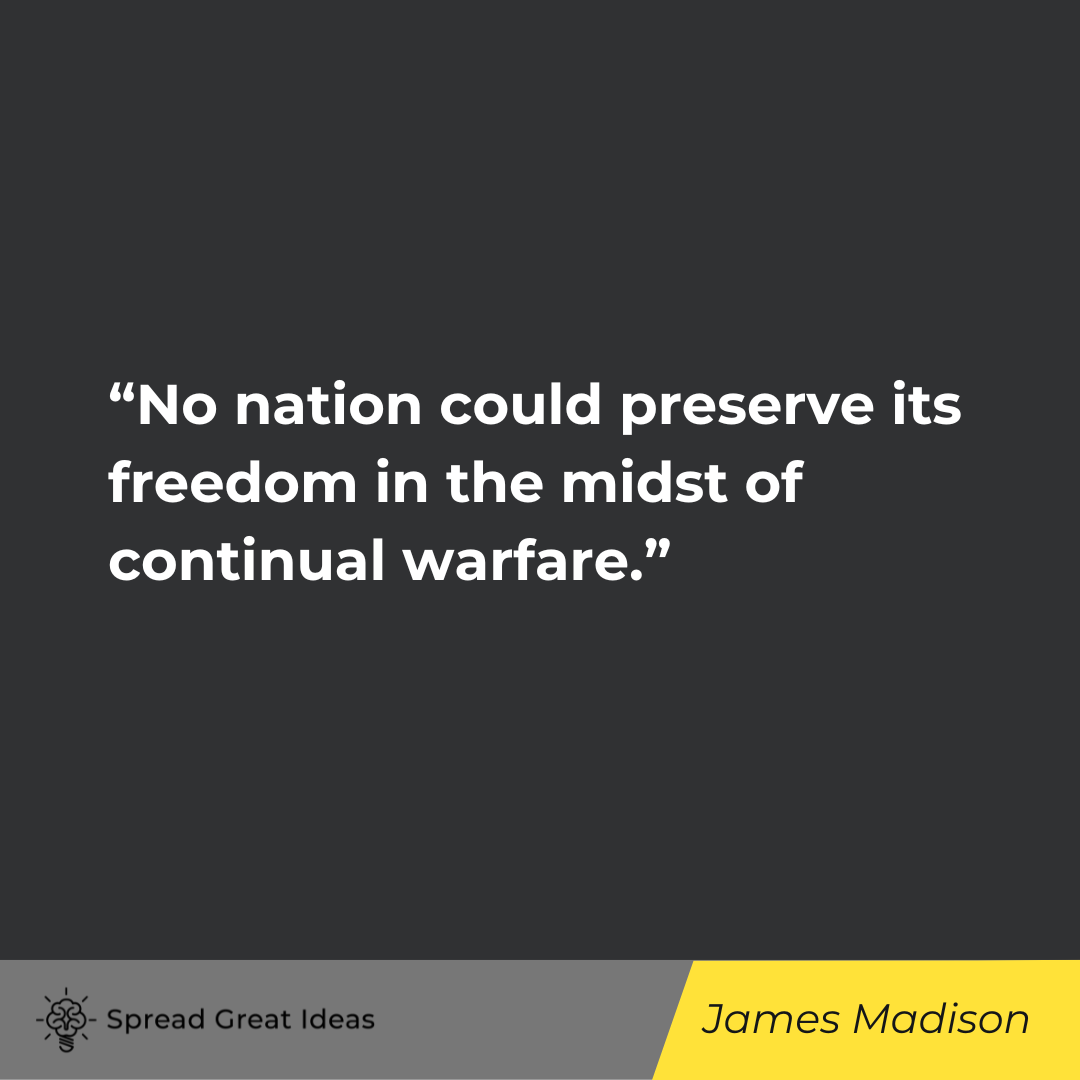
“No nation could preserve its freedom in the midst of continual warfare.”
- James Madison, Political Observations, April 20, 1795
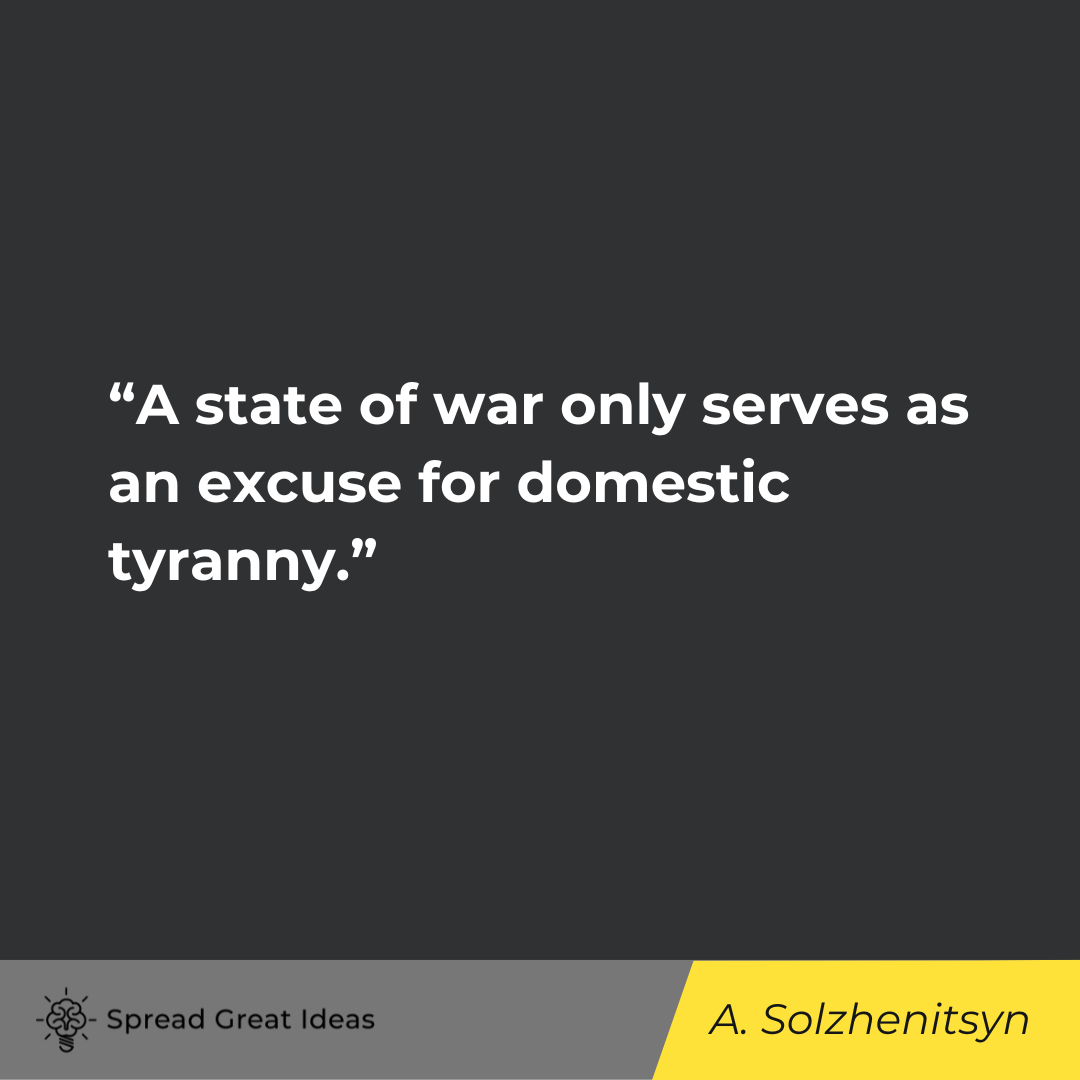
“A state of war only serves as an excuse for domestic tyranny.”
- Aleksandr Solzhenitsyn, Alexander Solzhenitsyn
Final Thoughts
If you read one short book on war, read Smedley Butler’s War Is a Racket (1935, free at Internet Archive). Butler was the most decorated Marine of his era, twice awarded the Medal of Honor, and he wrote the booklet after a career he summarized as having been a high-class muscleman for Big Business. For the policy version, read Eisenhower’s Farewell Address to the Nation (January 17, 1961) – the speech in which a five-star general and outgoing Republican president warned the country about the military-industrial complex. And for the long historical view, Barbara Tuchman’s The Guns of August (1962) is the still-unsurpassed account of how the great powers stumbled into the First World War without any of them really wanting it.