
 BY
BY Table of Contents
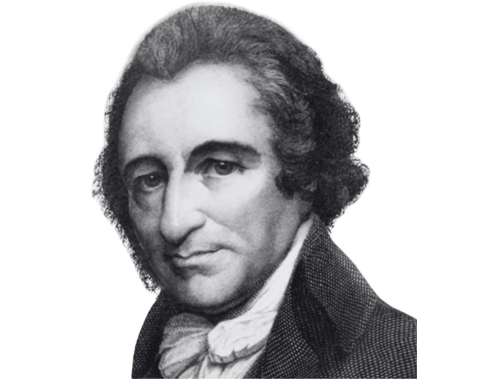
Thomas Paine is the Founding Fathers’ embarrassing relative – the one who actually meant it. Every regime produces its useful radicals: men who do the demolition work, clear the ground, and are then quietly managed out of the inheritance they helped create. Paine was the American Revolution’s demolition man. An English corset-maker with no university credentials and no landed interest to protect, he arrived in Philadelphia in 1774 and proceeded to write the ideological ammunition that turned colonial grievance into a coherent argument for self-governance. Common Sense sold roughly 500,000 copies in a country of 2.5 million – that ratio has not been matched by a political tract before or since. The Founding Fathers who later marginalized him were, in a precise sense, cashing the check he wrote.
The argument Paine was actually making is sharper than the civics-class version. He was not simply pro-independence. He was making a structural diagnosis: that concentrated power corrupts by its nature, that monarchy and hereditary aristocracy are not merely inefficient arrangements but active diseases, and that state-church entanglement is the mechanism by which both institutions sustain themselves against the populations they claim to serve. Rights of Man extends that diagnosis to the British constitutional order. The Age of Reason extends it to organized religion. The throughline is consistent – wherever you find a small class of men claiming authority that ordinary people cannot examine, question, or revoke, you are looking at the problem, regardless of what the class calls itself. The managerial state Paine could not have named would have been perfectly legible to him as a structural type.
He died in 1809, broke, with six people at his funeral – most of the political class he had armed with arguments having long since found him inconvenient. That is not a footnote. That is the confirmation of his thesis. Liberty taken seriously enough to apply universally and consistently makes powerful enemies, including the powerful friends who once needed your pen. Read Paine with that in mind and the quotes below land with considerably more weight than inspirational wall art.
Paine on Liberty, Rights, and Independence
“He that would make his own liberty secure must guard even his enemy from oppression.”
- Thomas Paine, Dissertation on First Principles of Government (1795)
“Those who expect to reap the blessings of freedom, must, like men, undergo the fatigues of supporting it.”
- Thomas Paine, The American Crisis, No. IV (1777)
“Whatever is my right as a man is also the right of another; and it becomes my duty to guarantee as well as to possess.”
- Thomas Paine, Rights of Man, Part the First (1791)
“I have always strenuously supported the right of every man to his own opinion, however different that opinion might be to mine. He who denies to another this right, makes a slave of himself to his present opinion, because he precludes himself the right of changing it.”
- Thomas Paine, The Age of Reason, Part I, Introduction (1794)
“What we obtain too cheap, we esteem too lightly: it is dearness only that gives every thing its value. Heaven knows how to put a proper price upon its goods; and it would be strange indeed if so celestial an article as freedom should not be highly rated.”
- Thomas Paine, The American Crisis, No. I (1776)
“If there must be trouble, let it be in my day, that my child may have peace.”
- Thomas Paine, The American Crisis, No. I (1776)
“When men yield up the privilege of thinking, the last shadow of liberty quits the horizon.”
- Thomas Paine, Reflections on Titles (1775)
“An avidity to punish is always dangerous to liberty. It leads men to stretch, to misinterpret, and to misapply even the best of laws.”
- Thomas Paine, Dissertation on First Principles of Government (1795)
“For all men being originally equals, no one by birth could have the right to set up his own family in perpetual preference to all others forever, and tho’ himself might deserve some decent degree of honours of his cotemporaries, yet his descendants might be far too unworthy to inherit them.”
- Thomas Paine, Common Sense, Of Monarchy and Hereditary Succession (1776)
“Independence is my happiness, and I view things as they are, without regard to place or person; my country is the world, and my religion is to do good.”
- Thomas Paine, Rights of Man, Part the Second (1792)
Paine on Government, Tyranny, and Power
“Society is produced by our wants, and government by wickedness; the former promotes our happiness positively by uniting our affections, the latter negatively by restraining our vices. The one encourages intercourse, the other creates distinctions. The first is a patron, the last a punisher.”
- Thomas Paine, Common Sense, On the Origin and Design of Government in General (1776)
“We still feel the greedy hand of government thrusting itself into every corner and crevice of industry, and grasping at the spoil of the multitude. Invention is continually exercised to furnish new pretenses for revenue and taxation.
It watches prosperity as its prey and permits none to escape without a tribute.”
- Thomas Paine, Rights of Man, Part the Second, Chapter V (1792)

“Governments … pervert the abundance which civilized life produces… It affords to them pretenses for power and revenue, for which there would be neither occasion nor apology, if the circle of civilization were rendered complete.”
- Thomas Paine, Rights of Man, Part the Second, Chapter V (1792)
“I become irritated at the attempt to govern mankind by force and fraud, as if they were all knaves and fools.”
- Thomas Paine, Rights of Man, Part the Second (1792)
“Tyranny, like hell, is not easily conquered; yet we have this consolation with us, that the harder the conflict, the more glorious the triumph.”
- Thomas Paine, The American Crisis, No. I (1776)
“…taxes are not raised to carry on wars, but that wars are raised to carry on taxes.”
- Thomas Paine, Rights of Man, Part the First (1791)
“Small islands, not capable of protecting themselves, are the proper objects for kingdoms to take under their care; but there is something absurd, in supposing a continent to be perpetually governed by an island.”
- Thomas Paine, Common Sense, Of the Present Ability of America (1776)
“Government, like dress, is the badge of lost innocence.”
- Thomas Paine, Common Sense, On the Origin and Design of Government in General (1776)
Final Thoughts
Paine’s enduring utility is diagnostic. He identified, with unusual precision, the mechanism by which concentrated power perpetuates itself: hereditary title, established church, the mystification of governance, the manufacturing of consent through ceremony and deference. Strip those away and the apparatus loses its legitimacy almost on contact with plain language. That is what Common Sense actually did – it was not merely persuasive rhetoric, it was a demystification operation, and it worked because the underlying structure it described was real. The lesson for any reader studying power today is that the pathology Paine named is not a colonial-era curiosity. Bureaucratic entrenchment, regulatory capture, the interlocking interests of the managerial state and its credentialed class – these are the hereditary aristocracy wearing different clothes. The disease is structural. Paine at least had the clarity to say so out loud.
The complication worth sitting with is that Paine’s corrective – abstract universal reason applied as a solvent to every inherited institution – is also a disease, one whose full symptoms took another century to present. Every regime that followed in his intellectual wake claimed the same rational mandate. What Paine lacked, and what any serious reader of this tradition eventually has to reckon with, is a theory of what holds a civilization together once the inherited forms have been dissolved. For that argument, the necessary counterweight is The Conservative Mind by Russell Kirk – the systematic case that order, continuity, and prescription are not the enemies of liberty but its preconditions. Read Kirk not to refute Paine but to complete the circuit. The tension between them is more useful than either alone.
The Founding Fathers read Paine and then, with notable deliberateness, did not govern like him. That gap is the whole argument. Know what Paine diagnosed. Know what he missed. The two together tell you most of what you need to know about why republics are built and why they decay.