
 BY
BY Table of Contents
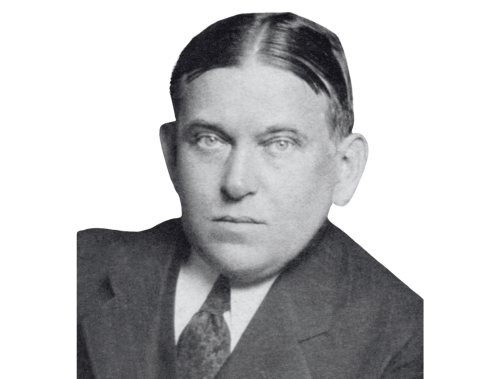
H.L. Mencken (1880–1956) was not a conservative, not a libertarian, and certainly not a progressive – he was something rarer and more useful: a diagnostician. Where most political writers argue about which faction should hold the levers, Mencken questioned whether the machine itself was worth running. The “Sage of Baltimore” spent four decades at the Baltimore Sun, edited The Smart Set and The American Mercury, and produced a shelf of books – Notes on Democracy, Prejudices in six volumes, In Defense of Women – that made him the most dangerous writer in America not because he was angry, but because he was precise. Politicians feared him less than they feared being understood by him.
The argument running beneath Mencken's wit is structural, not temperamental. He was not merely a cynic performing for a literary crowd. His core claim was that democratic politics selects for a specific type: the man skilled at manipulating mass emotion, which is to say the man least qualified to govern anything. The electorate, in Mencken's telling, does not occasionally fail to recognize quality – it systematically punishes it. What looks like a series of unfortunate electoral outcomes is, on closer inspection, the system working exactly as designed. That diagnosis lands harder now than it did in 1926, given that the managerial apparatus Mencken saw forming has had another century to metastasize. Readers who have spent time with the quotes below on government and democracy will recognize the disease he was naming.
Mencken is not comfortable company. He will offend the religious right, the secular left, the patriot who thinks the Founding Fathers require reverent silence, and the progressive who thinks the common man requires reverent agreement. That discomfort is the point. Read him not as a source of conclusions to adopt wholesale, but as a corrective – a cold compress applied to whatever ideology you arrived with. The quotes collected here draw from his published books, newspaper columns, notebooks, and correspondence. Take them as a field guide to the permanent features of political life: the charlatan, the mob, the expert who is neither, and the apparatus that keeps all three employed.
Mencken on Government, Democracy, and Politics
“A good politician is quite as unthinkable as an honest burglar.”
- H.L. Mencken, Prejudices: Fourth Series (1924)
“Every election is a sort of advance auction sale of stolen goods.”
- H.L. Mencken, A Carnival of Buncombe (1956); orig. Baltimore Evening Sun, Oct 26, 1936

“Every decent man is ashamed of the government he lives under.”
- H.L. Mencken, Prejudices: Third Series (1922)

“A judge is a law student who marks his own examination papers.”
- H.L. Mencken, A Little Book in C Major (1916)

“I believe in only one thing: liberty; but I do not believe in liberty enough to want to force it upon anyone.”
- H.L. Mencken, Letters of H.L. Mencken (ed. Guy J. Forgue, 1961)
“A politician is an animal which can sit on a fence and yet keep both ears to the ground.”
- H.L. Mencken, A Mencken Chrestomathy (1949)
“Democracy is only a dream: it should be put in the same category as Arcadia, Santa Claus, and Heaven.”
- H.L. Mencken, Minority Report: H.L. Mencken's Notebooks (1956)
“The kind of man who wants the government to adopt and enforce his ideas is always the kind of man whose ideas are idiotic.”
- H.L. Mencken, Minority Report: H.L. Mencken's Notebooks (1956)

“As democracy is perfected, the office of President represents, more and more closely, the inner soul of the people. On some great and glorious day, the plain folks of the land will reach their heart’s desire at last and the White House will be adorned by a downright moron.”
- H.L. Mencken, "Bayard vs. Lionheart," Baltimore Evening Sun, July 26, 1920
“The whole aim of practical politics is to keep the populace alarmed (and hence clamorous to be led to safety) by an endless series of hobgoblins, most of them imaginary.”
- H.L. Mencken, In Defense of Women (1918)
“The fact is that the average man’s love of liberty is nine-tenths imaginary, exactly like his love of sense, justice and truth. He is not actually happy when free; he is uncomfortable, a bit alarmed, and intolerably lonely.”
- H.L. Mencken, Notes on Democracy (1926)
“The most dangerous man to any government is the man who is able to think things out for himself, without regard to the prevailing superstitions and taboos. Almost inevitably he comes to the conclusion that the government he lives under is dishonest, insane, and intolerable.”
- H.L. Mencken, Prejudices: Third Series (1922)

“The aim of public education is not to spread enlightenment at all; it is simply to reduce as many individuals as possible to the same safe level, to breed and train a standardized citizenry, to put down dissent and originality.
That is its aim in the United States, whatever the pretensions of politicians, pedagogues and other such mountebanks, and that is its aim everywhere else.”
- H.L. Mencken, A Mencken Chrestomathy (1949); orig. The American Mercury, April 1924

“Most people want security in this world, not liberty.”
- H.L. Mencken, Minority Report: H.L. Mencken's Notebooks (1956)
Mencken on the Press, Public Opinion, and Morality
“Communism, like any other revealed religion, is largely made up of prophecies.”
- H.L. Mencken, Minority Report: H.L. Mencken's Notebooks (1956)

“Nobody ever went broke underestimating the taste of the American public.”
- H.L. Mencken, Chicago Tribune, Sep 19, 1926
“A newspaper is a device for making the ignorant more ignorant and the crazy crazier.”
- H.L. Mencken, A Mencken Chrestomathy (1949); orig. The Smart Set, 1920
“I believe that it is better to tell the truth than a lie. I believe it is better to be free than to be a slave. And I believe it is better to know than to be ignorant.”
- H.L. Mencken, "What I Believe," The Forum, Vol. 84, September 1930
“It is inaccurate to say that I hate everything. I am strongly in favor of common sense, common honesty, and common decency. This makes me forever ineligible for public office.”
- H.L. Mencken, LIFE magazine, August 5, 1946
Mencken on Life, Language, and Human Nature
“The penalty for laughing in a courtroom is six months in jail; if it were not for this penalty, the jury would never hear the evidence.”
- H.L. Mencken, A Little Book in C Major (1916)
“The urge to save humanity is almost always only a false-face for the urge to rule it.”
- H.L. Mencken, Minority Report: H.L. Mencken's Notebooks (1956)
“It doesn’t take a majority to make a rebellion; it takes only a few determined leaders and a sound cause.”
- H.L. Mencken, Prejudices: Fifth Series (1926)
“The men the American people admire most extravagantly are the most daring liars; the men they detest most violently are those who try to tell them the truth.”
- H.L. Mencken, A Mencken Chrestomathy (1949); orig. The Smart Set, August 1922
Final Thoughts
What Mencken diagnosed was not a policy failure or a run of bad leadership. It was a structural condition: the managed democracy, in which the forms of self-government are preserved precisely because they no longer threaten the people who run things. The booboisie, as he called the credulous middle, does not merely tolerate the regime’s mediocrity – it demands it, rewards it, and punishes the man honest enough to name it. Mencken understood that the machinery of democratic consent is most useful to power not when it produces genuine accountability but when it produces the feeling of accountability, which is cheaper and more durable. That observation, delivered across decades of column-inches in a prose style no American journalist has since matched, is what makes him something other than a crank or a contrarian. The diagnosis holds. The symptoms have metastasized.
The obvious next step from Mencken is to ask how the machine works at the structural level – not the rhetoric it uses to justify itself, but the actual architecture of the managerial state and the class that operates it. That is precisely what Leviathan and Its Enemies by Sam Francis supplies. Where Mencken was content to ridicule the organism, Francis dissects it – tracing how the corporate-government complex consolidated a new ruling class, why traditional institutions were too brittle to resist it, and what the displacement of older elite formations actually means for what remains of republican life. The two writers are not interchangeable, but they are reading the same pathology from different instruments. Mencken names the disease with contempt and wit; Francis maps the anatomy with cold precision. You need both.
The reader who finishes this page still inclined to dismiss Mencken as a cynic misses the point. Cynicism is the posture of someone who expected better. Mencken had no such illusions to lose – he simply reported what was in front of him, which is a harder and rarer discipline than it sounds. The managerial order he watched assembling itself across the Progressive Era has since completed its work. The question he leaves you with is not whether the republic can be reformed by the next election cycle. It is whether you are willing to see the thing as it is.