
 BY
BY Table of Contents
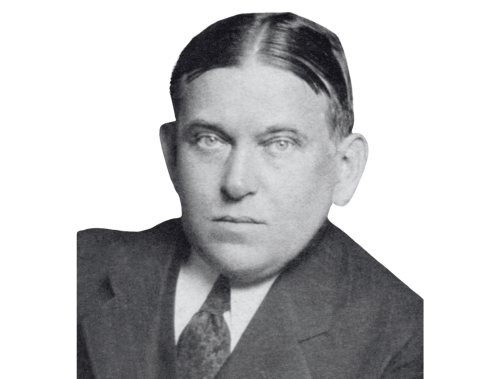
Henry Louis Mencken (1880-1956) was an American journalist, essayist, satirist, and critic known as the “Sage of Baltimore.” He spent decades skewering politicians, democracy, religion, and the American middle class with a wit so sharp it still draws blood. He wrote for the Baltimore Sun for over forty years, edited The American Mercury and The Smart Set, and published shelves of books that made him the most feared critic in the country. Nobody was safe - not presidents, not preachers, not the public itself.
Mencken’s writing is the antidote to optimism. If you’ve ever suspected that most people in power are fools and that the public enthusiastically elects them, Mencken said it first - and better. The quotes below are drawn from his published books, newspaper columns, notebooks, and personal correspondence. They cover government, democracy, the press, morality, and the full spectrum of human foolishness.
Mencken on Government, Democracy, and Politics
“A good politician is quite as unthinkable as an honest burglar.”
- H.L. Mencken, Prejudices: Fourth Series (1924)
“Every election is a sort of advance auction sale of stolen goods.”
- H.L. Mencken, A Carnival of Buncombe (1956); orig. Baltimore Evening Sun, Oct 26, 1936
“Every decent man is ashamed of the government he lives under.”
- H.L. Mencken, Prejudices: Third Series (1922)
“A judge is a law student who marks his own examination papers.”
- H.L. Mencken, A Little Book in C Major (1916)
“I believe in only one thing: liberty; but I do not believe in liberty enough to want to force it upon anyone.”
- H.L. Mencken, Letters of H.L. Mencken (ed. Guy J. Forgue, 1961)
“A politician is an animal which can sit on a fence and yet keep both ears to the ground.”
- H.L. Mencken, A Mencken Chrestomathy (1949)
“Democracy is only a dream: it should be put in the same category as Arcadia, Santa Claus, and Heaven.”
- H.L. Mencken, Minority Report: H.L. Mencken’s Notebooks (1956)
“The kind of man who wants the government to adopt and enforce his ideas is always the kind of man whose ideas are idiotic.”
- H.L. Mencken, Minority Report: H.L. Mencken’s Notebooks (1956)
“As democracy is perfected, the office of President represents, more and more closely, the inner soul of the people. On some great and glorious day, the plain folks of the land will reach their heart’s desire at last and the White House will be adorned by a downright moron.”
- H.L. Mencken, “Bayard vs. Lionheart,” Baltimore Evening Sun, July 26, 1920
“The whole aim of practical politics is to keep the populace alarmed (and hence clamorous to be led to safety) by an endless series of hobgoblins, most of them imaginary.”
- H.L. Mencken, In Defense of Women (1918)
“The fact is that the average man’s love of liberty is nine-tenths imaginary, exactly like his love of sense, justice and truth. He is not actually happy when free; he is uncomfortable, a bit alarmed, and intolerably lonely.”
- H.L. Mencken, Notes on Democracy (1926)
“The most dangerous man to any government is the man who is able to think things out for himself, without regard to the prevailing superstitions and taboos. Almost inevitably he comes to the conclusion that the government he lives under is dishonest, insane, and intolerable.”
- H.L. Mencken, Prejudices: Third Series (1922)
“The aim of public education is not to spread enlightenment at all; it is simply to reduce as many individuals as possible to the same safe level, to breed and train a standardized citizenry, to put down dissent and originality. That is its aim in the United States, whatever the pretensions of politicians, pedagogues and other such mountebanks, and that is its aim everywhere else.”
- H.L. Mencken, A Mencken Chrestomathy (1949); orig. The American Mercury, April 1924
“Most people want security in this world, not liberty.”
- H.L. Mencken, Minority Report: H.L. Mencken’s Notebooks (1956)
Mencken on the Press, Public Opinion, and Morality
“Communism, like any other revealed religion, is largely made up of prophecies.”
- H.L. Mencken, Minority Report: H.L. Mencken’s Notebooks (1956)
“Nobody ever went broke underestimating the taste of the American public.”
- H.L. Mencken, Chicago Tribune, Sep 19, 1926
“A newspaper is a device for making the ignorant more ignorant and the crazy crazier.”
- H.L. Mencken, A Mencken Chrestomathy (1949); orig. The Smart Set, 1920
“I believe that it is better to tell the truth than a lie. I believe it is better to be free than to be a slave. And I believe it is better to know than to be ignorant.”
- H.L. Mencken, “What I Believe,” The Forum, Vol. 84, September 1930
“It is inaccurate to say that I hate everything. I am strongly in favor of common sense, common honesty, and common decency. This makes me forever ineligible for public office.”
- H.L. Mencken, LIFE magazine, August 5, 1946
Mencken on Life, Language, and Human Nature
“The penalty for laughing in a courtroom is six months in jail; if it were not for this penalty, the jury would never hear the evidence.”
- H.L. Mencken, A Little Book in C Major (1916)
“The urge to save humanity is almost always only a false-face for the urge to rule it.”
- H.L. Mencken, Minority Report: H.L. Mencken’s Notebooks (1956)
“It doesn’t take a majority to make a rebellion; it takes only a few determined leaders and a sound cause.”
- H.L. Mencken, Prejudices: Fifth Series (1926)
“The men the American people admire most extravagantly are the most daring liars; the men they detest most violently are those who try to tell them the truth.”
- H.L. Mencken, A Mencken Chrestomathy (1949); orig. The Smart Set, August 1922
Final Thoughts
Mencken is not for everyone. He was an elitist who openly despised the average voter, a skeptic who found democracy absurd, and a stylist who could make you laugh while dismantling every institution you were raised to respect. He did not soften his positions for polite company. He did not hedge. He said what he thought, backed it with evidence and wit, and let the consequences sort themselves out.
What makes him worth reading today is not that he was right about everything - he wasn’t - but that he was honest in a way that almost no public figure manages to be. His observations about government, the press, and human nature have not aged a day. If anything, they’ve gotten sharper. The best single-volume introduction to his work is A Mencken Chrestomathy - a collection he curated himself from decades of essays, columns, and books.
If you can read Mencken without wincing at least once, you probably aren’t paying attention.