
 BY
BY Table of Contents
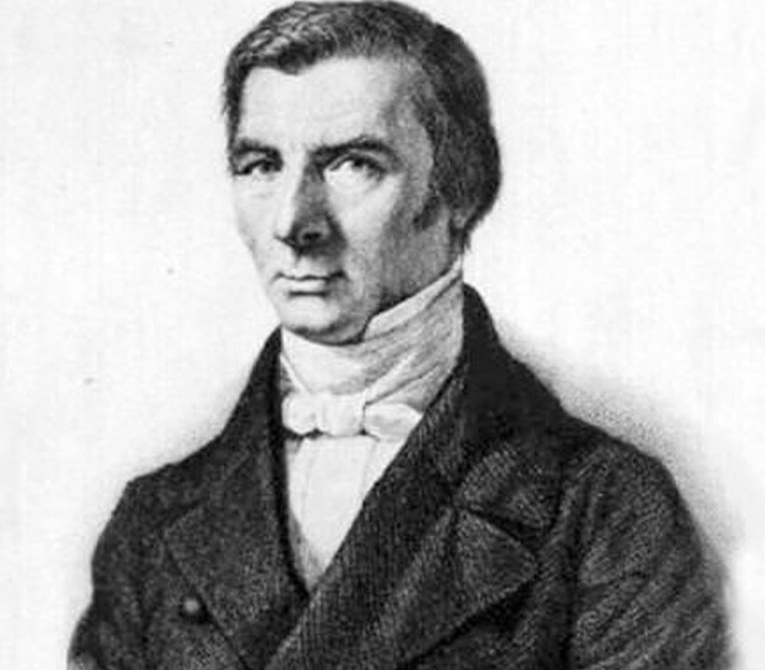
Plunder does not become legitimate because the legislature authorizes it. That is the core of Frédéric Bastiat’s work, stated plainly, and it remains the single most uncomfortable idea in the classical liberal tradition precisely because it does not permit exceptions. Bastiat (1801–1850) was a French economist, deputy in the National Assembly, and polemicist of the first order – a man who had the misfortune, or perhaps the perfect timing, of watching the 1848 revolution convert rhetoric about fraternity and equality into a bidding war over whose faction would hold the apparatus of legal confiscation next. He did not respond with sentiment. He responded with definitions.
The argument Bastiat was actually making across The Law, Economic Sophisms, and Economic Harmonies is structural, not anecdotal. Law, he insisted, is force – organized, collective force – and the only legitimate purpose of that force is to protect persons, liberty, and property. The moment law is turned to redistributing wealth, engineering social outcomes, or rewarding one class at another’s expense, it has crossed from justice into what he called “legal plunder.” The managerial state’s great trick, then as now, is to make that crossing invisible: to dress compulsion in the vocabulary of solidarity, to call a protected industry “national policy,” to call a subsidy “investment.” Bastiat’s method – he called it looking for “the unseen” – is to demand that every policy answer for both the effect you can observe and the effect that has been suppressed, taxed away, or never permitted to exist. Conservative Inc. has largely forgotten this discipline. Bastiat had not.
What makes these quotes worth reading in sequence rather than in isolation is that they form a single diagnostic: the disease is the conflation of law with benevolence, and every symptom – the protected monopoly, the welfare apparatus, the regulatory barrier that happens to favor the incumbent – follows from that original confusion. Bastiat died at forty-nine, still writing. The regime he was dissecting is still writing back. Read him with that in mind.
Quotes on Natural Rights and Property

“Life, liberty, and property do not exist because men have made laws. On the contrary, it was the fact that life, liberty, and property existed beforehand that caused men to make laws in the first place.”
- Frederic Bastiat, The Law

“Each of us has a natural right, from God, to defend his person, his liberty, and his property.”
- Frederic Bastiat, The Law
“Life, faculties, production – in other words, individuality, liberty, property – this is man. And in spite of the cunning of artful political leaders, these three gifts from God precede all human legislation, and are superior to it.”
- Frederic Bastiat, The Law
“It is not true that the legislator has absolute power over our persons and property. The existence of persons and property preceded the existence of the legislator, and his function is only to guarantee their safety.”
- Frederic Bastiat, The Law
Quotes on Legal Plunder and the Perversion of Law

“When plunder becomes a way of life for a group of men in a society, over the course of time they create for themselves a legal system that authorizes it and a moral code that glorifies it.”
- Frederic Bastiat, Economic Sophisms, 2nd Series, Ch. 1: The Physiology of Plunder

“The mission of law is not to oppress persons and plunder them of their property, even though the law may be acting in a philanthropic spirit. Its mission is to protect property.”
- Frederic Bastiat, The Law

“Now, legal plunder can be committed in an infinite number of ways.
Thus we have an infinite number of plans for organizing it: tariffs, protection, benefits, subsidies, encouragements, progressive taxation, public schools, guaranteed jobs, guaranteed profits, minimum wages, a right to relief, a right to the tools of labor, free credit, and so on, and so on.”
- Frederic Bastiat, The Law

“Legal plunder has two roots: One of them, as I have said before, is in human greed; the other is in false philanthropy.”
- Frederic Bastiat, The Law

“As long as it is admitted that the law may be diverted from its true purpose – that it may violate property instead of protecting it – then everyone will want to participate in making the law, either to protect himself against plunder or to use it for plunder.”
- Frederic Bastiat, The Law

“But what do the socialists do? They cleverly disguise this legal plunder from others – and even from themselves – under the seductive names of fraternity, unity, organization, and association.
Because we ask so little from the law – only justice – the socialists thereby assume that we reject fraternity, unity, organization, and association.”
- Frederic Bastiat, The Law

“The politician attempts to remedy the evil by increasing the very thing that caused the evil in the first place: legal plunder.”
- Frederic Bastiat, The Law

“When law and morality contradict each other, the citizen has the cruel alternative of either losing his moral sense or losing his respect for the law.”
- Frederic Bastiat, The Law

“If the natural tendencies of mankind are so bad that it is not safe to permit people to be free, how is it that the tendencies of these organizers are always good?
Do not the legislators and their appointed agents also belong to the human race? Or do they believe that they themselves are made of a finer clay than the rest of mankind?”
- Frederic Bastiat, The Law

“One of the strangest phenomena of our time, and one that will probably be a matter of astonishment to our descendants, is the doctrine which is founded upon this triple hypothesis:
the radical passiveness of mankind, the omnipotence of the law, the infallibility of the legislator: this is the sacred symbol of the party that proclaims itself exclusively democratic.”
- Frederic Bastiat, The Law
Quotes on the State, Socialism, and Liberty

“The state is that great fiction by which everyone tries to live at the expense of everyone else.”
- Frederic Bastiat, The State (L'Etat)

“Everyone wants to live at the expense of the state. They forget that the state lives at the expense of everyone.”
- Frederic Bastiat, The State (L'Etat)

“Slavery, protection, and monopoly find defenders, not only in those who profit by them, but in those who suffer by them.”
- Frederic Bastiat, Economic Sophisms
“There are two principles between which there can be no compromise – liberty and coercion.”
- Frederic Bastiat, Economic Harmonies

“The most urgent necessity is, not that the State should teach, but that it should allow education. All monopolies are detestable, but the worst of all is the monopoly of education.”
- Frederic Bastiat, What Is Money? (Cursed Money! / Maudit Argent)
“Ah, you miserable creatures! You who think that you are so great! You who judge humanity to be so small! You who wish to reform everything! Why don’t you reform yourselves? That task would be sufficient enough.”
- Frederic Bastiat, The Law
“This line of reasoning brings us to a challenging question: If people are as incapable, as immoral, and as ignorant as the politicians indicate, then why is the right of these same people to vote defended with such passionate insistence?”
- Frederic Bastiat, The Law
“The purpose of the socialists is to suppress liberty of association precisely in order to force people to associate together in true liberty.”
- Frederic Bastiat, The Law

“Socialism, like the ancient ideas from which it springs, confuses the distinction between government and society. As a result of this, every time we object to a thing being done by government, the socialists conclude that we object to its being done at all.
We disapprove of state education. Then the socialists say that we are opposed to any education. We object to a state religion. Then the socialists say that we want no religion at all. We object to a state-enforced equality. Then they say that we are against equality. And so on, and so on.
It is as if the socialists were to accuse us of not wanting persons to eat because we do not want the state to raise grain.”
- Frederic Bastiat, The Law
Quotes on Economics, the Seen, and the Unseen

“There is only one difference between a bad economist and a good one: the bad economist confines himself to the visible effect; the good economist takes into account both the effect that can be seen and those effects that must be foreseen.”
- Frederic Bastiat, That Which Is Seen and That Which Is Not Seen

“You compare the nation to a parched piece of land and the tax to a life-giving rain. So be it.
But you should also ask yourself where this rain comes from, and whether it is not precisely the tax that draws the moisture from the soil and dries it up. You should also ask yourself further whether the soil receives more of this precious water from the rain than it loses by the evaporation?”
- Frederic Bastiat, That Which Is Seen and That Which Is Not Seen – Taxes

“When misguided public opinion honors what is despicable and despises what is honorable, punishes virtue and rewards vice, encourages what is harmful and discourages what is useful, applauds falsehood and smothers truth under indifference or neglect,
then the state may be termed corrupt, and society is at the mercy of an unscrupulous master.”
- Frederic Bastiat, The Law
Final Thoughts
What Bastiat diagnosed was not a policy failure or a fiscal miscalculation. It was a structural corruption of the legal order itself – the point at which law stops being a fence around individual rights and becomes the instrument by which organized interests extract from everyone else. That transformation does not announce itself. It arrives dressed in the language of necessity, compassion, and the public good. Bastiat’s lasting contribution is the vocabulary to see through the dressing. Plunder does not become less plunderous because the legislature ratifies it, and the mechanism he described in 1850 runs the same way whether the beneficiary is a French sugar magnate or a twenty-first-century corporate-government complex collecting a subsidy its lobbyists wrote into the appropriations bill. The trick is identical. Only the paperwork changes.
Bastiat cleared the perceptual ground. The next question – why populations consent to arrangements that visibly work against them, and keep consenting across generations – takes you somewhere Bastiat himself gestured toward but did not fully map. That is where you pick up The Politics of Obedience: The Discourse of Voluntary Servitude by Etienne de la Boetie. Written in the sixteenth century and barely known outside specialist circles until libertarian and paleoconservative readers recovered it, the book asks the foundational question: how does a small ruling apparatus maintain dominion over a population that could, at any moment, simply withdraw its cooperation? De la Boetie’s answer is structural and unsettling – the managerial state does not primarily hold power through force; it holds power through habit, spectacle, and the manufactured dependency of those who serve it. Read alongside Bastiat, it completes the diagnosis.
Bastiat died at forty-nine without seeing how thoroughly the century would vindicate him. That is a minor biographical fact. The more important fact is that the analytical framework he built requires no updating, because the disease he identified is not a product of a particular regime or statute – it is what political power does when no limiting principle holds it. The quotes on this page are entry points. The work is to apply the logic forward, to every line of every bill sold as relief, correction, or investment. If you find yourself wanting to argue against the conclusion, check whether you are arguing against the reasoning or simply against the discomfort of following it.