
 BY
BY Table of Contents
It’s October 2020, and I’m at the Mises Institute Supporters’ Summit at Jekyll Island, Georgia – the site where the Federal Reserve was founded in 1910.
Timing-wise, this was deep COVID. The lockdowns were in full swing. Sweden was running its no-lockdown experiment. The Great Barrington Declaration had just been published.
Team Blue thought Team Red was trying to kill grandma, and Team Red thought Team Blue was building a surveillance state under the cover of public health.
I scribbled a note during one of the talks:
“Debate vs. Denounce: We live in post-persuasion America.”
I didn’t unpack it at the time. But the phrase kept surfacing. Because it named a shift I’d been feeling for years but couldn’t quite articulate. Somewhere along the way, we stopped trying to convince each other and started trying to destroy each other.
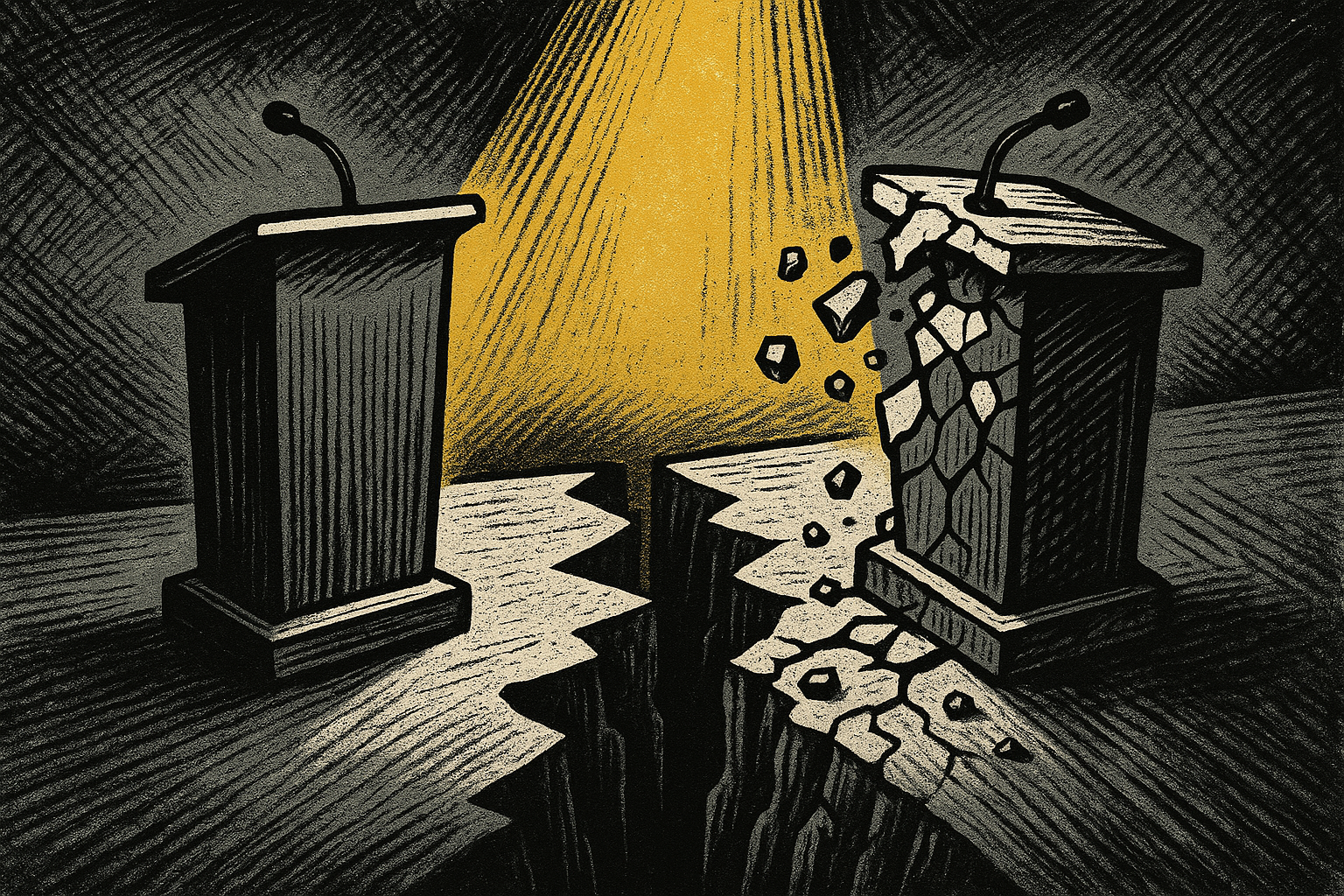
The Shift
Debate has rules, even if nobody writes them down. You state a position. I state a counter-position. We respond to each other’s arguments, not each other’s character. At the end, somebody changes their mind, both of us sharpen our positions, or we agree to disagree while still being able to sit at the same table.
That requires two things: intellectual humility (the willingness to be wrong) and social restraint (the willingness to not destroy someone you disagree with).
Denunciation needs neither.
Denunciation skips the argument and goes straight to the person. You don’t engage with what someone said. You establish that the person who said it is morally disqualified from saying it. Racist. Fascist. Grifter. Shill.
Once the label lands, the argument is over. Not because it was resolved, but because one side has been removed from the conversation.
This isn’t new. But the speed and scale at which it now operates is.

Friedman on Manners
George Friedman, the geopolitical analyst I’ve followed for years (founder of Stratfor, now at Geopolitical Futures), wrote an essay in 2018 called “Manners and Political Life” that I think is the best thing written on this topic. Not because it’s about politics specifically, but because it gets at the infrastructure underneath debate – the social architecture that makes disagreement possible without destruction.
His core argument:
“Restraint in public life is not a foundation of civilization. It is civilization.”
Friedman grew up in the Bronx. His wife, Meredith, grew up in a culture of English-style manners – the kind where eating soup was a complex choreography and certain topics were simply not discussed at dinner. He describes his own dinner table as “a place of intellectual and emotional combat, where grievances were revealed, ideas were challenged and the new world we were in was analyzed for its strangeness.”
Two different approaches to social interaction. But both had structure. Both had rules. The combat at his dinner table was still bounded. There were things you said and things you didn’t. There was a grammar to it.
What Friedman argues we’ve lost isn’t the specific rules (the ties, the table manners, the proper forms of address). What we’ve lost is the principle behind them: that there are limits to what you say in public, not because you don’t feel it, but because saying it destroys the framework within which disagreement can happen without permanent damage.
That’s the key insight. The restraint isn’t dishonesty. It’s infrastructure.
“Our opponents have become our enemies,” he writes, “and our enemies have become monsters. This has become true for all political factions, and all political factions believe it is true only for their opponents.”
The Truman-Eisenhower Example
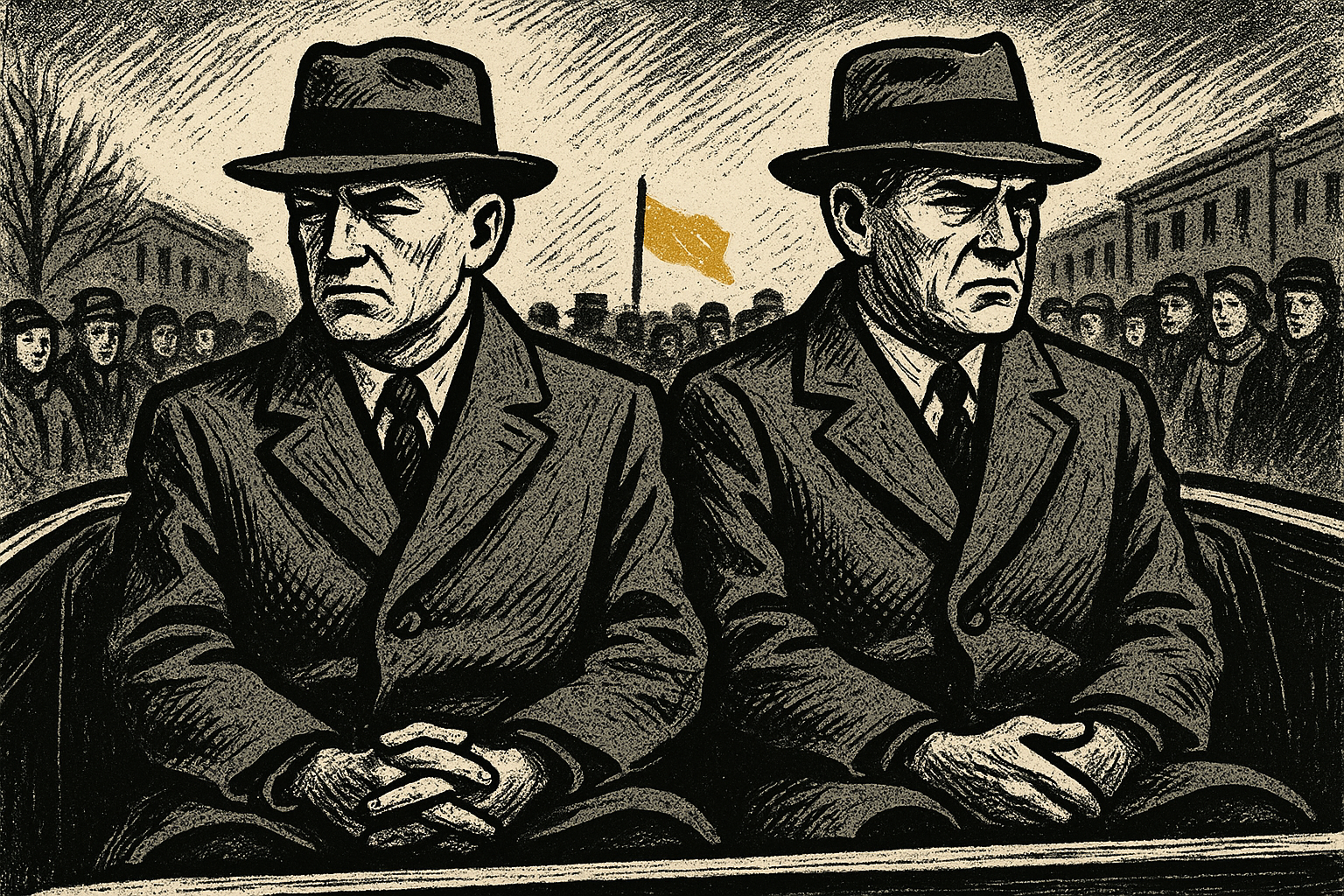
Friedman tells a story that’s worth repeating. Harry Truman and Dwight Eisenhower despised each other by the time of Eisenhower’s inauguration. They hid this in public. The press, undoubtedly aware of the tension, chose not to focus on it.
The ritual at the heart of the republic – the peaceful transfer of power – was the focus. The personal feelings of each man were irrelevant. They were, in Friedman’s phrase, “dishonest in their public behavior, and in retrospect, the self-restraint with which they hid their honest feelings was their moral obligation.”
Two dishonest men, honoring their nation in their dishonesty.
That framing is so foreign to the current moment that it almost sounds satirical. Today, the performance of authentic feeling is the whole point. Politicians compete to show how much they truly, honestly, authentically despise the other side.
The press doesn’t just report on the conflict. It amplifies it because conflict drives engagement. And the audience rewards the most extreme performers with attention, which is the only currency that matters.
The old model said: feel whatever you want in private, but in public, maintain the forms. The new model says: the forms are hypocrisy, and hypocrisy is the worst sin. Be authentic. Show your rage. Let them see how you really feel.
Friedman’s counter: “Hypocrisy is a tribute vice pays to virtue.” (He’s quoting La Rochefoucauld.) The willingness to pretend to be civil, even when you’re not feeling civil, is itself a form of respect for the shared project of self-governance.
When you strip that away in the name of authenticity, what you get isn’t honesty. What you get is a war of all against all.
The 1960s Break
Friedman traces the break to the 1960s:
“Manners were held to be a form of hypocrisy, the sign of a false and inauthentic time.”
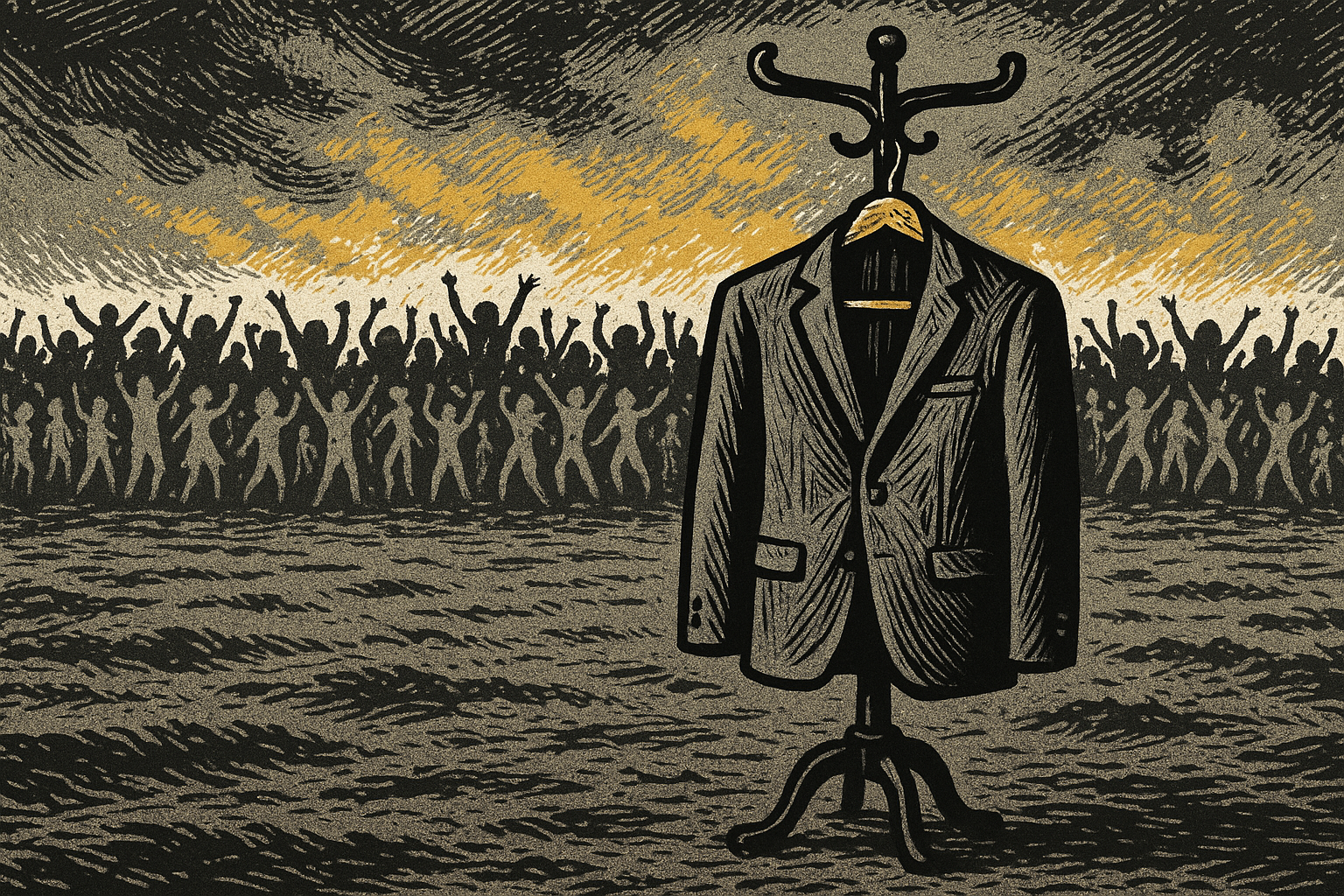
The argument was that honesty was the highest virtue. Manners restrained honest expression. Therefore manners denied us our authenticity. The solution: tear down the barriers between public and private life. Say what you feel. Show who you really are. Woodstock, Friedman notes, was less about the music than about “the fact that things that had been ruthlessly private had become utterly public.”
I think this is right. And I think the consequences have been compounding for sixty years. Each generation since has pushed the boundary further.
What was radical transparency in the 1960s became confessional culture in the 1990s, became social media oversharing in the 2010s, became performative authenticity as a political weapon in the 2020s.
The throughline: the belief that any restraint on expression is itself a form of oppression. That manners are power structures in disguise. That the only honest thing to do is to say exactly what you think, to whoever you want, as loudly as possible – and let them deal with the consequences, whatever they may be.
And the result: a culture where debate is impossible because debate requires restraint, and restraint has been redefined as dishonesty.
What This Looks Like in Practice
The 2A space is a perfect case study of the debate-to-denunciation pipeline.
There are real, substantive arguments to be had about firearms policy. The tension between individual rights and public safety is genuine. Smart people disagree. The constitutional questions are legitimately complex. (The Second Amendment is 27 words long and has generated more jurisprudence per word than almost anything else in the Bill of Rights.)
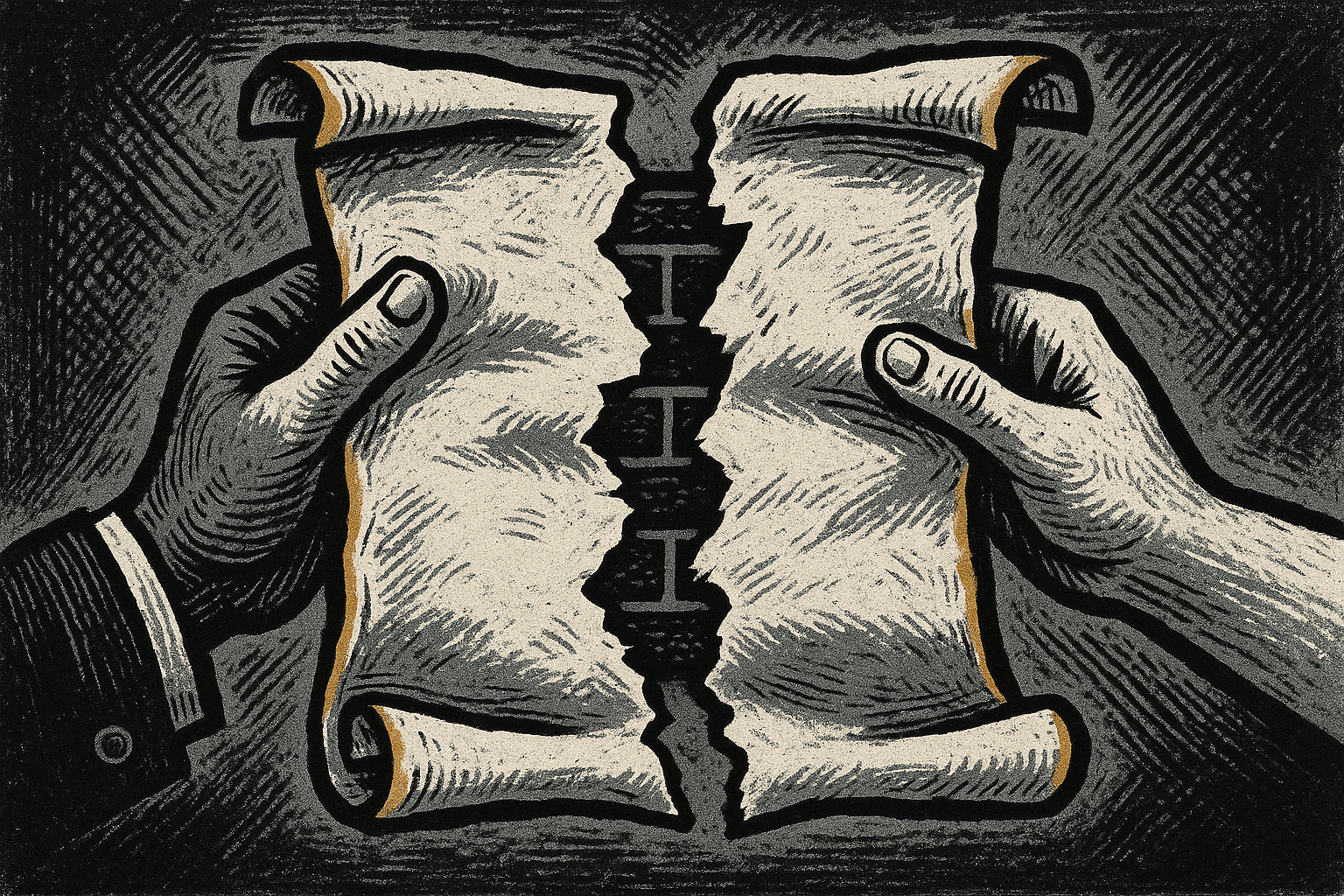
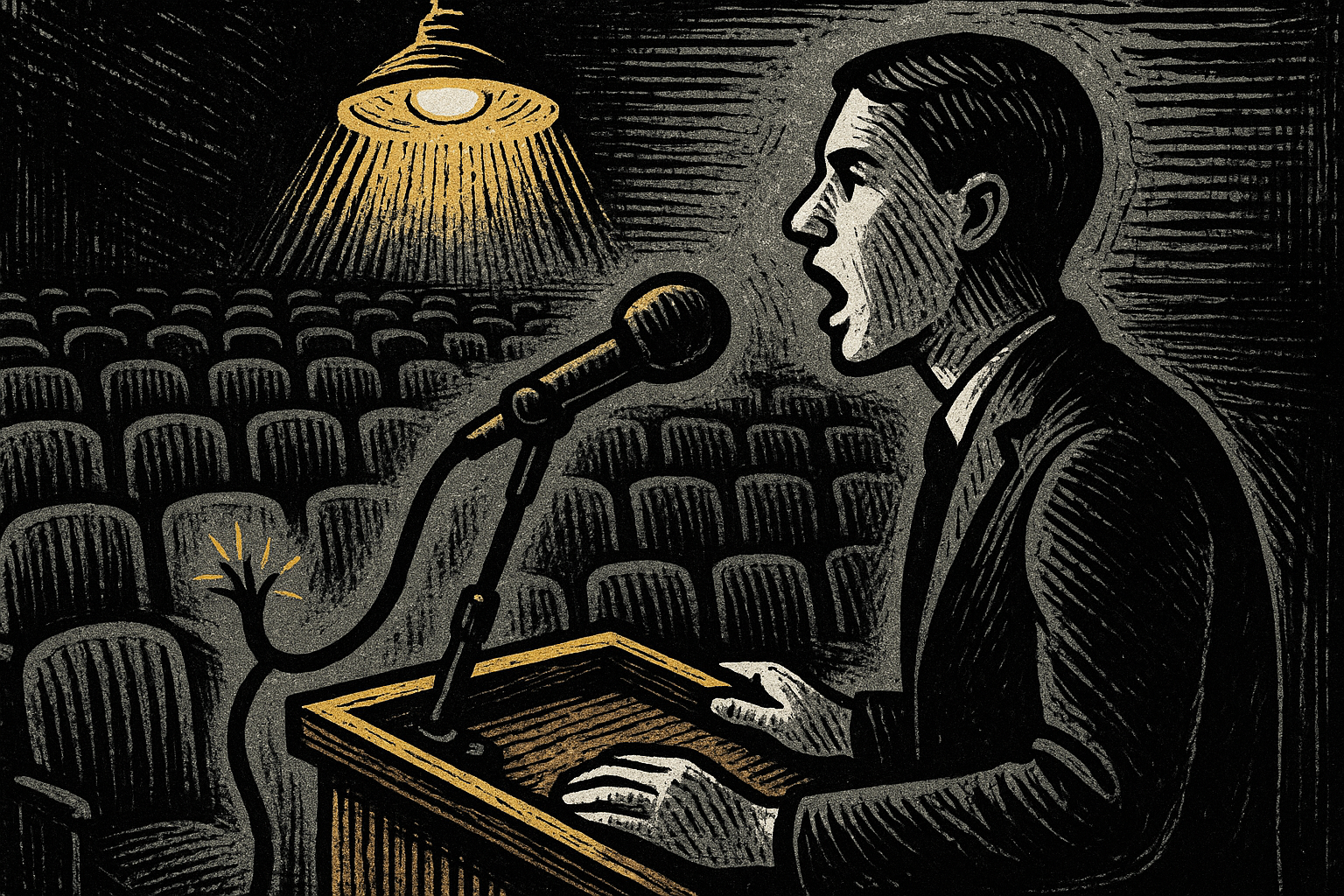
But almost nobody is having that argument. What happens instead is denunciation. If you support gun rights, you want children to die. If you support gun control, you want tyranny. Each side has reduced the other to a caricature so monstrous that engagement is unthinkable.
Why would you debate someone who wants children to die? Why would you debate someone who wants to disarm free citizens?
The denunciation preempts the debate. And once it does, the only moves left are escalation or withdrawal. You either get louder or you leave the conversation. Nobody learns anything. Nobody changes their mind. The positions calcify.
I’ve watched this play out in real time. The moment someone in the 2A space expresses a view, a certain percentage of people skip straight to denunciation. No questions about why the Second Amendment exists, what the founding generation intended, what the data actually shows about firearms and crime, or how other countries with different constitutions handle the same questions. Just: you support guns, therefore you are the problem.
That’s not an argument. It’s a verdict. And verdicts don’t require dialogue.
The COVID Amplifier
COVID was the masterclass. Not because the virus was polarizing – viruses don’t have politics – but because the people in power lied, and denunciation was the mechanism that let them get away with it.
The lockdowns didn’t work. The masks were theater. The school closures did enormous damage to children for no measurable benefit. The vaccines were sold as stopping transmission when they didn’t. The lab leak hypothesis was called a conspiracy theory until it became the most likely explanation. Every one of these things was knowable at the time, by anyone willing to look at the data.
I was at Jekyll Island for the Mises Institute summit in October 2020, watching this unfold in real time. Sweden was running its no-lockdown experiment and the results were already clear. Jay Bhattacharya at Stanford was raising legitimate questions about lockdown efficacy. The Great Barrington Declaration had just been published. Tom Woods was documenting the data in real time.
None of this was fringe. These were credentialed scientists and researchers making evidence-based arguments.
All of it was denounced anyway. Because that was the point.
If you questioned lockdowns, you were a science denier who wanted people to die. If you cited the Great Barrington Declaration, you were a fringe extremist funded by dark money. If you asked about natural immunity, you were dangerous. If you hesitated on the vaccines, you were killing grandma.
The denunciation served a function: it made the debate unnecessary. If the person asking the question is morally disqualified, you never have to answer the question. And if you never have to answer the question, you never have to account for the fact that the answers were wrong.
That’s the part that should terrify everyone. The people who were right were destroyed. The people who were wrong were promoted. And denunciation was the tool that made that inversion possible.
The Social Media Accelerant
I should mention social media, as Friedman noted, but as he said, what more is there to say? So consider it said.
Except this: the specific mechanism matters. Social media didn’t just give everyone a megaphone. It gave everyone an audience that rewards denunciation and punishes nuance.
A thoughtful, 2,000-word essay about the tradeoffs of firearms policy gets 12 likes. A tweet that says “gun owners have blood on their hands” gets 12,000 retweets. The incentive structure is clear. The market for denunciation is vastly larger than the market for debate.
And the audience isn’t passive. Social media audiences are participants. They pile on. They amplify. They create consequences for the denounced. Job losses. Social ostracism. Reputational destruction.
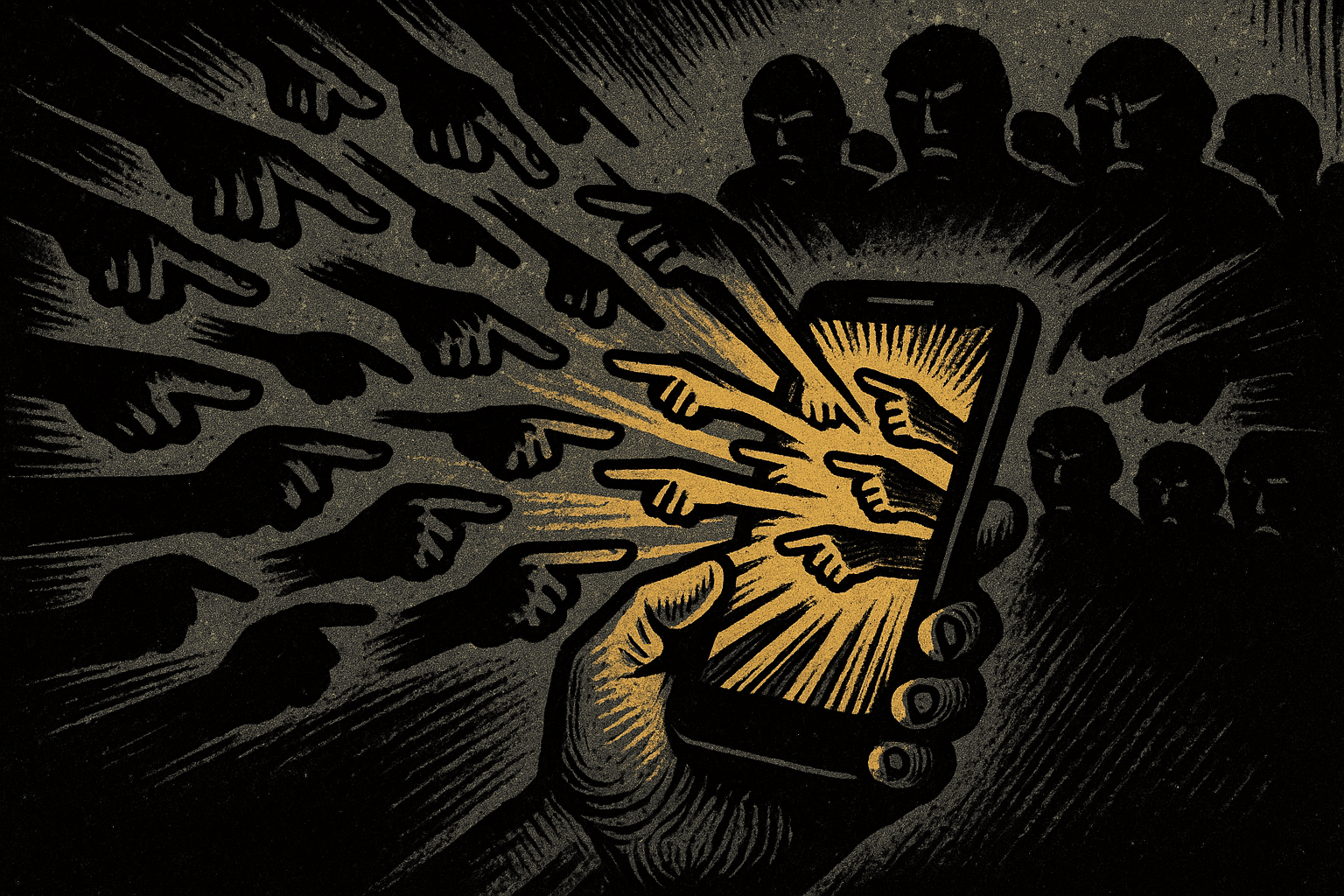
Jon Ronson wrote the book on this. Literally. So You’ve Been Publicly Shamed traces what happens when the mob finds a target. His central case is Justine Sacco, a PR executive who tweeted a bad joke before boarding a flight to South Africa. By the time she landed, she was the number-one trending topic worldwide. She lost her job. Her life was dismantled. Google made an estimated $120,000 in ad revenue from people searching her name. The people who did the dismantling got nothing except the feeling of being on the right side.
As one of Ronson’s sources put it: “The justice system in the West has a lot of problems, but at least there are rules. You have basic rights as the accused. You have your day in court. You don’t have any rights when you’re accused on the Internet. And the consequences are worse. It’s worldwide forever.”
That’s the distinction that matters. Truman and Eisenhower could despise each other because the press chose not to amplify it. Today, the press and the public have every incentive to amplify it. And the consequences are permanent. There’s no appeals court. There’s no statute of limitations. The shaming lives forever in the search results.
One journalist told Ronson he had so many jokes and observations he wouldn’t dare post online anymore. “I suddenly feel with social media like I’m tiptoeing around an unpredictable, angry, unbalanced parent who might strike out at any moment.”
Ronson’s conclusion: “We were creating a world where the smartest way to survive is to be bland.”
That’s the end state of denunciation culture. Not a world where everyone agrees. A world where everyone pretends to.

Benjamin Franklin’s Warning
Friedman ends his essay with the story of Benjamin Franklin leaving the Constitutional Convention. A woman asks him what kind of government he and his colleagues created. “A republic,” he says, “if you can keep it.”
Friedman reads this as Franklin placing the burden on the citizens. The republic survives only if the people who live in it can manage the tension between private feeling and public conduct.
It requires that we be willing to disagree without destroying, to argue without annihilating, to feel one thing and display another – not out of weakness, but out of respect for the thing we share.
That sounds quaint now. It shouldn’t.
Dan Carlin makes a point in Hardcore History that I keep coming back to: the civilizations that lasted – Rome at its best, the British parliamentary tradition, the early American republic – all had mechanisms for channeling disagreement into something productive. Debate in the Roman Senate, parliamentary opposition in Westminster, the Federalist-Anti-Federalist exchange. The disagreement wasn’t a bug. It was the immune system. The civilizations that collapsed weren’t the ones with the most internal conflict. They were the ones that lost the ability to channel it. When debate dies, what replaces it isn’t peace. It’s either stagnation or violence.
A republic that can debate survives. A republic that can only denounce cannibalizes itself. Not because the denunciations are wrong – they might even be accurate – but because denunciation doesn’t produce solutions. It produces silence.
Albert Hirschman wrote about this in Exit, Voice, and Loyalty. When people are dissatisfied with a system, they have two options: voice (speak up, try to change it) or exit (leave). Debate is voice. It’s the mechanism by which a system gets feedback and self-corrects.
Denunciation kills voice. When the cost of speaking up is destruction – of your reputation, your career, your social standing – people stop speaking up. They don’t stop being dissatisfied. They just exit. Quietly. And the system loses the only feedback loop that could have saved it.
I’ve written elsewhere about the distinction between coercion and persuasion. The short version: the only way we can influence one another short of physical violence is through speech. Persuasion is how free societies function. When you remove the ability to persuade – when the cost of speaking is too high, when debate is replaced by denunciation – you haven’t eliminated disagreement. You’ve just eliminated the nonviolent way of resolving it. What’s left is coercion.
That’s what the silence actually is. Not agreement. Withdrawal. People don’t stop believing what they believe. They just stop saying it out loud. A society where half the population has exited the conversation isn’t at peace. It’s a pressure cooker.
We live in post-persuasion America. Not because persuasion stopped working. Because we stopped trying.