
 BY
BY Table of Contents

Imagine you’re at a dinner party. Friends of friends. You’re sitting across from someone you’ve just met, and within five minutes you can tell they’re smart. Genuinely smart. They have opinions on everything and the vocabulary to back them up. Healthcare, education, the economy, whatever. They can dismantle any of it.
But here’s the thing you notice after about ten minutes: they’re talking at you, not with you. They speak before they listen. They’re convinced of their own dog food. And they are quick - really quick - to point out what’s wrong with everything and everyone else.
We wrote elsewhere about the distinction between knowledge and true opinion - the Munger test. Charlie Munger said he wasn’t entitled to have an opinion unless he could state the arguments against his position better than the people in opposition. That’s a qualified opinion. The person at the dinner party hasn’t done that work. They just have the vocabulary.
That gap - between the person who sees what’s wrong and the person who builds what’s next - is the one I keep coming back to. The critic and the revolutionary. Our culture has gotten very good at producing the first and very bad at rewarding the second.
Arthur C. Clarke nailed it in The City and the Stars:
“He was a critic, not a revolutionary. On the placidly flowing river of time, he wished only to make a few ripples: he shrank from diverting its course.”
That’s the whole dichotomy in two sentences.
Criticism Is Cheap

Criticism is the cheapest form of intelligence. I don’t mean that as an insult. I mean it literally. The cognitive cost of identifying a flaw is a fraction of the cost of designing a solution. It’s the difference between noticing a building has a crack in the foundation and actually building a better building.
Any smart person can find the cracks. Give them five minutes on any topic. Healthcare? Broken. Education? Broken. The financial system? Broken. Social media? Broken. Government? Pick a country, it’s broken. The military-industrial complex? The prison system? The food supply chain? All broken. All easy to critique.
And the critiques are usually correct. That’s the seductive part. The critic isn’t wrong. The building does have a crack in the foundation. The question is what you do after you’ve noticed it.
The critic stops there. The revolutionary starts there.
The Dopamine Hit of Being Right
There’s a psychological payoff to criticism that most people won’t admit to. When you identify a flaw, you feel smart. You feel like you see something others don’t. You’ve separated yourself from the broken thing and the people who can’t see that it’s broken.
That’s a hit. And it’s addictive.
I felt it myself in my twenties. I had read Rand and Rothbard and Hayek, and I could tell you exactly what was wrong with every government program, every regulation, every tax code. I was insufferable at dinner parties. (I’d like to think I’ve gotten better. My wife might disagree.) I’m still guilty of it sometimes. Everyone is, to a degree - we’re not all Charlie Munger. But the arguments were mostly correct. The attitude was almost entirely unproductive.
Because here’s the thing about criticism: it doesn’t cost anything. You don’t have to be vulnerable. You don’t have to risk failure. You don’t have to put your name on something that might not work. You just point at the thing that’s broken, say “see?”, and collect your social credit.
Building is the opposite of all of that. Building is expensive. It costs time, money, reputation, energy. It requires you to commit to a specific solution, which means committing to being wrong about that specific solution. Every person who builds something opens themselves up to the exact same criticism they used to dish out from the sidelines. Especially once they publish it and go live.
That’s why most people stay on the sidelines.
Roosevelt said it better than anyone will ever say it again, in his Citizenship in a Republic speech at the Sorbonne in 1910:
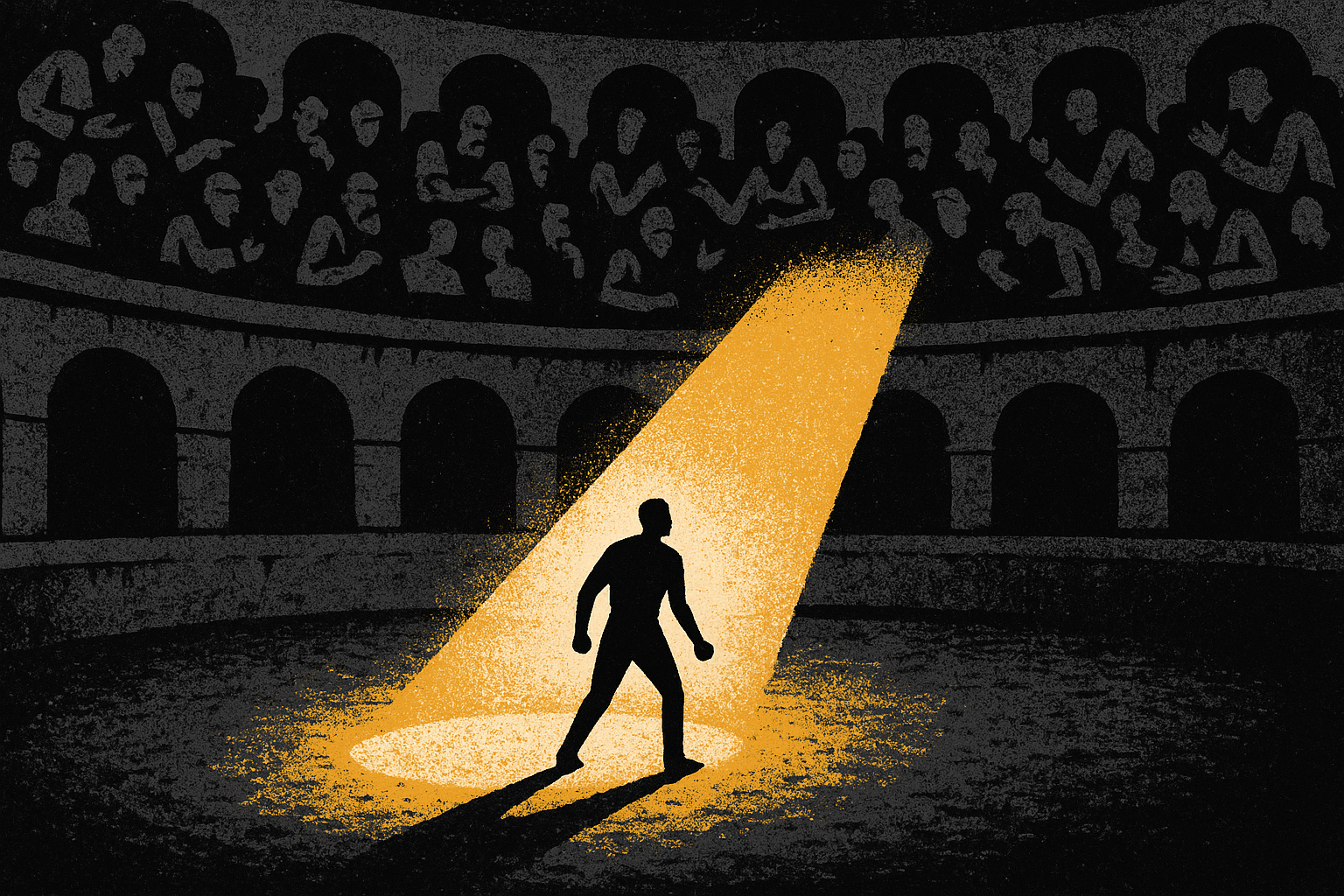
“It is not the critic who counts; not the man who points out how the strong man stumbles, or where the doer of deeds could have done them better. The credit belongs to the man who is actually in the arena, whose face is marred by dust and sweat and blood; who strives valiantly; who errs, who comes short again and again, because there is no effort without error and shortcoming; but who does actually strive to do the deeds; who knows great enthusiasms, the great devotions; who spends himself in a worthy cause; who at the best knows in the end the triumph of high achievement, and who at the worst, if he fails, at least fails while daring greatly, so that his place shall never be with those cold and timid souls who neither know victory nor defeat.”
That last line is the one that stays with me. “Those cold and timid souls who neither know victory nor defeat.” That’s the critic. Not evil. Not wrong. Just absent from the arena where anything actually happens.
Shouting Into a System That Doesn’t Listen
There’s another layer to the critic’s payoff that I think is even more dangerous than the dopamine hit. It’s the feeling that you’re doing something.
You share a thread about how broken the healthcare system is. People like it. They reshare it. You get replies agreeing with you. You feel engaged. You feel like a participant in civic life. You’re part of the conversation. You’re raising awareness, after all.
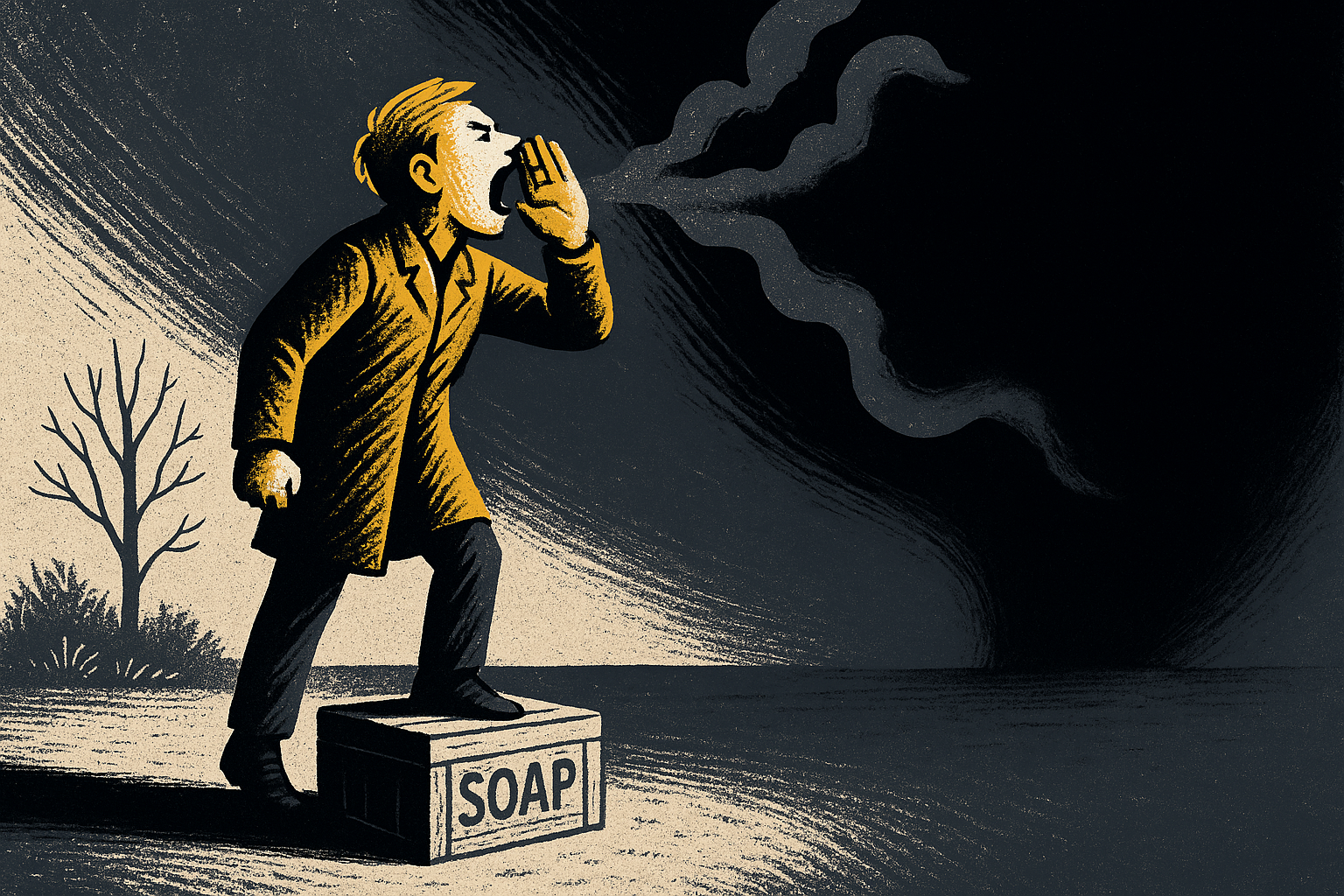
And then nothing happens.
Because the critique, no matter how accurate, no matter how widely shared, usually operates outside your sphere of influence. You don’t have the leverage, the position, or the proximity to the problem to make the thing you’re criticizing any different. You’re shouting into a system which either can’t hear you or chooses not to, and the shouting feels like action because other people are shouting with you.
Robert Greene’s The 48 Laws of Power is built on this insight. Power is local. It operates through proximity, leverage, and position. The people who actually change things aren’t the ones with the best analysis of what’s wrong. They’re the ones who’ve maneuvered themselves close enough to the problem to do something about it. Greene’s laws are amoral, but the underlying principle is structural: influence requires proximity. Commentary from the cheap seats isn’t influence. It’s noise.
This is the trap. Criticism simulates engagement without requiring it. It gives you the emotional experience of contributing without the inconvenience of actually doing anything. No skin in the game. All noise, zero signal. And the more people agree with your critique, the more it feels like progress, when all that’s actually happened is that a group of people have agreed that something is broken. Something they already knew.
The antidote, I think, is an old one: think globally, act locally. That old chestnut survives because it’s true. You can understand the systemic problem at scale. You should. But the place where you can actually move the needle is close to home. In your family. In your business. In your community. In the thing you can touch, build, or change with your own hands.
The critic thinks globally and acts globally. Which means they don’t act at all. They just think, out loud, to an audience.
The revolutionary thinks globally and acts locally. They see the same broken thing the critic sees. But instead of broadcasting their analysis, they build the alternative in the only place they actually have power - right in front of them.
When Acting Locally Doesn’t Work
A caveat: acting locally doesn’t always work. It’s the best way, yet it doesn’t always work.
I had Mark Pulliam on my podcast a while back. Mark is a retired lawyer who moved to East Tennessee - my home territory - and got involved. Not Twitter-involved. Actually involved. He saw problems in local government, built an organization, held regular meetings at the local library, organized people, pushed for changes at the local level. Did exactly what I’ve been arguing for here. Thought globally. Acted locally. Put skin in the game.
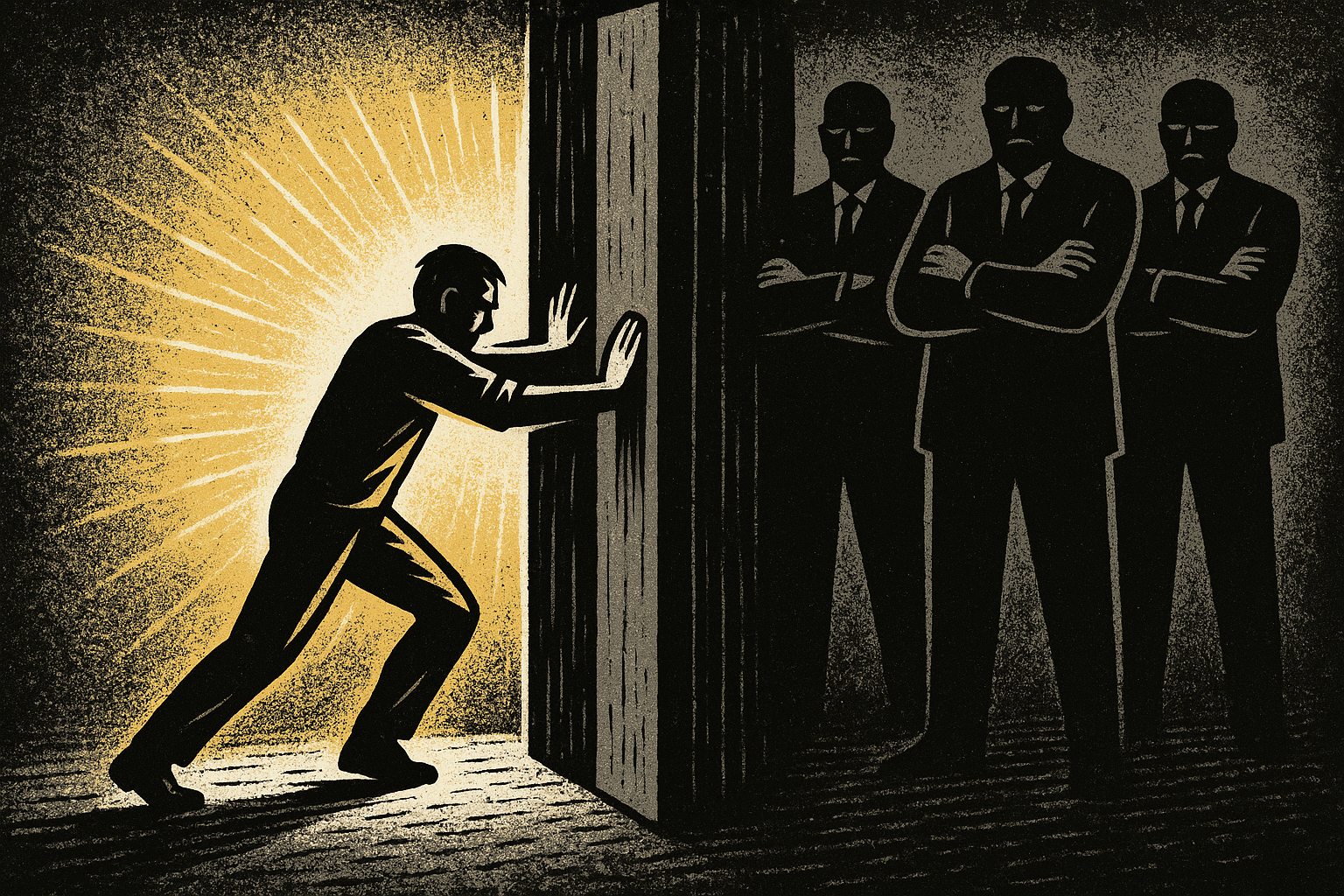
And the old guard used the existing rules to freeze him out. They didn’t beat his arguments. They didn’t have better ideas. They just controlled the machinery - the committees, the appointments, the procedures - and used that control to make sure his organization couldn’t gain traction. The system absorbed the challenge and kept going.
I don’t think that invalidates the “think globally, act locally” strategy. I think it complicates it, which is more useful than a clean narrative anyway. The revolutionary doesn’t always win. Sometimes you do your best locally and the chips don’t fall in your favor. Sometimes you build the alternative and the people in charge burn it down.
But Mark can look at himself in the mirror. He entered the arena. He built something. He tried. The people who tweet about how broken East Tennessee’s local government is can’t say the same. They performed intelligence from a safe distance.
The question isn’t whether acting locally guarantees results. It’s whether it’s the only place where results are even possible. I think it is. Even when it doesn’t work.
Two Revolutions, One Lesson
The distinction runs through every era of change I’ve studied.

The French Revolution had plenty of critics. Half of Paris could tell you what was wrong with the monarchy. The salons were full of brilliant people cataloguing the failures of the ancien regime. And when the revolution came, it was primarily driven by critics. People who knew what they were against, not what they were for. The result was the Terror. A revolution defined by what it was destroying, not what it was building.
Contrast that with the American Revolution. The Founders were critics, sure. The Declaration of Independence is one of the greatest pieces of political criticism ever written. But they didn’t stop there. They spent the next decade building. The Constitution, the Bill of Rights, the Federalist Papers, the institutions. The criticism was the starting gun. The building was the race.
(Jefferson could do both. JFK once hosted a dinner at the White House for a room full of Nobel Prize winners and told them it was the most extraordinary collection of talent ever gathered there - except for when Thomas Jefferson dined alone. Most of Jefferson’s contemporaries couldn’t do both. Hamilton could build but couldn’t stop fighting. Adams could critique but alienated everyone in the process. The rare person who can see what’s broken and build what replaces it is the rarest person in any room.)
The same split shows up in business. Every industry has its commentators and its builders. The people who write the “X is dead” blog posts and the people who build the thing that replaces X. Both groups are smart. Both have evidence. But only one group throws their shoulder into it and builds an alternative.
The Algorithm Loves a Takedown
Social media broke whatever balance used to exist between critics and builders. It didn’t create critics - they’ve always existed. But it gave them a megaphone and a monetization model.
Social media rewards criticism. The algorithm loves a takedown. The most viral content is almost always someone dismantling something - a company, a person, a policy, an idea. A well-crafted criticism gets engagement. A well-built product gets… customers. Eventually. Maybe. If it works. The feedback loops operate on completely different timescales.
The critic gets dopamine today. The builder gets (maybe) results in three years.
Pick any space you care about. There are hundreds of commentators cataloguing what’s broken - podcasts, newsletters, YouTube channels dedicated entirely to critique. And then there are the handful of people actually building alternatives. People who put real money and real reputation on the line rather than just commentary.
The critics get the followers. The builders get the results. The gap between those two has never been wider.
The Spectrum Between Critiquing and Contributing
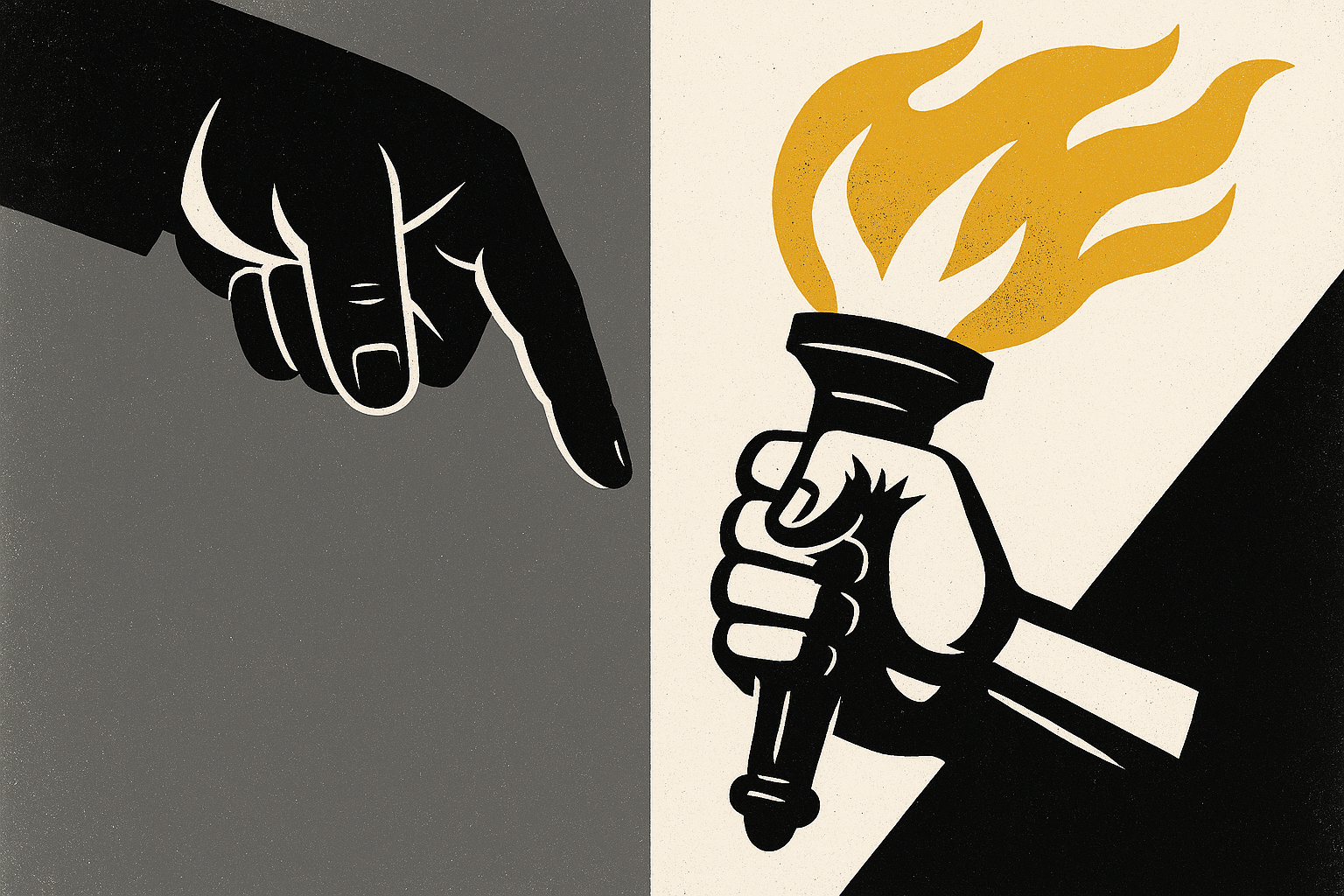
Critiquing vs. contributing is a spectrum. Everyone starts as a critic. It’s what you and I do with the critique that matters - do you turn it into action or not?
That’s a big part of what this website is all about. At a retreat in the Basque Country, the leader, an archetypal reader, pulled the High Priest card for me. His interpretation: “This is the card of healing - specifically healing with the voice. Not the card of wanting a guru.” The prescription was to teach, to build things publicly, to share what I’d learned. A spiritual coach in Bali told me essentially the same thing from a different tradition: that my trajectory was toward public teaching, and that I’d been avoiding it out of fear of being seen as small. Two completely independent systems, pointing at the same thing. Stop critiquing from the sidelines. Build the thing. Put your name on it.
Because when you build something, you’re exposed. Every decision you make can be criticized by someone smarter than you who doesn’t have to live with the consequences. And it will be. That’s the deal. You build, the critics tell you what’s wrong with what you built, and then you decide whether to listen or keep going.
(Most of the time, both the critic and the builder are partially right. The critic sees a real flaw. The builder sees a real constraint the critic doesn’t. The question is whose skin is in the game.)
Nassim Taleb put it better than anyone in Skin in the Game: “Don’t tell me what you think, tell me what you have in your portfolio.” The critic’s portfolio is empty. The revolutionary’s portfolio is messy, partially wrong, and real.
What’s Your Alternative?
Whenever someone offers me a critique now - of a business, a policy, an institution, anything - I have one question. Not “is the critique accurate?” It usually is. The question is: what’s the alternative, and have you tried to build or implement it?
Not “could you?” Not “do you have a theory about what it should look like?” Have you actually built it? Put your time, your money, and your name behind a specific solution?
If yes, I’ll listen all day. Your criticism comes with scars. You’ve earned it.
If no, I’ll note it. But I won’t confuse it with contribution.
The world doesn’t need more people who can identify what’s broken. That list is long and everybody knows it. What’s scarce is the person who looks at the broken thing and says “I’m going to build something better” and then actually does it. Imperfectly. Expensively. In public.
That’s the revolutionary. Not the best critique. The best alternative.