
 BY
BY Table of Contents
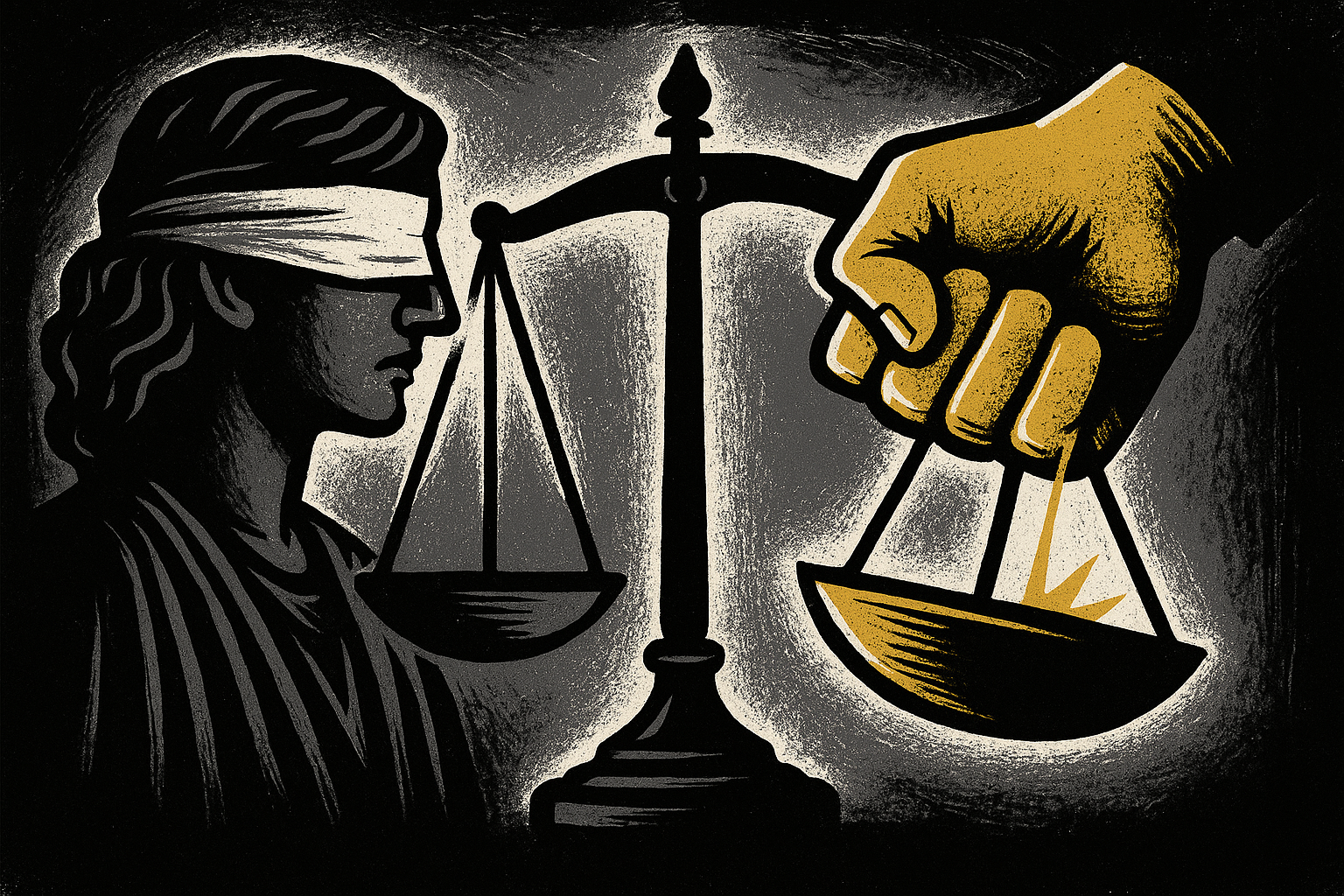
Americans like to believe that justice is blind. Then they spend hundreds of billions a year on legal services, forking over $1,500 an hour to white-shoe, well-connected law firms – payments which indicate that the scales of justice can, in fact, be tipped.
This isn’t an American problem. It’s a human one. (Americans just make better TV about theirs.). Every legal system in the world operates on two levels: the story it tells about itself, and what people actually believe when they come face-to-face with it.
The World Justice Project measures the first – how rule of law actually functions across 142 countries. Independent courts, constraints on state power, whether the law applies equally. The World Bank measures something different – whether citizens believe they’ll be treated fairly. Whether they have confidence in the courts, the police, the basic machinery of justice.
Those two numbers don’t always agree. And the distance between them tells you more about a country than either number alone.
A country where the institutions are strong and people trust them? That’s Denmark. That’s New Zealand. A country where the institutions look strong on paper but people know better? That’s where things get interesting – and dangerous.
That gap comes down to a two-letter distinction most people have probably felt but not been able to put words to. It’s known as “rule of law” vs. “rule by law.”
The Distinction
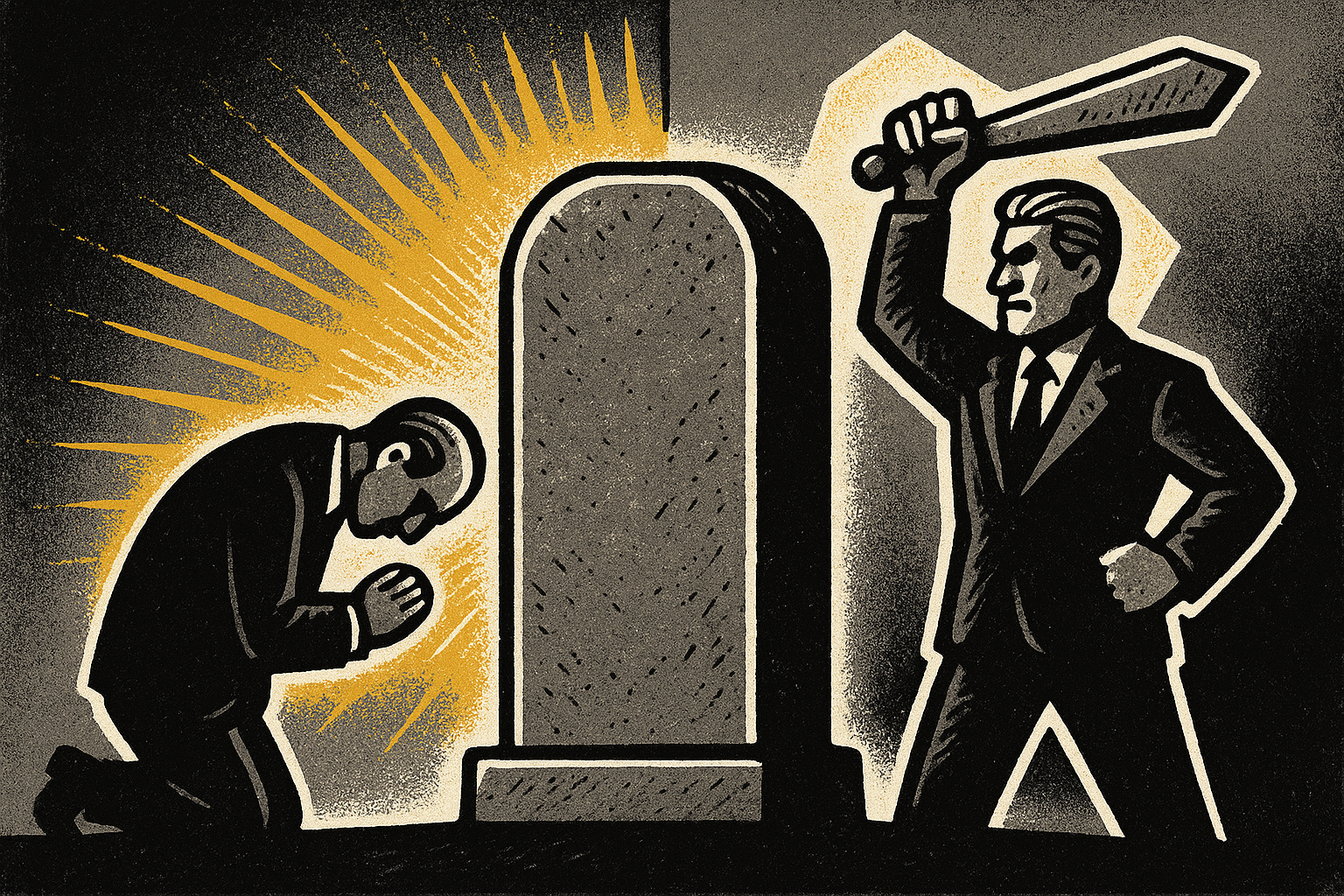
Rule of law means the law constrains power. The law is above the state. The state is bound by it. The president, the prime minister, the king, the bureaucrat at the licensing office – all subject to the same legal framework as the citizen standing in front of them.
As an American, that’s the core idea behind the Declaration of Independence, the Constitution and the Bill of Rights. You’re born with inalienable rights – to life, liberty, and the pursuit of happiness – and its only with the consent of the governed, i.e. you and I, fellow citizens, that a state is created amongst us to protect those inalienable rights.
(After all, you are endowed with certain inalienable rights, as the Bill of Rights says.)
If the state doesn’t abide by those principles, the Constitution and the Bill of Rights supersede the state’s ability to impose its will on you.
There’s a scene in Bridge of Spies that captures this perfectly. Tom Hanks, playing the lawyer James Donovan, is told by a CIA agent:
“Don’t go Boy Scout on me. We don’t have a rule book here.”
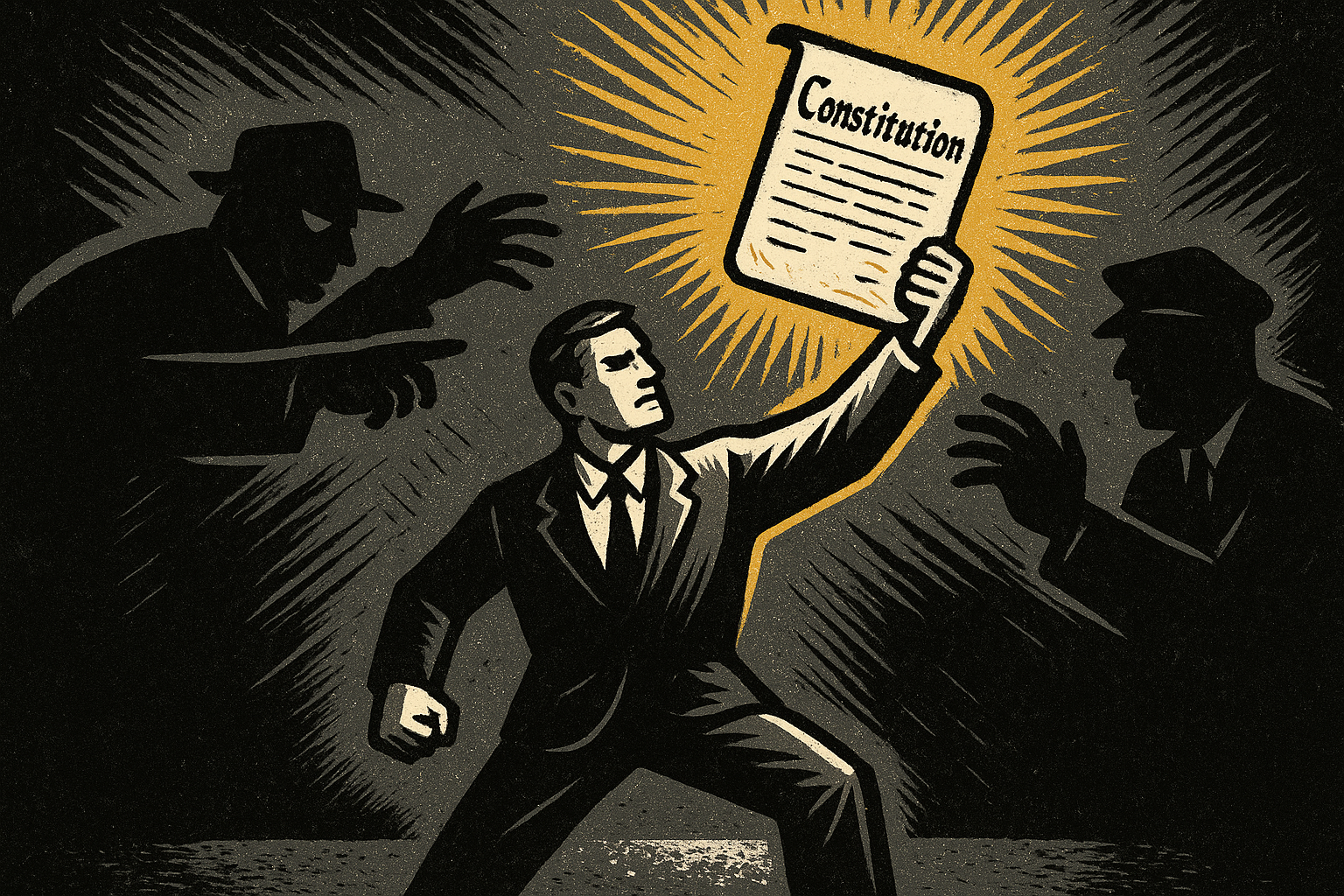
Donovan fires back:
“I’m Irish. You’re German. But what makes us both Americans? Just one thing. One. The rule book. We call it the Constitution. And we agree to the rules. And that’s what makes us Americans. It’s all that makes us Americans.”
Whether or not America lives up to that ideal is up for debate. But the ideal itself is the point. The rule book constrains the state and helps ensure that justice is blind. That’s the promise and the premise.
Rule by law means the state uses law as a tool to exercise power. The law exists, and it may even be elaborate and sophisticated, but it serves the state rather than constraining it. The state writes the law, interprets the law, enforces the law, and changes the law when the law becomes inconvenient.
The law is a coercive mechanism wielded by the state, not a constraint upon it. Whoever heads the state is the law.
Both systems have courts. Both have judges. Both have constitutions, often beautifully written ones. From the outside, they can look identical. The buildings are the same. The robes are the same. The language is the same.
The difference is who the law answers to.
Ben Thompson of Stratechery put it well in a piece about TikTok and China:
“The distinction between rule of law, and rule by law, is a crucial one: the former holds up the law as the ultimate source of power, to which everyone is accountable, even the ruler. Rule by law, on the other hand, means that law is an expression of power, used and changed as needed by some supreme ruler.”
Under rule of law, the law answers to a principle. Under rule by law, the law answers to a person or a party.
The Soviet Constitution
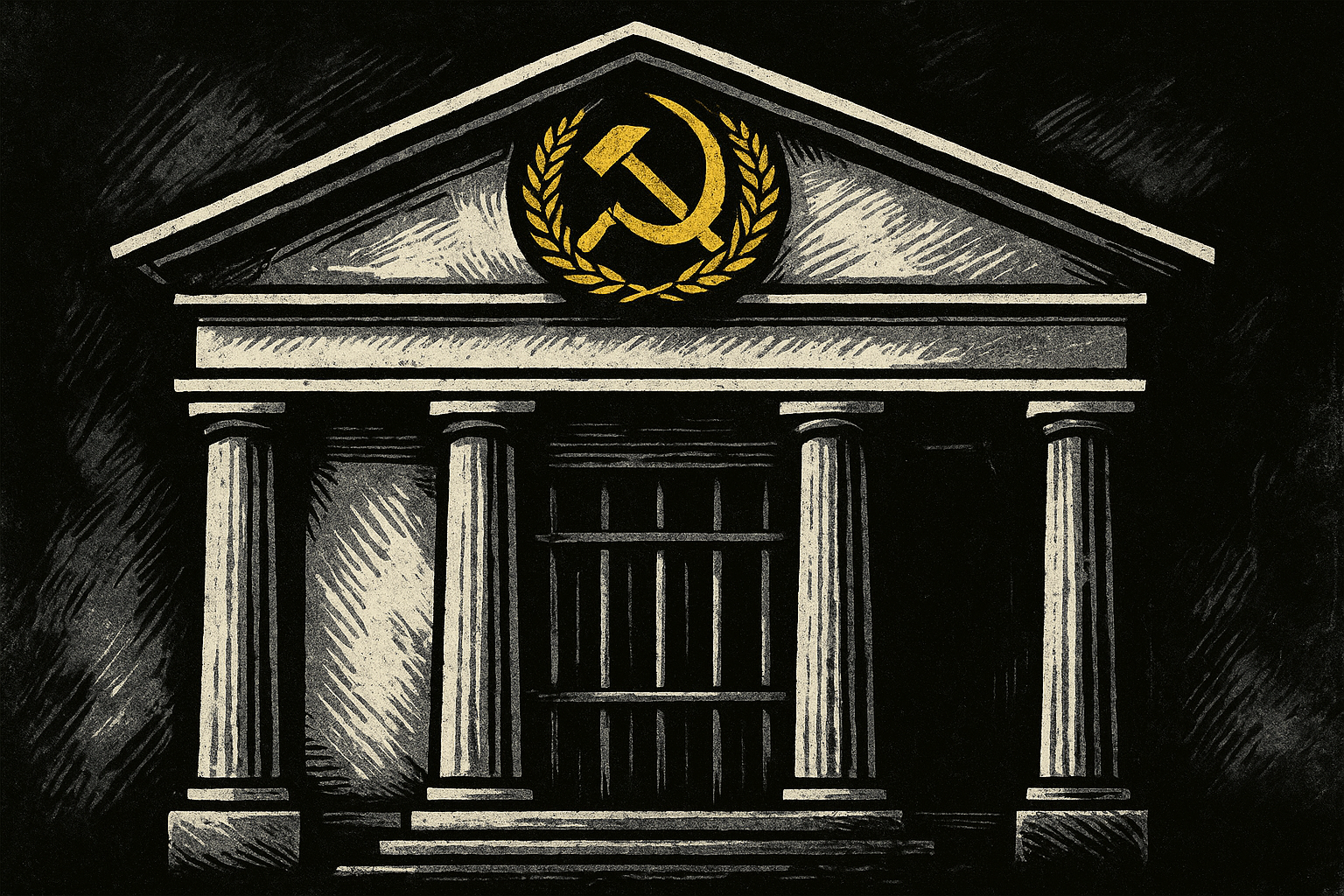
An excellent illustration of this phenomenon is the Soviet Constitution of 1936. It guaranteed freedom of speech, freedom of the press, freedom of assembly, the right to education, the right to rest and leisure. On paper, it was one of the most progressive constitutions in the world.
It was also in effect during the Great Purge, when Stalin’s regime executed approximately 750,000 people and sent over a million more to the Gulag.
The constitution wasn’t violated. That’s the key. From the Soviet perspective, the constitution was a statement of aspiration directed by the party. The party decided what the words meant, when they applied, and to whom.
Freedom of speech existed – for speech the party approved of. Freedom of assembly existed – for assemblies the party organized. The constitution didn’t constrain the state. It provided the vocabulary with which the state described itself.
This is rule by law in its purest form. The law exists. It is even referenced. But it serves the ruler, not the ruled.
There’s an old communist chestnut: “It’s not who votes that counts. It’s who counts the votes.”
Hong Kong: Before and After
I experienced this shift in real time.
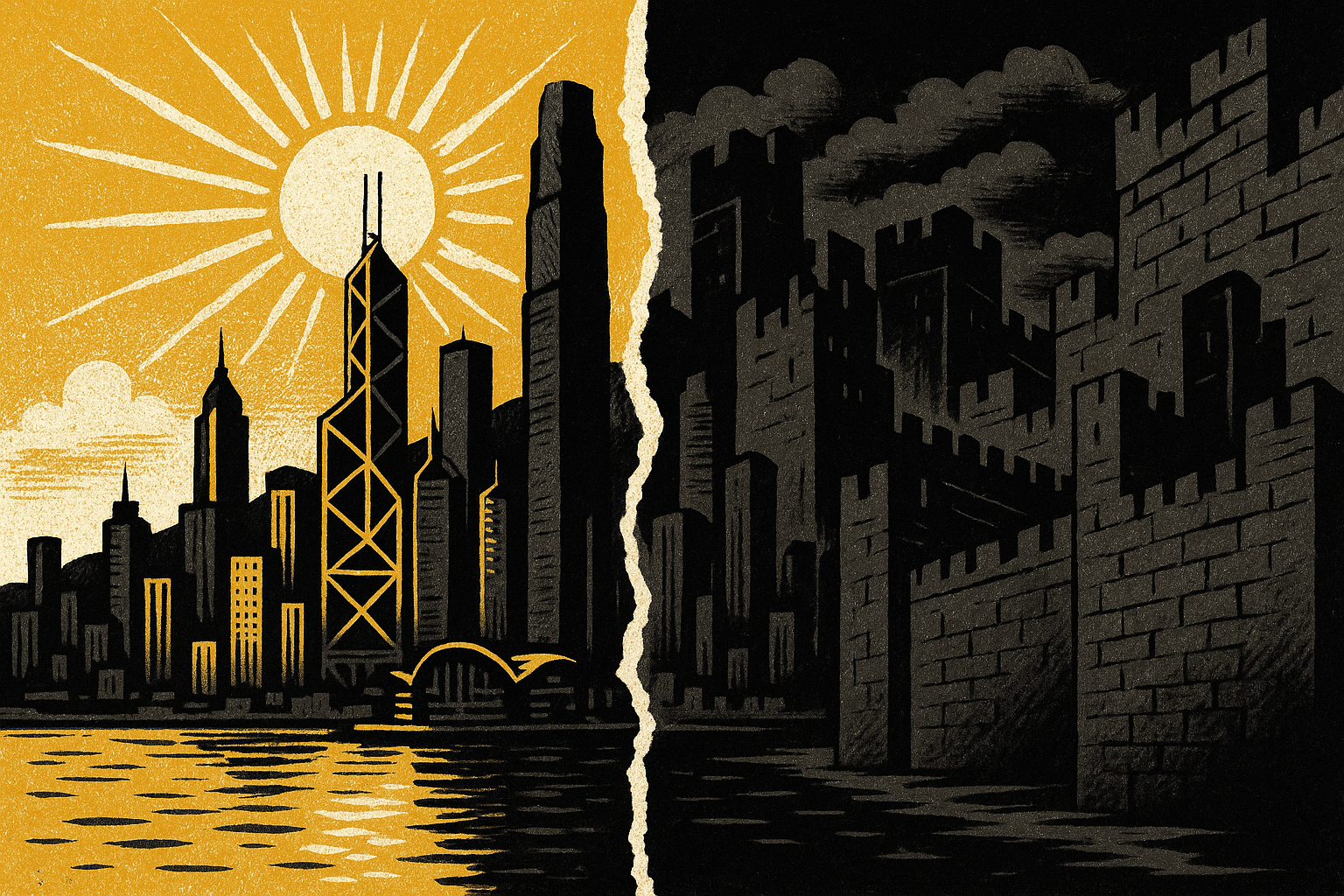
Hong Kong under British common law was one of the freest economies in the world. Not because there were no laws – there were plenty – but because the laws were predictable, the courts were independent, and the state was genuinely constrained by legal principles it didn’t control. You could plan, invest, and build because you could trust that the rules today would be the rules tomorrow.
Then Beijing decided it was time to be in charge.
The National Security Law of 2020 didn’t abolish Hong Kong’s legal system. It layered a new system on top – one in which the definition of “national security” is determined by Beijing, the courts are staffed by Beijing-approved judges for security cases, and the scope of what constitutes a crime expands or contracts based on political need.
The buildings are the same. The courts still exist. Judges still wear robes. But the law no longer constrains the state. The state wields the law. The speed with which Hong Kong’s energy evaporated tells you how fragile organic freedom is, and how quickly rule of law converts to rule by law without changing a single building or a single title.
South Africa
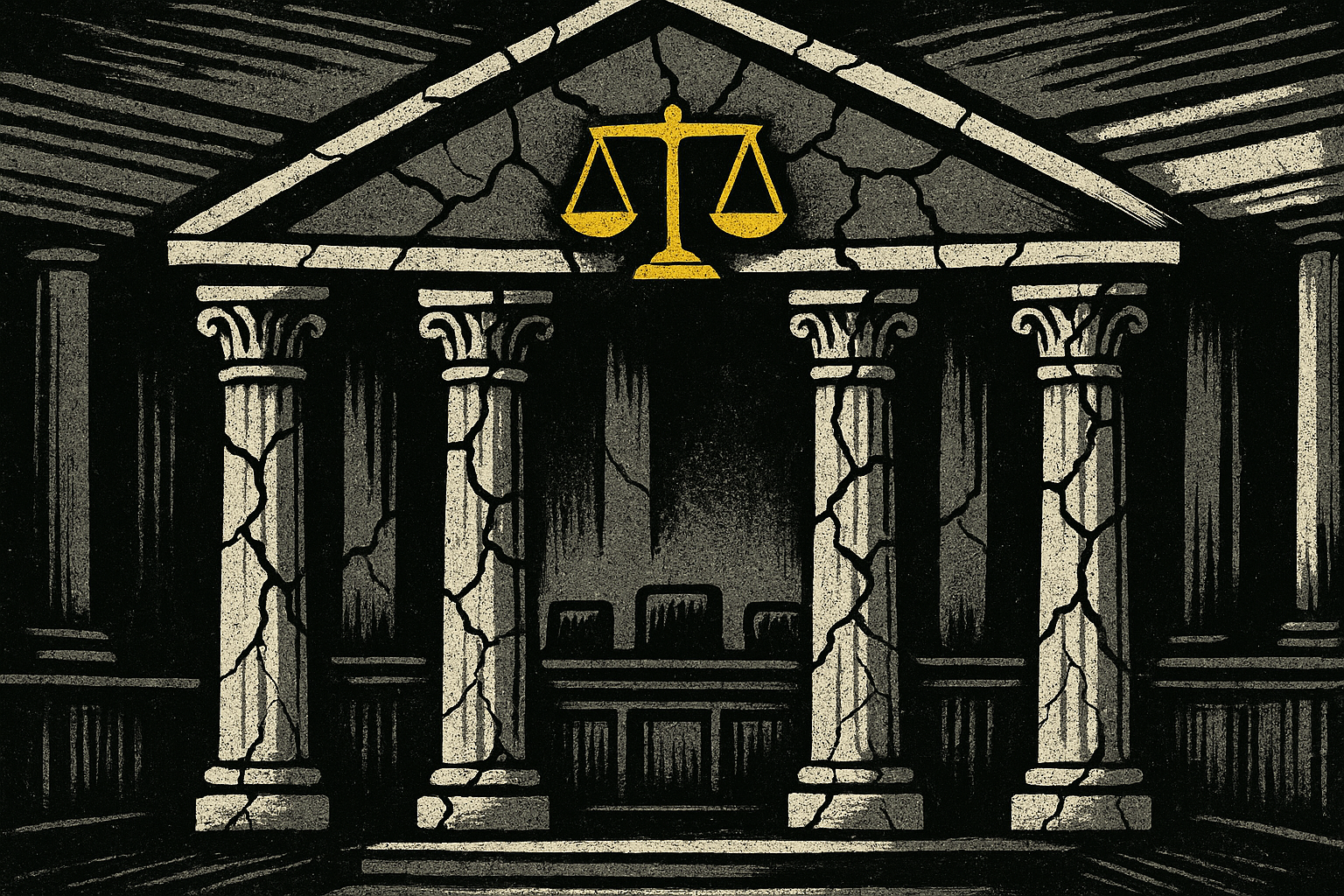
What de Klerk and Mandela accomplished in 1994 was genuinely extraordinary. A negotiated transition of power. A new constitution. An independent judiciary. The words on the page were world-class.
And then the ANC spent three decades hollowing it out. Not by rewriting the constitution – by staffing institutions with loyalists, using the legal apparatus to protect allies and prosecute enemies, and allowing corruption to become so systemic that the agencies tasked with fighting it were themselves corrupted.
The constitution still says the right things. The courts, remarkably, still function. But the gap between what the law says and what the state does widens year after year.
Compare it to Singapore. Both countries gained effective independence in the 1960s. Singapore had no natural resources. South Africa had gold, diamonds, and some of the most productive agricultural land in Africa. Today Singapore’s GDP per capita is around $65,000. South Africa’s is around $6,000.
The difference isn’t democracy. (Singapore is barely democratic by Western standards.) The difference is whether the legal framework constrains the people in power or serves them.
The American Version
Americans tend to think of rule of law as something they have and other countries don’t. The Constitution. The Bill of Rights. An independent judiciary. Separation of powers. Checks and balances. The whole apparatus.
And that apparatus is real. But the numbers tell a less comfortable story. The World Justice Project ranks the United States 27th out of 143 countries – behind Estonia, Costa Rica, and South Korea. On accessibility and affordability of civil justice, the US ranks 112th. That’s not a typo. The country that bills itself as the gold standard for rule of law ranks in the bottom quarter of the world for whether ordinary people can actually use its courts. That ranking has dropped over 40 places in the last decade.
The distinction between rule of law and rule by law isn’t binary. It’s a spectrum. And the United States has been sliding.
The federal regulatory state – the EPA, SEC, FTC, ATF, FDA – writes rules, interprets rules, and enforces rules, often with minimal judicial oversight. Governance by bureaucracy, technically authorized by legislation but practically operating well outside the purview of Congress. Quis custodiet ipsos custodes? Who watches the watchmen?
The Supreme Court’s *Loper Bright* decision in 2024 pushed back, overturning Chevron deference – the forty-year doctrine that courts should defer to an agency’s interpretation of ambiguous statutes. The law didn’t change. The interpretation changed. And the interpretation was controlled by the agency, not the citizen. That’s rule by law inside a rule-of-law system.
The Netherlands
The Netherlands proves that constitutional architecture isn’t the whole story. The Dutch don’t have a constitutional court – their constitution actually prohibits courts from reviewing the constitutionality of acts of parliament. On paper, that sounds like a recipe for rule by law.
My wife is Dutch, so I know the system fairly well. The Netherlands ranks 9th globally on the World Justice Project Index, with one of the highest levels of public trust in police and courts in the world. The system works not because of structural safeguards but because of institutional culture – a high-trust society where the norms do the work that, in other countries, only a constitution can do.
The Rules-Based International Order
The same pattern plays out at the supranational level.
After the Cold War, what started as trade agreements grew into something much larger. The European Coal and Steel Community became the European Union. The post-war Bretton Woods institutions – the IMF, the World Bank – became a web of interlocking governance touching nearly every country on earth.
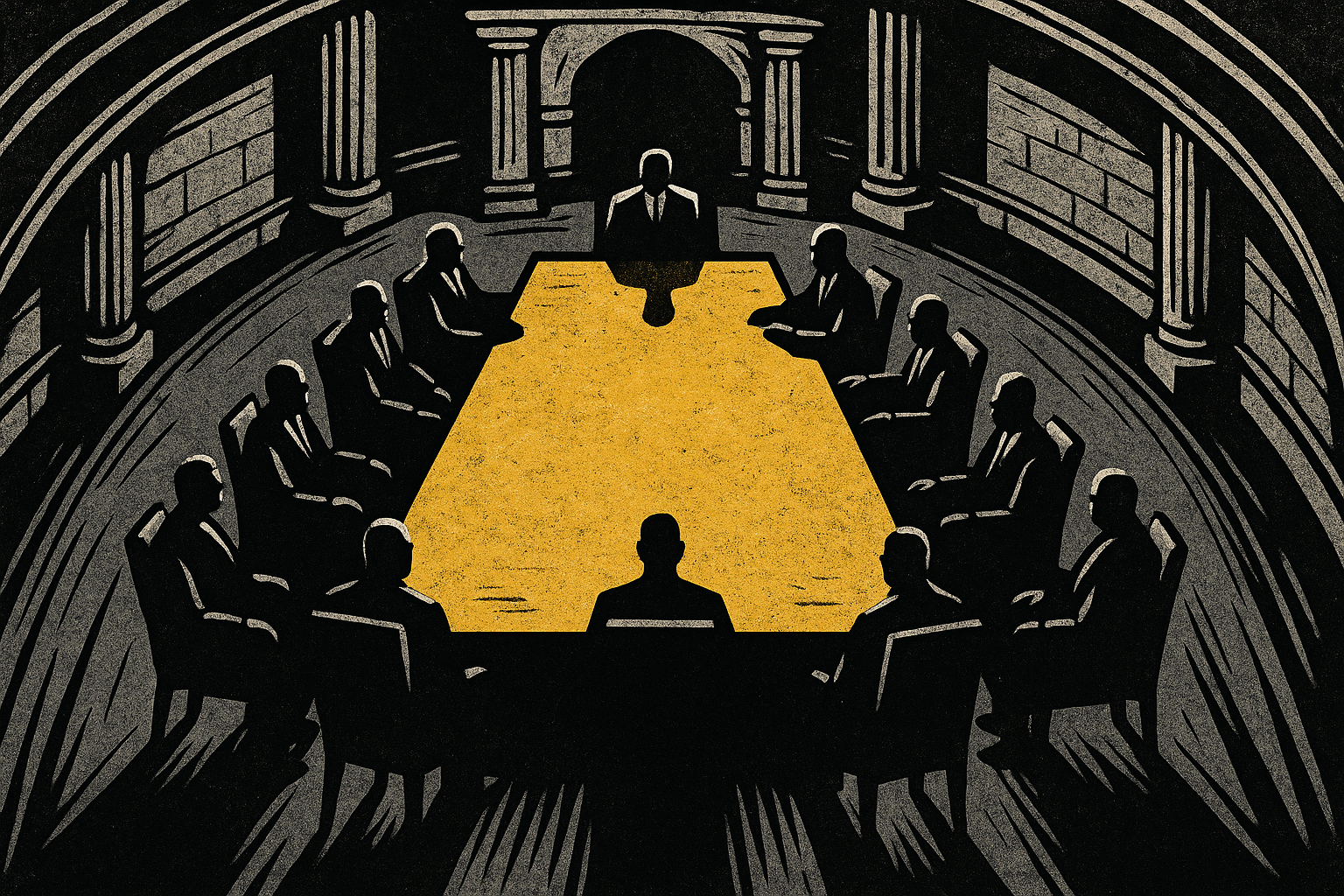
The people managing this system became a transnational managerial class operating the “Rules-Based International Order” – RBIO for short.
On paper the RBIO has rules. Elaborate ones – trade rules, sanctions regimes, human rights frameworks, international courts. From the outside, it looks like the rule of law scaled to the planet.
Yet look at how it actually operates. NATO bombed Yugoslavia in 1999 without UN authorization to remove Milosevic. The U.S. has bombed Syria, Libya, and conducted operations, especially with drones, across the Middle East for decades. Outcry, sure – but no sanctions, no asset seizures, no pariah status.
Russia invades Ukraine and the full weight of the RBIO comes down – sanctions, frozen assets, coordinated economic warfare, international criminal charges. The action is comparable. The response is not. The difference isn’t what was done. It’s who did it.
That’s not rule of law. That’s rule by law at planetary scale. The rules of the RBIO serve the rule-makers, not constrain them.
Again, Russia’s attack on Ukraine is the most revealing stress test. Western sanctions were supposed to cripple the economy after Putin green-lit his Special Military Operation. What actually happened is closer to forced re-shoring. Russia isn’t a rentier petro-state – it’s a developed country with a highly educated population and vast productive capacity. With Western trade cut off, brain-drained industries came home. Wages rose. Domestic demand surged. The ordinary Russian on the street is, by many measures, doing better than before the war.
This drives the RBIO architects up the wall – not because Russia is a military threat, but because it demonstrated that you can exit the system and survive. That the RBIO is optional – and that, my friends, is a threat to this transnational managerial class.
Countries that don’t comply aren’t adversaries to negotiate with. They’re criminals to be punished.
Friedman’s Law vs. Custom
George Friedman makes a distinction I think is essential here: the difference between law and custom.
“The foundation of a democratic republic is the principle that everyone is equal before the law,” he writes. But custom “covers most human interactions because most of what we do is governed by custom, not law.”
This matters because rule of law, in its best form, is actually quite limited. It governs the edges – the criminal code, property rights, contracts, the relationship between citizen and state. The vast middle of life is governed by custom, by norms, by the unwritten rules of how we treat each other.
A society with strong rule of law but weak customs is fragile. The law can tell you not to steal, but it can’t tell you to be a good neighbor. It can enforce a contract, but it can’t make you honor a handshake. The formal legal framework is the skeleton. Custom is the muscle and tissue.
This is why the Nordic countries dominate every rule of law ranking. It’s not just their legal architecture – it’s the culture underneath it. Sweden’s principle of public access to government documents dates to 1766. Corruption isn’t just illegal – it’s socially unacceptable. Politicians caught in scandals resign; they still know shame. The social contract feels reciprocal: the state provides, citizens comply, and trust is maintained because the system visibly works for people, not just against them. Consensus-based politics, proportional representation, coalition governments – power is structurally dispersed, which makes it harder for any one party to bend the law to serve itself.
Compare that to the United States, where shamelessness has become a political asset and brazenness signals strength. When the customs break down – when shame no longer functions as a constraint – you’re left with only the law. And law alone isn’t enough.
The places I’ve lived that work best – Sweden, the Netherlands, parts of the United States, pre-2020 Hong Kong – have both. The law constrains power and the customs hold the social fabric together.
The places that are falling apart – South Africa, post-crisis Argentina, increasingly polarized segments of the United States – are losing one or both. The law is being bent toward those who hold power. The customs and trust in one’s neighbor are fraying as institutional trust declines.
Why This Matters
The signature of rule by law isn’t bad laws. It’s selective enforcement. The law doesn’t have to be unjust. It just has to be applied unevenly.
If the tax code is enforced against your political opponents and not your allies, it becomes a weapon. If building permits are granted to the connected and denied to the unconnected, property law becomes a patronage system. If free speech is protected for some viewpoints and prosecuted for others, the Bill of Rights becomes a decoration.
The question isn’t whether a country has good laws. It’s whether those laws apply equally to the people who wrote them and the people who didn’t.
The Test
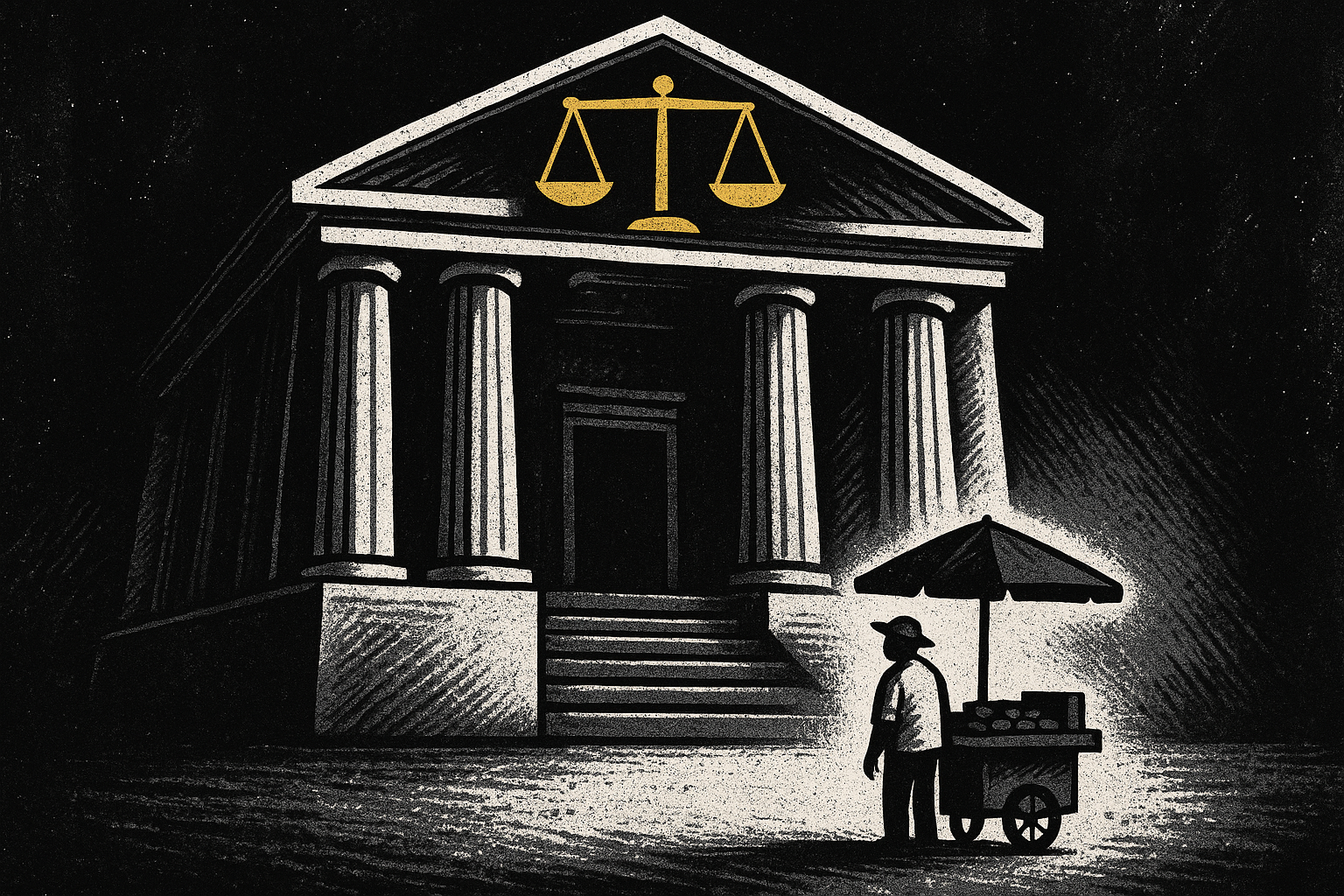
Hernando de Soto, the Peruvian economist, put it simply. A legal system works when a poor person can use it. When a family can build a house and get legal title. When a small business can open without bribing an inspector. When a contract dispute can be resolved without knowing a judge.
When the legal system only works for those who can afford lawyers, lobbyists, and connections, it’s not rule of law. It’s rule by law wearing a nice suit.
The distinction between a civilization and a protection racket isn’t in the buildings or the constitutions or the robes. It’s in the answer to one question: does the law constrain the powerful, or does it serve them?
Two letters. The whole game.